From Selling Canned Corn to Purposeful Coaching with Chip Scholz

A layoff. A cross-country move. A booming coaching practice. Then a stroke that forced a hard pause. Chip Scholz’s story is a sharp reminder that career and identity reinvention rarely unfold as we script them, and that “success” can still quietly pull us away from the life we actually want.


On this episode of Beyond Expertise, we trace Chip’s path from working non-stop in college, landing in sales during a recession, to discovering he thrives when he can define his own role and build real community relationships. He explains what pushed him out of the corporate world, why he stopped chasing the motivational-speaking stage, and how executive coaching gave him what he craved: long-term relationships and measurable impact. If you’re trying to figure out how to reinvent your career, start a coaching business, or build a more fulfilling professional identity, you’ll hear concrete tactics, not just inspiration, including his simple five-by-five networking method for generating warm introductions.
The conversation also goes deeper into meaning and purpose. Chip reflects on David Brooks’ “The Second Mountain,” the toll of 100-hour weeks and constant travel, and how recovery changed his priorities around sleep, health, and the way he chooses work. We also talk about writing books, using StoryWorth to break through writer’s block, and why hobbies like woodturning can become a surprisingly powerful part of a purposeful life.
Listen now, then subscribe, share this with someone at a crossroads, and leave a review so more professionals can find these stories of reinvention.
Have questions, comments, or interest in being a guest? Leave me a voicemail!
00:00 - Welcome And The Reinvention Theme
00:50 - Early Work Ethic And First Sales Role
06:04 - Freedom Inside A Self-Defined Job
10:29 - Layoff Forces The Big Reset
12:22 - Consulting Frameworks Then Coaching Fit
17:31 - The Five-By-Five Networking Flywheel
23:01 - Rapid Growth And Life On The Road
26:30 - Stroke Recovery And Doing Everything Better
28:39 - StoryWorth Writing Sprint And New Books
32:56 - Be Curious Not Judgmental Advice
34:48 - Where To Find Chip And Closing
Welcome And The Reinvention Theme
Eric Dickmann
Welcome to Beyond Expertise, a podcast about identity reinvention for professionals ready to explore who they are beyond their titles and careers. I'm your host, Eric Dickmann. On this episode, I'm excited to welcome Chip Scholes. After decades working in leadership and executive environments, Chip didn't just reinvent his career, he began rethinking the idea of identity itself through coaching, writing, and even woodturning. His work explores how change often happens quietly through small decisions rather than dramatic moments. Today, we talk about what it means to let go of who you thought you had to be Chip, welcome to the show. So glad to have you on today.
Chip Scholz
Eric, I am, I am just really looking forward to it.
Early Work Ethic And First Sales Role
Eric Dickmann
Same here. uh, you know, As I start today, maybe a little different than other shows that you've been on, but I wanna go way back. I wanna go all the way back from when you left school that very first job when you entered the corporate world. I wanna understand a little bit more about how that was for you. Was that first job like saying,"This is exciting. I'm on my way. I'm on the career path that I really thought that I would be on when I entered the corporate world"? Did you take what was ever available? Tell me a little bit about how it all started for you.
Chip Scholz
Well, I, I'll go back even further and, uh, high school and college, I worked incessantly. Um, freshman year of college, my dad was gonna pay for school, pay for, um, tuition at least, and, uh, um, he had a couple of reversals. He had a commission, um, problem with his company. They took back some commission, and the IRS audited him and, you know. So there, there was just not a lot of money there. And so, um, I had to work if I wanna stay in school. So he, he did take care of, uh, of the, um, tuition, uh, mostly, but, uh, um, but I still had to pay for all living expenses and everything like that, which meant getting a job. So, so I-- a lot of times I had two or three jobs that I was working. You know, I'd work an on-campus job and I'd work an off-campus job, or I'd work a couple off-campus jobs. Uh, you know, one of the, one of the jobs I worked was, uh, um, hiking cars for Hertz, where we wou- we would load, load 12 fraternity brothers in a van, drive someplace, um, like Mattoon, Illinois, pick up 11 cars, and drive them back in formation. And, you know, and it was way before anything like CBs. I guess CBs were a thing, but, uh, um, you know, certainly not cell phones. You couldn't c- talk to each other. But we would, we would go four abreast on a two-lane and, and, uh, and drive, you know, drive pretty crazy. And this is back in, in the day when, uh, muscle cars were, were kinda muscle cars. Even, even rental cars were muscle cars. So I, I did a lot of that stuff and, uh, um, and one of the things that I did in college was get very heavily involved in radio. So, so I was the, uh, um, eventually the station manager at WESN, um, Radio in Bloomington, F- FM station at, for school. But I also worked at WAKC as, uh, the Hank Scholz Evening Show here on WAKC. And Yeah, yeah. So, you know, I, I had a lot of options to, uh, to think about when I graduated, but I graduated in the heart of a s- a recession. You know,'78 was not a, a good time to, uh, to graduate. And, uh, um, and so, you know, I, I followed my dad's footsteps and I ended up in sales, you know, because everybody said,"Oh, you're really good with people. You ought to be in sales."
Eric Dickmann
Were you excited about sales, or you just followed the path that kind of had the least resistance?
Chip Scholz
You know, I got hired by Del Monte to sell beans and corn and ketchup. I was, I was paid$950 a month plus a company car and all the dried fruit I could eat. Think about that,$950 a
Eric Dickmann
Yeah. Yeah.
Chip Scholz
I was, moved from Atlanta. I was living in Atlanta at the time, uh, with my mother, and, uh, I was moved to Charlotte, North Carolina, where I knew absolutely nobody. And, uh, um, and so I, you know, my first apartment was$195 a month, furnished. Furnished apartment for 195. Think, think about that. And, uh, um, you know, I was barely getting by but, uh, um, over the, over a couple years I got promoted a couple times and, and, you know, um, you don't really know what you're doing. You know, i- if, if I, if I said I was intentional, I would be lying because, because I wasn't. Um, I just knew that I wanted to get ahead. I just knew that, that I wanted to be promoted, um, which led to a move to Atlanta and, uh, um, there's a backstory there, um, with a, uh, um, with an ex-wife and, and things like that. Um, got married and got divorced in Atlanta. But, uh, um, you know, I, I left that job, ended up with an air freight company and, uh, um, got promoted a couple times there. Um, that got me moved to Tampa for, uh, um, for a few years and then out to LA. That's how I ended up in LA. And, uh, um, and, uh, you know, I, I guess I was supposed to be an expert in sales and sales management. I don't think I was really an expert. I wasn't really that into reading or, or advancing my craft. I just figured, you know, you should know that I'm that good.
Freedom Inside A Self-Defined Job
Eric Dickmann
It's so funny when I talk to people and you look back on your careers, one thing leads to another, which leads to another, and then you look back 10, 15, 20, 30 years have passed by and you wonder,"How did I get from where I started to here?" And you look at all those little moments where new opportunities opened up or you were forced to make a change, but you end up in a place that isn't necessarily, I think, where a lot of people aspired to be when they first started. Did you find that as
Chip Scholz
Oh, that, that's no kidding. Um, so, you know, one of the things that I learned over the years, and, and I think it dawned on me after I got on my own business, is that, uh, um, I'm not a good employee. Um- And, and so here's, here's how I learned. So, so I was with the air freight company in LA. Um, I got, uh, I got let go by them. I ended up in, uh, in the trash business with, uh, BFI. And, um, a couple years into it, my boss said,"Hey, you're really good at talking to people." He said,"Uh, why don't you, why don't you talk to the cities?" Because at the time they had this bill that had passed that, that 50% of all refuse was supposed to be diverted from the landfill, and cities were freaking out. And since we did a bunch of city contracting, he wanted me to, to go over and get in trouble. And one, one city in particular was getting ready to give all their commercial waste, which was about$5 million of our business, they were giving it to another company without a bid, without anything. And so he said,"Go over and get in trouble." And so over the next couple years I got in trouble. I got to know all the city people, I got to know the Chamber of Commerce, I got involved in the Chamber of Commerce. I joined a rotary club. I did all this, this stuff. And, uh, um, and I was actually quite good at it. But the, the really cool part is my boss at the time gave me free reign to define my, my position as I wanted to make it. Didn't tell me what... You know, he told me what the, what the goals were, but he didn't tell me how to do it. He didn't tell me that it has to include this. And he said,"Go ahead and design your own, uh, your own business, um, your, your own position." And that was pretty revelatory. I mean, that was so cool that I got to do pretty much what I wanted to do. And, and that's where I started to learn that I, I wasn't a good, um, a good employee. Um, the other thing I learned is that, you know, when I was involved, I was on 26 different Chamber of Commerce boards. I was, uh, um, chairman of four different chambers of commerce. And the last chamber of commerce that I was chairman of out there was the Torrance Area Chamber of Commerce, which, you know, at the time had about a$3 million budget and, you know, Torrance, California is kind of like the heart of the automotive and the aerospace business. TRW is out there. Um, Honda used to have a campus out there and, and, uh, um, you know, it, it's a, it's big business. Um, Torrance had 100,000 residents at ni- uh, during, at, at night, and had over a million residents during the day. So, you know, the, the people, yeah, the people that came to work in, in Torrance was pretty, uh, pretty amazing. So it was pretty, pretty heavy stuff. And the thing I really noticed is the people that I really admired are the people that hung their own shingle
Eric Dickmann
Hmm.
Chip Scholz
The people that weren't defined, that got to define themselves. And, uh, and you know, I-- the, the one guy I remember is a guy named Forrest Mayo. He's, uh, he's passed away, um, a long time since now. But he was the, he was the tchotchke guy. You know? He o- he had all the rulers and the, uh, the foam fingers and the, the coffee mugs and all that kind of stuff. And I just loved the way that he went about his business and, and he was, he was such a gentle man, and he was also a gentleman, but he was also a gentle man. And, uh, um, it was just, he-- that kind of gave me a framework.
Eric Dickmann
It sounded like it planted a seed almost that you thought,"Well, there is something that beyond this corporate world that I'm in where I could be my own boss and, and run my own show." Hang your own shingle, as you said. Was that planting of that seed what eventually pushed you out? Or was there something that...
Chip Scholz
there... I, I don't think, I don't think we're the architects of our own change. You know, sometimes we are, but, uh, um, I would say most change comes externally that, that forces you into the change. Um, so in, in the last three years that I was with BFI, they went through, I went through five bosses.
Eric Dickmann
Yeah.
Layoff Forces The Big Reset
Chip Scholz
Which, you know, you can tell that, yeah, it is. It is. And because I was not a easy category to understand, because I did what I did, um, nobody really knew what to make m- of me. And so I was constantly having to justify what I was doing and, and all that kind of stuff. And it was e- you're right, it was exhausting. Um, May of'98, I got laid off. Um, the company was about to be sold. We didn't know that, but, uh, um, the company sold about six months later. And, uh, um, and I called my wife and I said, uh, um,"Listen, um, I just got the package." And she said, um,"Well, uh, what do you wanna do?" And I said,"I don't know, but I don't wanna do it here. And I do know what I do that I don't wanna do, I don't wanna work for anybody else."
Eric Dickmann
Isn't that interesting? Because I hear that a lot from people too. They're not always sure what they wanna do, but they absolutely know what they don't wanna do anymore. And so it sounds like you had a little bit of room, right? If you got a package when that layoff happened. But that's a big change if you decide you're gonna move, uh, leave the, the city where you were living, start a new life someplace else, and start a new career.
Chip Scholz
Well, a month later, we were on a plane to North Carolina, and in that, in that, uh, um, weekend that we were in North Carolina, we signed a contract for a house to, to be built on Lake Norman. And, uh, um, and we went back to LA, and we both got temporary permanent jobs
Eric Dickmann
Hmm.
Chip Scholz
Yeah. The, our employers thought they were permanent, uh, we, we knew they were temporary. So I went to work for Southern California Edison. Uh, my wife went to work for a, uh, pager company selling pagers. And, uh, um, and a year later, um, we shocked everybody when we said,"Hey, we're outta here." And, uh, um, you know, everybody threw a big party, all our friends and, and, you know, they had stayed friends over the time. So, you know, we, uh, headed out. And now I still didn't know what I was gonna do.
Eric Dickmann
Well, that's interesting though, but you knew you were gonna do something else. You took these jobs that other people thought were permanent, you knew they weren't. So in the back of your mind, obviously you're ruminating a little bit about what is this next chapter gonna be. But even after that period of time, you hadn't settled on what that was yet.
Chip Scholz
Yeah, I had thought originally that I wanted to be a motivational speaker,
Eric Dickmann
Okay.
Chip Scholz
and so I was kinda headed down that path. And, and, uh, um, so when I got here, um, I ran into a company called, uh, Resource Associates. And, uh, um, Resource Associates was a company that provided materials like, um, leadership materials and, and things like that, um, some processes and that kind of stuff. And so, uh, um, I signed up with them, paid them their money. Um, yesterday I couldn't spell consultant, today I are one. And, and it was, it was different than, um, it was different than, than motivational speaking, but it was similar in that you, you know, the, the whole model was based on being in front of a class of people, either people that you've recruited, individuals or businesses that have, have sponsored you in, and, uh, and running leadership programs. And, uh, you know, the first five years were really rough. The, uh, the first year was kinda tough. Um, I found a company called TTI, which is, uh, a purveyor of assessment instruments, and, uh, um, that changed, that changed my project- trajectory quite a bit. And somewhere along the line, um, I hooked up with a, um, a guy that had, had, uh, graduated like six months before from the training at REC, and he had found this thing called coaching.
Eric Dickmann
Mm. Mm-hmm.
Chip Scholz
It was so cool because his description of it was you could sit on your couch in your underwear and talk to people all over the country. Now, now, I didn't ever think it was going to be sitting on my, uh, couch in my underwear, but, uh, um, certainly talking to people all over the country was, was pretty exciting. Um, the thing that I learned about, uh, motivational speaking is that it's, it's kind of like doing stand-up or, or being in a, in a Broadway show or whatever. You, you go and focus so much energy on that hour or two hours you're on the platform, and then you walk off and you go back to your hotel room and eat Cheetos and watch bad TV
Eric Dickmann
Right.
Chip Scholz
And, and so there's no relationship in it. And, and so when I got my coaching chops and I started to figure out what it all meant, and, you know, this was probably two years in, three years in, um, you know, some things made sense to me. Like, I wanted to have long-term clients. I also wanted to bill them on a monthly basis. So, so my whole goal was to bill, um, 20 clients a certain amount that I would have this base that I could do a lot of other things, um, for it. You know, that's what I, that's what I set out to do, and that's what I did.
Eric Dickmann
I think you, you stumbled upon a couple really important things that I think the audience can relate to. When you first decided to go off on your own and do the motivational speaking, you got involved with some companies that I'm sure provided some frameworks and, and kinda helped you get that going.'Cause I think a lot of people leave and decide I'm going to do this or that, but they don't have all the pieces,. So you either spend a lot of time building those pieces or you go out and get something that gives you a head start so that you can begin to build that business, but it's not always a right fit for you. And it sounds like that's kind of what happened with you, is it, it was okay, but it wasn't completely the right fit, but it got you going.
Chip Scholz
Well, and, and so RAC graduated to a different, uh, company called Trusted Advisors. I've been a part of that for a long time. Um, but what happens is if you do the homework, and I, I mean do the homework, I mean do all the reading and, and all of the listening and learning and mastermind groups and all that kind of stuff, you start to form your own ideas. So, you know, I was-- When, when I started out, I was still 10 years away from, uh, from writing my first book. And, and so it took 10 years for all those ideas to percolate and all that kind of stuff. And I would have to say that, uh, um, I, the book that was released last year, um, October 2025, um, was, was so much better than the two that I put out in the, uh, um, in the early 2010s. Um, because it, it just, it gives you time to percolate and, and, you know, finish up. But, but you're absolutely right. Having a framework is, is a whole lot easier than having to go out and write the book.
Eric Dickmann
Yes And then when you made that transition from being the motivational speaker to doing the coaching,'cause I hear this a lot, you know, a lot of people say,"Well, I'll quit my job and I'll just coach others on how to do it. I'll share that expertise that I have with others." But it's still you're building a business, right? You have zero clients when you start as a coach, and so you have to be a marketer, right, to sell your services. You have to figure out a way to, to price them, and usually there's some sort of a framework that goes along with that, right? So that people know what kind of value they're gonna get from your services. So how did you start that from, from zero clients?
Chip Scholz
I, I leaned back on all my, uh, networking skills that I had from, from LA, you know? Um, so, so one of the things that I did first, and, and it's funny because as I go through the, uh, the cycle, it, it is not applicable anymore. But, uh, um, one of the first things I did was I got involved in city government and chambers of commerce out here and, and charitable organizations, you know. So I, I got involved in a couple hundred charitable organizations in LA and, uh, you know, anything from the Boy Scouts to, uh, um, to, you know, Cheer for Children to any, any kind of...'Cause, uh, it wasn't just lobbying. I was director of community affairs, so I gave a lot of money to a lot of people. I had a half a million dollars to, uh, to give away to the community.
Eric Dickmann
you,
Chip Scholz
getting to know people. And, uh, here's-- I did this thing'cause I, I, I developed, um, this, this thing early on called the five-by-five program. Uh, you know, I don't know if it makes sense, but, uh, um, but it, it made sense to me. And so what I did is, uh, is I would sit, I would call these city leaders or corporate leaders, like the, the CAO of Duke Power,
Eric Dickmann
Mm-hmm.
Chip Scholz
and, and, um, a lady named Ruth Shaw at the time. She was a wonderful, wonderful person. But, uh, um, the chamber of commerce had, had referred me to her. I sat down with her and had a nice conversation over coffee, and I said at the end,"Who are the five people I need to know in, in Charlotte? What are, what are their phone numbers? And do you mind if I say it's okay that you-- to call them, that you told me it was okay to call them?"
Eric Dickmann
Mm-hmm.
Chip Scholz
Well, out of those five people, there were four that would see me. One just kept blowing me off, so hey, that's, that's it. But I had four people. Those four people gave me five people, and pretty soon you're so damn busy that you can't see straight with meetings and having coffee and, and doing that kind of stuff. And, uh, and so that's, that's how, that's how I build it from a realistic standpoint. But you're absolutely right. There are a lot of really gifted people that are coaches or marketers or, or whatever, they can't sell a lick and so they starve You know, I, I had a, uh, and well, and there's a, there's a, uh, um, a coaching organization called Sherpa. And I think up until 2020, they used to do a survey and, uh, um, and every year they do the survey of the coaching industry. And I think, I think one of the years they found that the average coach makes$30,000 a year from coaching. If I wasn't making 30,000 a month, I'd go slit my wrists.
Eric Dickmann
Right.
Chip Scholz
You know, and, and so, so the expectation is that, first of all, I didn't make that all by coaching. I was doing other things like assessment work and, and I was doing classes and all that kind of stuff. But, but the expectation is, um, you've got to sell if you want to do something.
Eric Dickmann
Sure.
Chip Scholz
And so I think the background in sales really helped a lot. But I, I tell you, I was never a good salesperson until I got into business for myself.
Eric Dickmann
Well, that's an interesting point as well. When you're in the business world, how would you compare selling something to a business to selling something like coaching services? Do you find that it, it's harder to get a business to make a purchase or harder to make an individual sign up for some sort of a program?
Chip Scholz
So Del Monte was a product, but everything else, um, CFR Freight and, and BFI was a service.
Eric Dickmann
Was this nervous?
Chip Scholz
With service offerings, you can be a little bit more creative about your, your, you, you know, it's not like a can of corn that you say,"This is a can of corn," and, you know, that's it. Um, getting into the coaching business, it was, it was extremely flexible as well. So, so in a way, you know, I, my best sales approach that I learned years ago was, was I walked in with an open, uh, with, with an empty yellow pad. And I sat down and I said, uh, I said,"So why are you seeing me?" And they would look kind of stunned at you and say,"What do you mean?" And you would say,"Well, there's a reason that you took this meeting. So, so what's the reason that you took this meeting?" And we'd have a great conversation then because it was just kind of like taking the, uh, taking the, the, uh, um, the blindfold off. And, uh, um, and then we had a good conversation and they were being seen and I was being seen and it was just, it was a, it was a good conversation. I worried about all the people that go into coaching, complain about it, never make it, and then can't figure out why.
Eric Dickmann
No, I think you, you're spot on with, uh, with some of your observations, and I'm curious as you went on this journey, at what point did you sit back and say,"Now this is fulfilling. I feel like I'm really adding value to people's lives. This is the trajectory that, that I really wanna be on or stay on"?
Chip Scholz
Have you ever heard of The Second Mountain by David Brooks?
Eric Dickmann
Sure.
Chip Scholz
That book spoke to me and, and it spoke to me in, in a way that is, is different. Um, so hi- his description of the first versus the second mountain. The first mountain is all about, um, career and money and power and all that, that crap. Um, and then in between you have, you have some kind of a crisis.
Eric Dickmann
Mm-hmm. Hmm.
Stroke Recovery And Doing Everything Better
Chip Scholz
And the second mountain is more about meaning and fulfillment and that kind of stuff. So got the business started. 2005, I, I was, I was giving a s- a, a, um, speech to a Rotary Club. I think it was 2004. I was giving a speech to a Rotary Club in, uh, in Charlotte, and there was a guy there who was the head of the Southeastern Warehouse Association. And he came up to me afterwards and he said,"You're just the kind of guy that we need to have come and speak at our, uh, at a Ro- at, at our convention." So that fall, I went to The Homestead, Virginia, and, uh, and I gave a talk. I had two hours on a Saturday morning, and, and I ended up doing a whole bunch of business out of that, that conversation. But more importantly, the head of the International Warehouse Association was there. And, and he, you know... I, I, I hit it off with him. He was the volunteer chair, and a little while later they fired the executive director, who was also there, and, uh, um, they asked me to do the assessment work from him. Well, here's, here's where everything blew up, and, and it blew up in a good way. Um, I, I went from, I went from, um, being only doing business within about a three-hour range of Charlotte, three-hour driving range of Charlotte, to now I was nationwide. And, and I did this, uh, um, this thing. I did all the assessments for the new candidates for the executive director spot. Um, and then at the convention in, uh, in Vegas, they invited me to come and, uh, and tell the board how to work with this guy. So I did. And, uh, um, and you know, I ended up, I-- All of the people that were in that meeting ended up being clients of mine Um, and, and so that guy that I originally met too, he wasn't working for anybody at that point. He was kind of in between selling a company and going to the next company. The company that he ended up with was a company called Genco, who, um, was, uh, the CEO and the owner was a guy named Herb Shearer. Um, he got me involved in coaching in his team. He was a CEO of one of the, uh, one of the affiliates, uh, one of the subsidiaries. And, and he introduced me to Herb, and Herb and I, we did a lot of business. So, you know, I went from, I went from 35 to 135 i- ov- overnight. And, and so typical first mountain move, I was, I was traveling my butt off, um, 200 nights a year in a hotel. Um, you know, there was one, there was one particular stretch that, uh, um, I was in, uh, um, Newark on Monday and, uh, Atlanta on Tuesday, Dallas on Thursday, and, uh, LA on Friday, and then back home. That, that was kind of the way it all went, just life of, of planes, trains, automobiles, and, and, you know, it was, it was kind of crazy. Um, so in 2012, I had a stroke.
Eric Dickmann
Okay.
Chip Scholz
And I, I didn't-- I should have seen it coming. I just, I, I was working too hard. I was, I was working 100 hours a week. Um, I didn't have anything else I was doing. My wife and I played golf a little bit on the weekends, but most of the time I was behind the desk. And, uh, um, and just, you know, or, or traveling or waking up in too many hotels and, and getting, getting five hours of sleep a night and, you know, all those things that are just metabolic dynamite.
Eric Dickmann
Yeah. Yeah, burning yourself out.
Chip Scholz
yeah, so, so I had the stroke, and, uh, um, I, I think that was my valley. You know, I could say getting laid off was my valley. It really wasn't. What, what, what that was is, okay, all of a sudden it forced me to retrench. I, I couldn't really work for, for a couple months. Um, I, you know, they, they kept telling me it was a, uh, a mild stroke and, uh, and you don't believe it when you're inside of it. When I finally got back to it, I just wanted to do everything better.
Eric Dickmann
It's so interesting that you said that, though. I think a lot of people look at a layoff or, you know, a forced retirement or, or something as, as the valley, as you put it. But oftentimes it's not, right? That's just the push that then either starts some momentum going up or oftentimes, there's a lower point than that as you're trying to figure things out before the recovery starts. But it's not often that one thing that is the valley itself.
Chip Scholz
Well, and, and so, you know, being an ambitious person, um, I, I lost 110 pounds after the stroke. I, I started exercising. I started taking care of myself. If I don't get eight hours a night of sleep, I get cranky. And just started doing all the things that I should've been doing all the rest of my life but, uh, but had not. And, uh, and just everything became more valuable. I, I found woodturning as a, uh, as a hobby, and, uh, um, that's been a big part of my life for the last 12 years. And,
Eric Dickmann
And you've written three books you said?
Chip Scholz
um, I've got three books. Well, I've got two out. I had two out, um, so that's another interesting story. Do you mind if I tell you?
StoryWorth Writing Sprint And New Books
Eric Dickmann
No, please do.
Chip Scholz
Okay. So, so I had the two books out, 2009, 2011. Um, they were written with other people. Um, the first one was written with seven other people, and then two other people for the other one. Um, so I always wanted to write my own book and, uh, um, and so, um, I, I started down that path after the stroke, and I just cognitively I wasn't there. But, um, I, I, you know, I had probably about 100 pages in a, in a manuscript, and, and I didn't like it, and I put it away in a, uh, uh, in a drawer. And then a few years ago, my kids gave me, um, StoryWorth
Eric Dickmann
Okay.
Chip Scholz
for Father's Day. It's a, uh, platform that what it does is they send you a question a week, and you write the story of the question, and at the end of a year they, they print a book and send it to you.
Eric Dickmann
Oh, interesting. Okay. No, I hadn't heard that.
Chip Scholz
It is really cool. So over the course of a year I wrote 60 stories. The, the book ended up being 411 pages long.
Eric Dickmann
Oh,
Chip Scholz
Yeah, I kind of, I kind of blew through my writer's block. And, and so I dusted off the manuscript. Six months later I sent it to a publisher, signed a contract, and, and, uh, that came out, um, last October. That was the first one. I've got another one that came out in March and, uh, um, you know, the first one took me 10 years to write. The second one took me a month and a half to write. Um, I've got another one coming out in October that, uh, um, I wrote in about six months,
Eric Dickmann
it's also interesting to me because, you talked about hanging your own shingle earlier, and it sounds like in many ways you've done that across multiple aspects of your life, right? Not only in business, but your hobbies, becoming an author, something that you didn't do before. You've got a professional podcast, uh, set up in your home, and you were talking about being a college radio announcer, right? So i- it's come full circle in a way. Yeah.
Chip Scholz
isn't that wild?
Eric Dickmann
Yeah. So what's next?
Chip Scholz
I still go with the theme of I wanna do everything better. And, uh, and, um, listen, my, uh, my parents died early. My dad was 51, my mom was 56 when they died. Um, it's, uh, it's 42 years since my, uh, my dad died and, uh, um, uh, it's been, uh, 39 years since my mom died. Um, I, I never really thought that I would live past them. You know, you get this thing in your head being, being an orphan, um, you start to, you start to think that,"Hey, you're pretty screwed anyway, so, you know, uh, what does it matter if I did?" And I j- I didn't take care of myself. And, uh, um, uh, and, and so, um, I'm-- I feel doubly blessed that I've been able to have the years that I've been having. And, uh, um, and, you know, I, I think taking care of yourself, uh, hopefully, uh, um, I can outrun some of the sins of my past. But, uh, um, you know, I really like being around as long as I have been. And, uh, um, and so, you know, what, what I'm gonna do is, is next thing better. I've got another book in the works for 27. Um, and, uh, um, I, you know, I'm, I'm, I'm kind of working on it. Um, but I've been so busy doing podcasts that, uh, that I don't have time to, time to work on it. Um, you know, I'm, I'm teaching a lot. Um, I'm teaching woodturning a lot. I'm still, uh, still pretty active in, in working and, you know. I don't ever plan to retire, you know. I'm, I'm, I'm not gonna, I'm not gonna take calls when I'm in my hospital gown or anything. But, uh, um, you know, I, I am, I am planning on, uh, working because, you know, that second mountain is about meaning and purpose. And, and, you know, um, I, I mentioned a guy before, Art Blanchford, he, he told me that, um, there are, um, three stages you go through in retirement. Um, the first stage is, uh, is vacation,
Eric Dickmann
Mm-hmm.
Chip Scholz
lasts about six months. And then the second stage is depression, and that lasts, you know, a couple years. And then, and then you find meaning and purpose. Well, I've found meaning and purpose. I don't want to go through all the bullshit, and I really don't want a vacation. I take my vacation when I can get ups, you know?
Be Curious Not Judgmental Advice
Eric Dickmann
I love that. I love that. And, if we just circle all the way back to the beginning, you know, when you were out there selling beans and corn, what would you t- say to somebody who's doing the same? They're out there selling their beans and corn, but maybe they're not finding the fulfillment and the purpose in their job. What would you give them as a, as a piece of life advice to say,"Here's maybe something that you should, think about or try next"?
Chip Scholz
Well, that's, that's the whole thing is to try next. And, and, you know, one of the, uh, one of the phrases that I love, um, is a Walt Whitman phrase. It was used in"Ted Lasso," believe it or not, um, is, uh,"Be curious, not judgmental."
Eric Dickmann
Mm, I love that.
Chip Scholz
And so what I would, what I would suggest if someone's starting that journey is, is to be curious. You know? Because a lot of times you get satisfied with what is, but be curious to ask what can be.
Eric Dickmann
Yes.
Chip Scholz
And, don't get pigeonholed. I, I know so many people that, that have started off as stock market guys or, or, you know, lawyers or whatever, and they get fried. You know? And they get, they get burned up in the whole thing and, and, uh, um, and they end up, you know, they end up becoming coaches. But, but they end up, they end up doing something different that, that gets them on the, on the way to meaning and purpose. So always be willing to question yourself, question if you're on the right path. I guess that's, that's it. I, I don't know if, if we have the self-awareness to, to do that questioning, though.
Eric Dickmann
I think that's tough, right? And five years can become 20 years very quickly, and you look back and say,"Well, maybe I should have taken a harder look at my life, you know, 15 years ago or 20 years ago."
Chip Scholz
Yeah, preach it. I'll tell you, preach
Where To Find Chip And Closing
Eric Dickmann
Yeah. Yeah. it's easy to look in the rear view mirror. Sometimes it's harder to look ahead. Uh, Chip, this has been a great conversation. I'd love if you could share with the audience where they could find out more about you, your coaching services, and of course, your books.
Chip Scholz
The books are on Amazon. Um, audiobooks are on, on a lot of different platforms like, um, um, Spotify and, uh, audiobooks.com. Bonus is, uh, um, if you go to my website, schulzandassociates.com, there is a section called What's Chip Reading? And on there I have about 140 books that I've read. Um, I've read a lot more than that, but, uh, um, it, it's about 140 books that have a quick review.
Eric Dickmann
Ah, that's so helpful. Uh, there's so many books out there, and sometimes I've found the best ones come from recommendations from people you trust, so I appreciate that. I'll make sure to have all the things that you mentioned, uh, linked up in the show notes today. thank you so much for being a guest on the show. I've really enjoyed our conversation, hearing about your story and those, transformational moments in your life.
Chip Scholz
Thanks, Eric, and, and I hope this is not the last time we talk.
Eric Dickmann
Absolutely. Thank you, Chip Thanks for listening to Beyond Expertise. You can find show notes, resources, and links mentioned during this episode at podcast.ericdickmann.com. If this conversation resonated with you, I hope you'll join me again next time as we continue exploring what it means to reinvent ourselves beyond our careers, titles, and expertise.
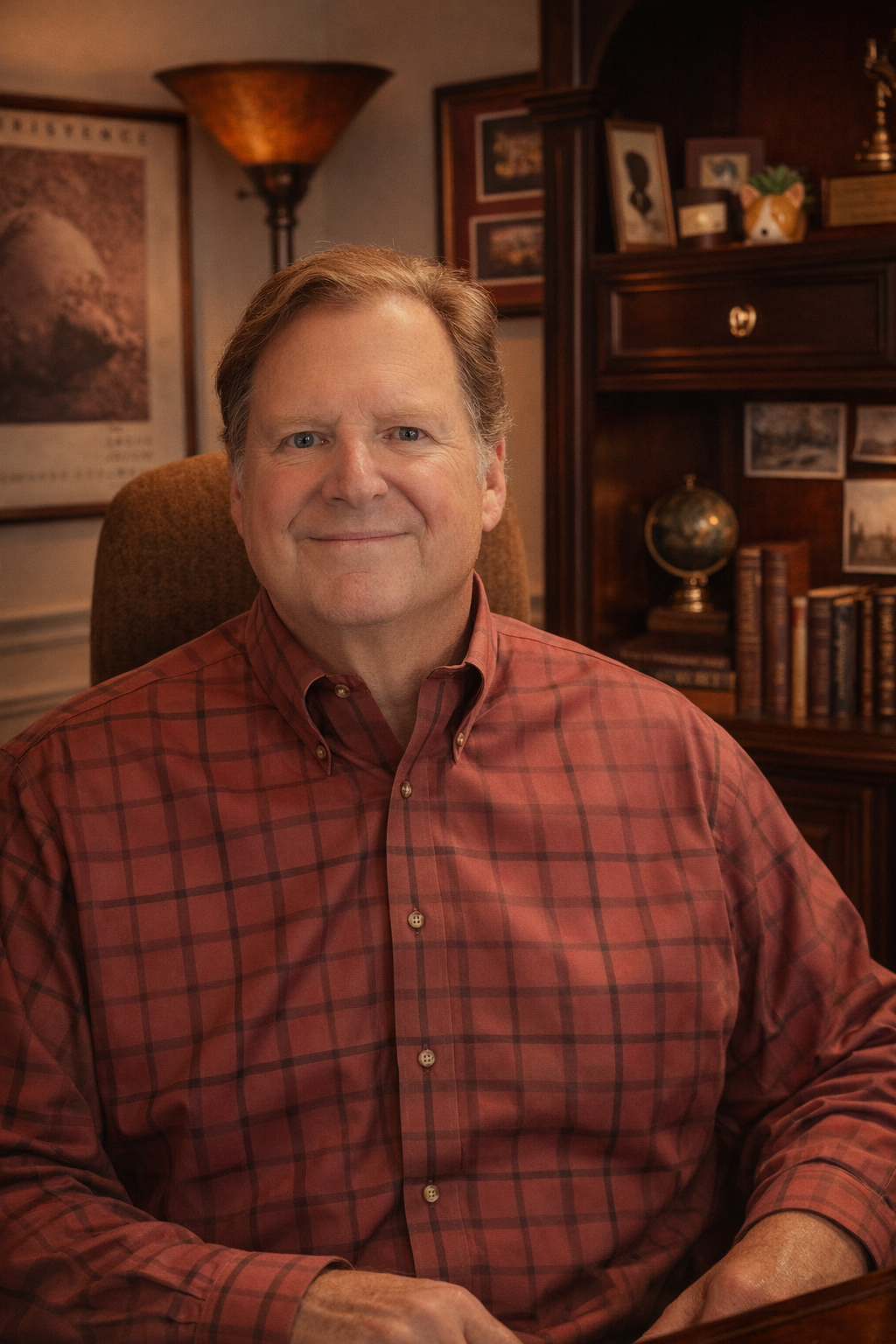
Executive Coach / Author
Chip Scholz is a master at working with executives on a strategic level. Through services including CEO and executive coaching, leadership development, strategic planning and hiring, individual assessments, and educational event facilitation, he strengthens businesses. He doesn’t meddle in production or get lost in political or spiritual weeds. Instead, he relies on a utilitarian approach. Scholz & Associates clients are experts in their chosen fields. He is also a nationally recognized speaker and author of Masterminds Unleashed: Selling for Geniuses, Do Eagles Just Wing It?, and the upcoming Clear Conduct, due to be published later this year.

