A Widowmaker Wake Up Call That Changed Everything with Adrian Jones

Two widowmaker heart attacks will either break your story or rewrite it. I sit down with Adrian “AJ” Jones, a longtime financial services leader who had to confront the question most high performers avoid until something forces it: what if the life you built no longer matches who you are? AJ walks me through the early twists that pulled him from international relations into finance, how comfort can become a trap, and how “fine” can mask deep misalignment.


In this episode, we get candid about what happens after a major health scare when the paycheck still feels safer than the calling. AJ shares the messy middle: going back to work, feeling the strain in his body through anxiety and sleeplessness, and realizing that identity, fear, and momentum can keep you stuck even when you know better. Then comes the second shock, another heart attack, and a sharper lesson that career success means nothing without health.
AJ also breaks down the evolution of his company, More, from a broad community idea to a focused mission around alignment and authentic truth. We talk about career reinvention, burnout signals, and why alignment may be more than motivation. AJ is building evidence into his work with psychology and neuroscience, and he shares resources, including his book, "Powered by Authenticity," and his podcast, Code 3: Life Reinvented.
If you know someone who’s high on achievement but low on aliveness, share this conversation with them. Subscribe to Beyond Expertise and leave a review so more people can find stories that help them reinvent with purpose.
Have questions, comments, or interest in being a guest? Leave me a voicemail!
Eric Dickmann
Welcome to Beyond Expertise, a podcast about identity reinvention for professionals ready to explore who they are beyond their titles and their careers. I'm your host, Eric Dickmann. Today, I'm excited to welcome Adrian Jones, or AJ, to the podcast. After more than two decades in financial services leadership, AJ experienced two widowmaker heart attacks that forced him to confront a difficult question: What happens when the life that looks successful from the outside no longer feels aligned on the inside? Those experiences became the catalyst for major reinvention. From high-pressure executive life into work centered around purpose, alignment, and helping others rethink success before crisis forces the issue. Today, AJ is the founder of More, a career wellness platform for accomplished professionals navigating burnout, transition, and the search for a more meaningful life. AJ, welcome to the show. I'm so glad to have you as a guest today.
Adrian Jones
I'm thrilled to be here, Eric. I'm excited for today's conversation.
From Diplomat Dream To Finance
Eric Dickmann
I am too. I think you've got an interesting story to share, and I'd like to rewind the clock a little bit. With my guests, I like to go all the way back, to start to think about your journey right from the beginning, when you graduated from school when you got that first corporate job, was it in financial services? Was it on a path you were excited about right from the start?
Adrian Jones
That is-- Wow, you asked a question that has a lot to it, and you might get more than you bargained for.
Eric Dickmann
I'm ready.
Adrian Jones
I actually, yeah, I went to, uh, a liberal arts college and studied, uh, international relations. Um, I went to Occidental College in LA, and I wanted to be a diplomat. I felt like that was what I wanted to do, that that was my calling going through college. I studied abroad in, in Belgium, in Brussels, because that's the, the center of Europe, the headquarters of Europe, even back in those days. Uh, and that is where I wanted to, um, end up after I graduated, so I could get some more international experience, and then I would go, um, in my mind, I would go get my master's of foreign affairs at the Kennedy School at Harvard or Georgetown or Fletcher at Tufts or whatever, or Monterey or wherever. That's how I saw the world. And so I did That, that was it. I, I, I left college, whatever I was 22, and that was my plan, and I ended up over in, in Belgium, and I, I got a job, uh, on a bond desk for a French trading company. I didn't know the first thing about bonds. They trained me. The-- They taught me about the difference between interest rates and the, the value of bonds, which was entirely mind-bending for me,'cause I didn't have any of this education before. But I actually, um, I was on the Belgian long bond desk for this French trading firm, and I became the second most active traders. But I had a problem with my work permit, sadly. Uh, and Belgium had 15% unemployment, and they just could not justify hiring an American to do a job that a Belgian could do, which I get. So I had to come home, um, sadly, and the first thing I did is let all my friends know that I was back in the States. Uh, and my college friends had all settled in San Francisco, and they said,"Jones, get out here. Um, we got a couch in our apartment in, uh, in Cow Hollow in San Francisco, and, and I'm sure we can help you find a job." That sounded good to me. I never unpacked my bags from Belgium. Got a one-way ticket to San Francisco, went up there to figure it out, and then I got a job in a financial services firm because I had that somewhat brief experience in Belgium. So I got a job on the sales desk of a mutual fund company called GT Global, which no longer exists. I was on the sales desk working market hours, so I had to be in at 4:30 in the morning, five days a week. And that's how I started my corporate career.
Eric Dickmann
and were you excited about it, that change? I mean, if you had wanted to be a diplomat, you kind of were on that path, but it took a little turn. Uh, were you excited now about how things were going in financial services?
Adrian Jones
Well, it was unexpected. I, I, I, I really enjoyed being in San Francisco in the early'90s. It was a very vibrant city, and it still is in ma- in, in an awful lot of ways. But I, um... Yeah, my heart was still in Europe and I felt like I had abandoned something I worked so hard to achieve or was hoping to achieve and putting myself on a path. I had stayed close with my mentor. I mean, I was one of those, Eric, I literally was one of those students who, uh, was super involved with the major. I was head of the student advisory committee. I did all these things because I was so devoted to, to that major and learning what they were teaching us about international relations throughout the late 80s and early 90s. Um, so I stayed in touch with my advisor from college two or three years after I had graduated and had a really interesting conversation with him. And he advised me, sort of threw me with this one. He advised me, he said,"AJ, why don't, why don't you look at getting your MBA? And, and maybe it's a different route for you. Maybe the Masters of Foreign Affairs, the MFA there, isn't the path. And maybe working your way up the State Department at all these random outposts that you'll be assigned to every couple of years, maybe that's not for your path. Maybe your path is to go get an MBA and work for a company that has, um, international offices and you can get your international exposure, exposure that way. And then who knows? Maybe there's a political appointment or, or down the road you could do something and get involved." And to me, that made a ton of sense. And so I switched, I switched gears. I really valued his opinion. We were, we were pretty close. So then I changed gears and I applied to MBA schools and ended up getting into the Anderson School, uh, at UCLA and went down there. And, and lo and behold, I started in management consulting at Deloitte, and then I went over and got a job for Wells Fargo and their wealth management group. And I was working for a bank that had no, effectively very little international business. I mean, they didn't have, you know, one-- It wasn't a big global bank. So I was like,"How am I gonna, how did I end up here when I'm trying to go abroad?" And so I just felt like every chance I had to like get abroad, like seemed to just, the world was pushing me in a different direction. I'm like,"Okay, well, I guess this is what I'll, I'll, I'll do." And, and ironically, um I'll, I'll finish it with this. So I, I went to Anderson at UCLA, and it's a two-year program if you're a full-time MBA. And I deci- me being me, I want some more international exposure. So instead of going over to Europe, I got myself an internship, uh, at an investment company in Hong Kong. And then I extended my stay there and, and applied to The Hong Kong University of Science and Technology in Sai Kung, in Kowloon over there, thinking maybe Asia is the place where I need to be in all this. And what I realized is I really miss San Francisco and the Bay Area. And so, I don't know. So anyways, graduated and moved to the Bay Area, got married and, and settled and started my career there in corporate America, so. Anyways, and so I probably gave you a lot more than you bargained for
Eric Dickmann
No, that was interesting because I think a lot of people start that way, right? They have hopes, they have dreams, they've got aspirations, what they think their career is going to be, and they push very hard to get themselves going in that direction, and then life intervenes and pushes you in slightly different directions. And it sounds like throughout your journey, you tried to course-correct a couple of times or what you thought was course-correcting, but fortunately for you, new opportunities kept opening up and pushing you in slightly different directions. And it sounds like you ended up in a good place, just not exactly where you envisioned you would be at the start of that journey.
Adrian Jones
Exactly. 100%. And I think that's w- was one of my early lessons is about being adaptable and, and where do you find-- where do you strike that balance between being adaptable and, and understanding where, where the trends are g- are going for you, so to speak, versus continuing to, um, push for something that you had previously believed in pretty mightily. Um, and it's an interest-- When you're in your early 20s, that's a, that's a, that's tricky. That's a difficult time. I think it's, those are difficult decisions at any stage of life, but particularly I felt in the 20s, that's, that's hard when many doors are still open, um, and we don't have, um, other responsibilities as you get older, right? And so, um, it was t- it, it was tricky, but I, I, I, I realized in, in hindsight now looking back all these many years, you know, I had a great fortune of working for some wonderful firms like, you know, Deloitte, Wells Fargo, Barclays Global Investors, BGI, who got bought by BlackRock. So I worked at BlackRock and over at Schwab. And so, uh, very, very fortunate in that way. It just certainly wasn't Coming out of college, the life that I had envisioned, where in my mind I was gonna be running, running around the world solving problems in all the global hotspots in a ver- sort of reasonably idealistic way. Um, yeah, that the, the universe said,"Yeah, I don't think so."
Eric Dickmann
Yeah, and at this point you've, uh, you've gone to school, right? You've gotten your MBA. You've had a chance to be in Europe and in Asia, worked for a number of different, top-tier companies. So you've been moving up the corporate ladder and at this point settled into San Francisco, met your wife is everything great? I mean, are you feeling content now in this new identity as you've kind of fit into the opportunities that presented themselves in your new education and firm footing in financial services? Is this a great time?
Adrian Jones
Amazing time. I met my wife at, at college. She was two years younger. So We got married in San Francisco, and then stayed there, and life, life was groovy. I mean, the, the'90s was just what was going on with internet and venture capital and launch parties, and the energy was just so palpable. Uh, it was, it was wonderful. Wherever you are, it touched you. Um, and so that was super fun, and to s- bring children into the, the equation was incredible. Um, after we had both our children, a daughter and a son, we moved over the Golden Gate Bridge to a place called Marin County. Loved raising our children there. Just tremendous, tremendous community of friends. It's beautiful. The-- I think Marin County is 80% protected open space. There is just an abundance of trails to explore, um, things to do, vistas to see. Uh, it's, it's a beautiful, beautiful place, and the weather's generally very good there. But going back to this theme that I had. So, right, I worked at Wells Fargo, not really an international bank. Um, I got a job at Barclays Global Investors and, and BlackRock bought them, and, and BlackRock is global. And so I saw this opportunity, and we had-- The stuff I was working on had, had actually gotten quite successful. And so I thought,"Well, I could take this and bring it to Europe." And I was all set and ready to go over there, and my plan was I'd pitch it to the London office for the EMEA, you know, efforts, and then I could potentially, uh, parlay that into a short-term assignment over there and move the family over. Our But as fate would have it, um, once again, um, that was all teed up, and then August 8th of, what was it? 2011, the S&P downgraded the US Treasuries. And at that point, the firm shut down all non-essential travel, which included my trip to Europe. And, and lo and behold, that was the end of that. And, uh, it just-- I, I-- Gosh, I'm like,"How many times am I gonna throw s- throw myself against this brick wall and, and the universe keeps saying nope?"
Eric Dickmann
Yeah. So I know that eventually you had a health scare, right? Tell our audience a little bit about what happened there, and then was that really the big wake-up call that said,"I don't know if I wanna keep doing this"?
Adrian Jones
Mm-hmm. Yeah, absolutely. So the, the setup here is, as I said earlier, we had moved to Marin County, which is, uh, a fun fact for your audience, it's the birthplace of mountain biking. Anyways, because there's all these great trails and, um, fire trails or single-track trails, and I'd gotten into mountain biking recently, it was a Saturday, beautiful fall day, and three friends of mine and I, we went mountain bike riding. And the first part of the ride has a pretty significant, uh, climb to it. It's, it's a hilly part of the world and, and unfortunately, most climbs there require what we call the suffer fest. It's climbing up hills to get to the trails on the ridges and all the fun downhills. But this was a ride like all the others. You had to go up, and one part was pretty strenuous, and that's, um, when I... My legs basically turned off. All the strength, like someone hit the off switch on my legs. And what ultimately happened is, um, within a very short order, uh, I was sick and nauseous beyond anything I'd ever experienced before. Super lightheaded, uh, uh, like s-terrifyingly so. Terrifyingly so. Like I, like I might just fall over and collapse. Um, and then a chest pain set in in my chest and, and all these things. Ultimately, what happened is, and we-- none of us knew it at the time, but I was suffering a, a massive widow-maker heart attack. Uh, fortunately, fortunately, uh, we were able to walk down the trail. How I could walk is, uh, I don't know, a testament to maybe some good health and exercising regularly, whatever. But, um, we were able to walk down. That walk took 40 minutes, um, and got into a car and got taken to the hospital, and that's the, the... I mean, I was in heart, uh, heart attack protocol and was in the cath lab, catheterization lab, like getting, uh, a stent in minutes. It happened so fast. And yes, that was a, a moment that changed my life forever. I mean, as, as any survivor, um, might attest to, it's, uh, it, it'll shake you up. And for me, what, what, what really happened is I got out of the hospital after I was there for three days, um- I was working for, for Schwab and they, they put me on, on leave for I think four months. They were very, very good to me. I have all kinds of respect for them. And I would lay in bed and stare at the ceiling and wonder why I survived. You don't survive a massive widow-maker, full occlusion of my left s- left anterior descending artery, uh, when I was on the op- by the time I got to the operating table and, and tell the tale and actually not suffer any lasting effects to my heart. It's just incredible. So what do I do with the second chance of life? What, what is the, what's the message? What is the play? Do I go back to my three-hour daily commute into the financial district in the, in San Francisco and continue with that job? Do I become a, a, a stay-at-home dad? Do I volunteer myself in, into the world of teaching, not as a volunteer, actually as a new career, or join the Peace Corps or something along these lines? Like, what is the plan? Universe, help me out, please, because I, I really need to know. And it finally happened in a, in a way that is, is almost hard to describe. It, uh, I call it my, my voice of God moment. It was like a lightning bolt to my soul. I, I, I had this thought that hit me like a two-by-four on my forehead or a lightning bolt to my soul. It was like,"Use your story to help and inspire others."
Eric Dickmann
Hmm.
Adrian Jones
And I had no idea what that meant. But it was loud, it was clear, and it was not a message or a voice that was to be argued with. I just signed up right then and there. I didn't know what about my story would be helpful or if how I delivered it would help anybody or inspire anybody, but I knew that this was the path that I was gonna be on.
Eric Dickmann
I think that's so interesting because when I talk to people, a lot of people have a growing frustration, growing level of discontent that they're just not finding the fulfillment in what they do like they used to, and they're wondering if there's something more. And it sounds like your path is a little bit different. Things were fine, and then all the sudden you had this heart attack And you wondered, well, fine is okay, but is my life really meant for something more than just what I was doing? Which is really an interesting, moment of choice.
Adrian Jones
Absolutely. And it made you or made me think, well, was it fine? Right? Like, why did this happen? So medically, I had a plaque rupture and, um, in the left anterior descending artery, AKA the widow maker, um, because when we're, we were climbing up that steep pitch, the, the plaque under that strain cracked, broke, and created a blockage, much like sticks create a little dam in a, in a little creek or something.
Eric Dickmann
Mm-hmm. Hmm.
Adrian Jones
So, um, I mean, that was the, that was the medical reason, but, but, but why? Why was the plaque loose? Was it stress? Was it diet? Was it what-- it's just a bad day, just unlucky, but lucky to survive, but unlucky that it happened. Um, so it really got me thinking like, well, was this the path? Was I truly aligned with what I should be doing? Yeah, I had nice roles and, and very nice compensation and, and things like that. Um, but was this the path I, I should have been on, or, or was I glossing over some other things that were going on inside that I just didn't know were taking place? Um, because my busyness and, and being in the game and hustling and doing all the things was, was filling up my time and filling up my focus, where potentially there were other things going on deeper down inside. And
Eric Dickmann
How did you sort through all that?
Playing It Safe Until It Breaks
Adrian Jones
Yeah. Well, here's how I sorted through it. So, um, for better or for worse, full candor and vulnerability here for, for your listeners. So I, um, I had this message,"Use your story to help and inspire others." And I said,"Yes, that's exactly what I'm gonna do." Uh, however, what I ended up doing is once my four months of, of leave, uh, came to an end, I went back to work and did that for a few months and realized, yeah, this isn't for me. Um, I don't know where I'm gonna go, but it, it, it can't be here. So on my way out the door, uh, a good friend of mine who h- who has a wealth management firm offered me a job. He said, you know,"Hey, Jones, we get the band together here and do these things." And I said,"Well, okay." And he knew my, my health situation, so I thought,"Well, maybe this makes sense." Very kind, very generous. And the, the reality I think is, is that for the next f- five years, I was in wealth management, and even though I was dabbling on the side with this helping and inspiring others, the exploration of what I could do there, and by dabbling, what was I doing? I was-- I started off by blogging anonymously. I did it anonymously'cause if you're in a highly regulated industry like financial services, you have to be careful what you put out. And then with time, I, I got some confidence and, and have my own blog. And then, um, you know, I had a podcast that I did in COVID, like so many people. Once we all were locked up, we all went on Amazon and bought a mic and started creating content. I was one of them. I still have the same mic, the Rode NT right
Eric Dickmann
a good one.
Adrian Jones
yeah, I love it. Um, and so I started to dabble with these things, and then the Heart Association asked me to do some talks for them, and that's how I started to pick up, um, some momentum. But I think the reality is, and, and this is where, you know, it's, it merits a, um, honing in here is I, I stayed in financial services because it felt safe. It-- I, I knew how I could get a nice paycheck. I knew how to do the job, um, whatever. You know, I knew how the industry works. Uh, I knew the regulations and, and these sorts of things. It almost killed me again, and, uh, a-and, and here's, here's what happened. So, um, my, my buddy's firm, like I didn't wanna be on his P&L, There was like a 12 to 15 month, like, trial run, and we both came to the end of it and said,"Hey, you know, like maybe this isn't the right thing." And I said,"Yeah." And what did I do? Instead of like maybe pursuing this calling, I went and got a job at a, another wealth management firm, and I got... It just was not the right move for me. And I've so much-- I, I like to say, if I could use a tree metaphor, that my, my trunk and roots were firmly on or in the ground because that's, that's the world that I knew. So that, that trunk and tree and, and being in the ground, that's the world of financial services. But my branches had grown into this other world that I, I, I, that I felt called to. Uh, that the nourishment and the photosynthesis was pulling my tree branches in a, in another direction and causing me to crack inside, quite literally. Um, I suffered extraordinary bouts of, of nau- I think stress-related nausea. I couldn't sleep. I was highly anxious. I-- It was all I could do to get out of bed every morning. Um, needed therapy, um, and anti-anxiety medication for a little bit just to, to, to get through. Like, was, was pretty traumatic. And I'm thinking,"Why am I this? I, I, I've just survived a heart attack. I don't need this pressure and this anxiety. Why am I... I gotta get out of this," but I couldn't get out, and it was a strange trap that I was in. Um, and You know, it was, it was not a good situation, Eric, at all. Um, and so fortunately, uh, our firm that I was with got bought by another firm, and they were like,"Okay, well, we need to like rationalize uh, workforce." And, uh, and I was-- I got on the wrong side of that and, and, and as they told me the news, I was-- I had a smile on my face. I'm like,"Oh my God, this is perfect."'Cause my wife was telling me to quit. Like,"You are, you are not yourself. Like, we have some savings. Like this-- your life is not worth it." Uh, sorry,"This job is not worth it. Your life is." And, and it's hard to hear that message. Like, even though I was miserable, and I knew I had to go, and I had felt this calling, and I felt like I could jump into the space that I'm in now, I, I, I don't know what held me back. My identity, my worry about money, just fear, fear, fear. And it caused this like crisis. And so anyways, I left in 2023, and in April of 2024, I came home from the gym and, uh, walked in the-- i-into an empty house and had a second widow-maker heart attack.
Eric Dickmann
No, Mike.
Adrian Jones
And yeah, and, um, you know, had-- luckily knew the symptoms immediately, called 911, and we had lights and sirens outside our house in three minutes and 40 seconds. I know this. Uh, and back I went to the, to the emergency room and had a second stent put in. So I don't know. It's-- for me, it's a lesson that, um, you have to make a move. Your, your health-- If you don't have health, you don't have anything. If your health isn't good, in my mind, you have nothing. So health is everything, and even if that job is nice, and even if the money's nice or whatever, if your health is suffering, it's not. Like, stop. Stop, please.
Eric Dickmann
They're warning signs, right? And I, I think it's so interesting to me because I had a guest on the show recently who had the same reaction to a big event where it actually was relief. They had the same smile on their face because I think it was a forcing moment. And I think where we so often get stuck is we get pulled back into the comfort of what we know, right? That's where I- our identity lies, and that's where it's comfortable. But I loved your metaphor about the tree and the branches that you had sort of already extended into these other things, and it sounds like there was something there, but you just didn't know how to fully monetize it, turn it into a business, turn it into a new life, a new identity. But there was the start of some growth there. And I'm guessing that this second episode gave you the clarity to start to move in that direction.
Building More Around Alignment Science
Adrian Jones
so and, and my time ended with that firm that March-ish, around there, 2023. And so I had some idea. I was-- I, I had a little blog, um, which I had never promoted, like it was just a side thing. And, and I had a podcast, which was a side thing. And for a while there, I thought,"Well, maybe I'll just get into content space on, on, on a couple topics." Number one, heart disease prevention and awareness. Um, and that's what led me to volunteer and do some things with American Heart Association. And, and then the other piece was I'm an adoptee, and after my first heart attack, I decided I'd go find my biological family. And, and that was, and is-- continues to be an incredible blessing in my life. Got-- found both my biological parents, and I have three half-sisters, and it's just been an incredible story and journey for me. Uh, and so I started to put some content into the universe around, you know, adoptee advocacy, what's it like to go through a, a reunion. Because in those days, 2017, 2018, 2019, um, era, um, Ancestry was blowing up, 23andMe was blowing up. There were so many genetic surprises popping up in people's families. I thought I could lend a voice. So I was out there with that. But what was crystallizing in my mind, although I didn't know it at the time, was this notion of, of your authentic truth and, and really getting aligned with, with just who you are and being grateful for that. And, and, um, ultimately-- So go-- now fast-forwarding back to 2023, um, I was like,"Well, what is my content gonna be about?" And I, I realized that I don't know if this is it. And so in early 2020-- In January of'24, I started a company called More, which is what I have now. And in its first iteration, we were gonna create a community for Gen Xers who wanna get more out of life. At the time, I was a one-time heart attack survivor, and I felt like I wanna help people. I've touched death's door and come back. If I can help people get more out of life with the time they have, like that is, that is a noble mission for me, and I think I can help. Gotta fine-tune the articulation of what that help is, but that's what I think I can do. So we started More in January of 2024, trying to build a community business, and in April, I had the second event, and I'm like,"You've gotta be kidding me." Um, I, I-- it was one of them-- It was like a, the massive leg sweep. Then you just find yourself like Humpty Dumpty on the ground. Like, how do I put this back together? Why me? Why again? It was a pretty traumatic couple weeks there. And my cardiologist told me to retire, and I said,"What are you-- Are you serious?" Like I mean, I, I appreciate you telling me that, but, um, I, I just started something, and I feel like I have unfinished business here, and I've survived two of these. Like, there's gotta be a reason I've survived two. The odds of me being here today after, as two-time widow-maker survivor are slim to none. Um, so what can I do with this? Well, no, it was my thing. I mean, it was the only game I had, uh, and we had just started. So, you know, to call it a business would be Yeah, I mean, it was technically a business, but we were just starting off. So I went back to the drawing board and said,"Okay, I'm gonna commit to this, to bus- this being the business of More and creating some destination for people who want more out of life." And as, you know, time went on, I, I began to refine what that could look like and how we could serve people, and what really are we trying to help solve. And so now, in, in, in this-- in, in today's day and age, if you will, um, More is, is really helping people find, you know, alignment. And what does that mean? It's helping people move out of this trap that they're in, where they're, they're, they're high on achievement but low on aliveness, and they're suffering. And they don't even-- can't even say it out loud that they're suffering,'cause they may not even fully understand it. But they, they guzzle caffeine in the morning and come home and have a few drinks just to level out and-- or maybe, you know, a sleeping pill or whatever it is. And, and, and they're just putting Band-Aids on this sense of, of, of misalignment, and it's something that my firm now is, uh, More is gonna start sharing a lot more about. We have a, a PhD of psychology on staff. She's amazing. And, um, we have one piece out on the science of alignment. Uh, and, and, and this, Eric, is fascinating, that when you are aligned to your purpose, your all-cause morbidity risk goes down.
Eric Dickmann
I believe that.
Adrian Jones
Risk of heart disease and cardiovascular disease goes down. Sign me up if that's what's happening. Uh, there's some really interesting research coming out of Japan, you know, it's one of the blue zones over there. And, um, so this is something we're gonna hone in on around helping people get aligned with their authentic truth and making sure their actions and ambitions track to, to who they are. Um, and if they can find that alignment, they can... Well, evidence would suggest that it can be g- you know, can be good for-- It's physiologically beneficial and protective. And then that is really powerful, beyond just getting people pointed in the right direction that they've-- that lights them up,
Eric Dickmann
I think that's a great mission for a business. You know, what a noble goal to help people in this way. And I'm always curious when I, talk to people who start up a business like this is you talked a little bit about the fact that you started out, you had to fine-tune it, where your original vision wasn't quite right. You had to make some adjustments, and then you finally found something that resonated with you and obviously with an audience. And so take me through that a little bit. So, you know, you're no longer working in the wealth management space. You've decided to go full-time into this business of your own. But having a great idea is not everything, right? You also need paying customers. You need to build something that, that you can make a living off of. Talk to me a little bit about how you navigated that.
Adrian Jones
Well, um, I was just thinking about this yesterday actually, that Thomas Edison, right, the inventor of the light bulb, what did he say? He found 10,000 ways how not to make a light bulb before he figured out the way to do it. And I feel like I'm, I'm not quite at 10,000, but it's, it, it's a process of evolution. It's a-- But if you're an entrepreneur, um, failure can't be the thing that scares you, I, I think. I think we're always dealing with failure. Like this didn't, like the, the Thomas Edison example, like 10,000 ways not to make a light bulb. It's trial and error, trial and error. Is, is your minimal vi- minimum viable product, is it landing? Do we need to tweak it? Do we need to tweak the message? Do we... It's constantly doing that. So when we launched MORE in 2024, it was this-- the idea was let's create a community for people who want more out of life. And even though our value proposition was very squish- squishy and wouldn't pass muster in any, any business school, um, marketing program, but, um, we just felt like, let's just-- you gotta start somewhere, and let's start here. And we'll offer like this really cool 13-week career coaching, career crossroads programming for people who wanna redesign their careers. And then, and, and this will come as no surprise, Eric, I wanted to add some international travel and retreats, right, into our portfolio, right? I'm gonna get there one way or another, and if I have to do it my own way, I'm doing it, right? So that was the design. And then, um, I, I had the, the heart attack a couple months later, three months after we started. Uh, technically, I think right around three, three and a half months. And so when I came out of that, I said,"I, I think MORE actually, our value proposition was not where we needed it to be. And I really wanna meet people at a crossroads." And the crossroads in, in people's lives, I think the best place I can help them is, is with their career, where, where career and life sort of intersect. You know, health could be something I talk about, but there's some great people who are talking about health or financial. Yeah. But, but, but careers, I think we can do some work there. So we redesigned the career, the, the business around cr- this notion of career wellness. Like, which-- who puts those two words together, career and wellness? Well, we tried. Um, and we would offer, like we would design everything around Getting people pointed in the right direction with their careers. And we s- I wrote a, to, to put a stake in the ground and build a philosophy around this, I wrote a book, um, which by the way, I will show you, which, uh, is, is right here, um,"Powered by Authenticity," which this is the proof book, so it comes out next week.
Eric Dickmann
I love that. Congratulations.
Adrian Jones
Thank you. But in, yeah, summer of 2024, I sat down and started writing it, and from it was born the methodology for More, which is about driving to your authentic truth and being radically honest and ex-exploring these, you know, what success is to you and all these things. So we relaunched as, as More Career Wellness, um, and I recruited some, um, coaches who've joined us, uh, on the platform. And, you know, we're, we're building and figuring it out, and people are coming in, and we have some successes. We stub our toe more often than we had successes, I think. And, and, um, last November, I was invited to New Orleans for a mastermind. I've never been to a mastermind, and I, and I was invited, and I said,"Well, this, I got time. I got some budget. I'll, I'll go attend." And I came out of it with a big aha, um, uh, from this two-day workshop with a bunch of other, uh, really smart entrepreneurs. And what, what hit me like a freight train as I shared my business and got feedback from them is the problem I'm trying to solve isn't careers and this notion of career wellness. It's actually about alignment and, and aligning what people do with who they ultimately are. And the career is a expression of that. Your job, your vocation is an expression of that if, if we can do this right and help people. So I went back to the, the drawing board and redesigned the business around alignment. Um, and so that is, you know, who we are now. And like, uh, like I say, I've got a team. I've got a head of research. She's, uh, um, a PhD in psychology and neuroscience, and, uh, we've doing this research and work'cause I want to infuse what we're doing with evidence and research and science. So yeah, when we-- You know, so I've got the story of inspiration. I've survived two widow-maker heart attacks. Here's how I just redesigned my whole life so I can get more out of life and live it in a way that I wanna do it on my terms. Um, but we're also gonna bring in science and, and tools of neuroscience to You know, not only prove what we're doing, but make sure that what we're doing is pointing people in a, in a physiologically good way or helping train the brain to move through the blockers. Like, as we're-- as you were saying earlier, like, it's just easy to stay in your own job. It's comfortable, you know? It's, it's easy. Um, but, but there are ways to work on your brain, um, to get it to feel comfortable moving forwards into doing something new. So, um, that's where we are now. So I'm not quite at 10,000 light bulbs, but, um, I've got a few more to go.
Eric Dickmann
Well, I appreciate you sharing that because I think some people think you have this epiphany, you wanna do something new, you feel you find your purpose, and magically you can create a successful business out of that. And more often than not, it's a lot of trial and error, it's some adjustments, and it's a slow build. And, you know, that takes time and patience. But I think if you're grounded in authenticity and really trying to provide value to others, the business will come. You just have to be willing to make those adjustments, to find the business that works for you.
Adrian Jones
Totally. You know, what do they say? It took me 10 years to build my overnight success.
Eric Dickmann
Yeah, that's
Adrian Jones
something like that. So yeah, it does take time. I, I, uh, if anyone can have an overnight success, uh, good on you. Um, but I, I think many things that are worthwhile take some time to figure out to get it, to get it right, um, and then to, you know, message it properly and all that kind of stuff. So, um, I think we're, I think we're there with what we're doing, um, with around alignment and, you know, the business is still called More. I have, um, you know, three career coaches and a, and a wellness coach who work with our members and, um, we, uh, I'd like to-- I've tried to, to get a retreat going, um, uh, and I, I think we're gonna try again in the fall this year, um, to have our, our first retreat. Um, and, uh, so-- because I think that if you really wanna do some transformation, you've got to get out, out of the known of your everyday life and get into the unknown, right? And, um, I'd, I'd love to longer-- my longer term vision is to go back to what I, what I was saying just a moment ago about more like have some, some retreat destinations around the world when we, when we really get this thing rolling.
Eric Dickmann
I think that's a great goal, though. Getting people together face-to-face is so needed in this virtual kind of Zoom economy that we live
Adrian Jones
You know it.
Eric Dickmann
And, you've mentioned a lot of great resources, and I'd love if you could just, uh, share those here as we, we bring this interview to a close. Tell people a little bit more where they can find out information about MORE, also about your book and your podcast
Adrian Jones
well, I appreciate that. Yeah, so the, the business is called More, M-O-R-E. Our website is B, B-E morealigned.com. And, um, our-- I do, I, I do have a podcast. We have episodes that drop every Monday morning. It's called"Code Three" in honor of my ambulance ride and the second heart attack,"Code Three: Life Reinvented." And my book is coming out very soon, uh, any day now. It's called"Powered by Authenticity." My name's Adrian Jones and, and so that's the author's name, me, on the book. And yeah, uh, would love to connect with anyone if they wanna reach out, say hi, get connected. The best email is hello@bemorealigned.com. Would love to hear from you.
Eric Dickmann
dude, that's really great. I'll make sure that all of that is linked up in the show notes so that people can find it. Thank you so much for taking the time to share your story. It's a pretty dramatic one, and the path that you're on today sounds exciting, it sounds fulfilling, and really meaningful to the people that you're having a chance to interact with. So I really do appreciate you sharing that story with us here today.
Adrian Jones
Yeah. Thanks, Eric. Uh, it was very enjoyable. I hope it helps someone in some way, or a lot of people in some way. And thanks for this opportunity to have this conversation. Really appreciate it
Eric Dickmann
Thanks for listening to Beyond Expertise. You can find show notes, resources, and links mentioned during this episode at podcast.ericdickmann.com. If this conversation resonated with you, I hope you'll join me again next time as we continue exploring what it means to reinvent ourselves beyond our careers, titles, and expertise.
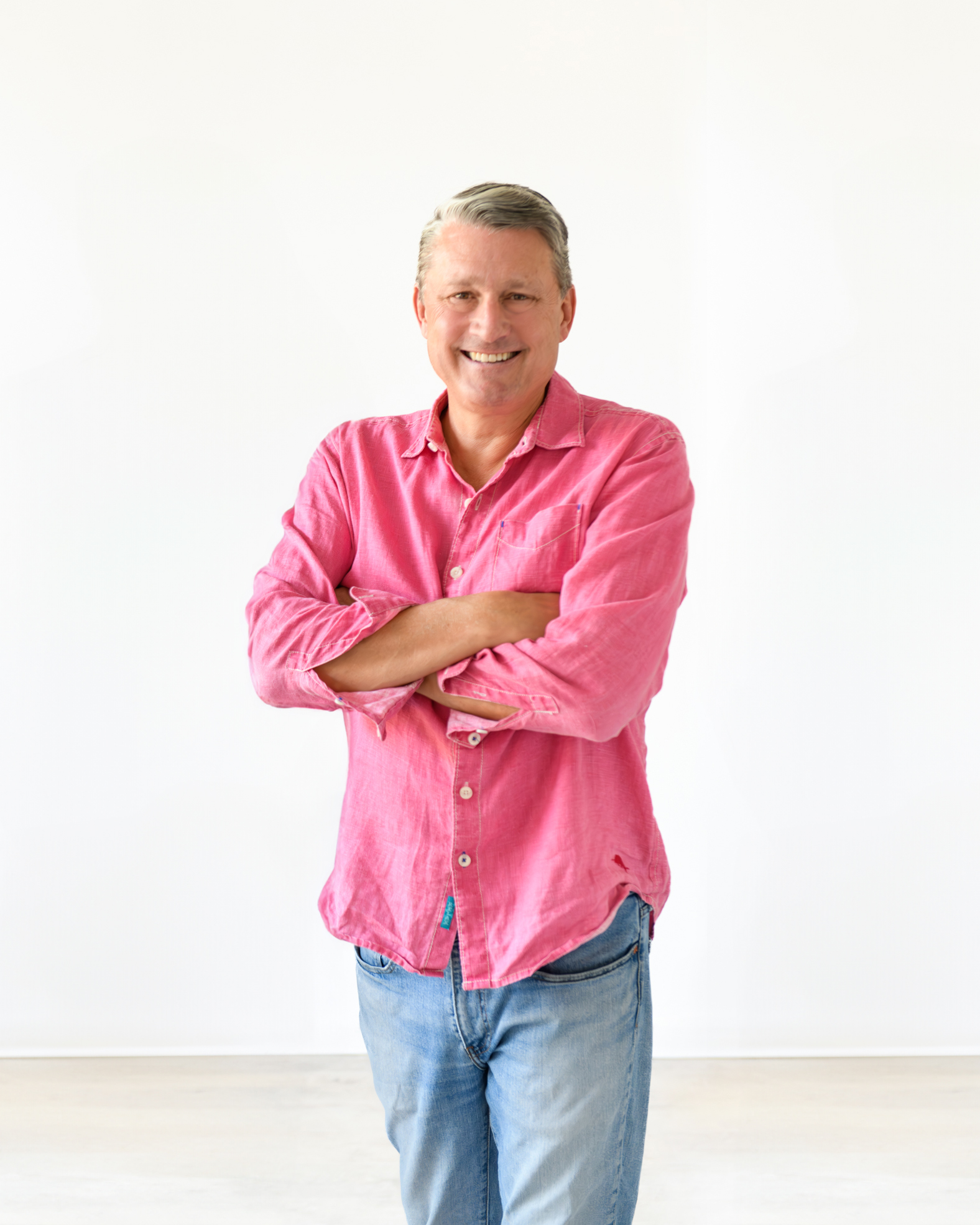
Founder / Author / Podcast Host
Adrian "AJ" Jones is a two-time widowmaker heart-attack survivor, former financial services executive, and founder of MORE®, a career wellness platform that helps accomplished professionals redefine success and live more fulfilling lives.
After 20+ years in high-pressure corporate leadership roles, AJ left it all behind to focus on what really matters: authenticity, purpose, and impact. He now hosts the podcast Code 3: Life. Reinvented., where he explores the wake-up calls that push us to build lives that feel as good on the inside as they look on the outside.
Through his work, AJ inspires others to turn crisis into clarity and to live with more courage, connection, and meaning.

