A Real Estate Leader Discovers Alignment Helping Agents with Joe Arnao

A career can look successful and still feel strangely unfamiliar. Joe Arno spent decades building in sales, real estate leadership, and recruiting, only to realize that the work he was doing no longer matched the life he wanted to live. After a move, a bout with cancer, and one too many “shiny new” opportunities that didn’t fix the underlying problem, the misalignment became impossible to ignore.


In this episode, we talk about the real pressures behind professional reinvention: the loneliness of entrepreneurship, the illusion that independence automatically brings balance, and the way industries like real estate can push people into moves that sound exciting but don’t fit. Joe breaks down a blind spot in traditional recruiting and revenue-share models: the company has representation, but the individual often doesn’t. That insight becomes the spark for his work as what he calls “the agent of the agent,” helping people slow down and choose a path based on what they actually need to thrive.
Joe also shares his 4W Strategic Identity Process framework for aligned decisions: who you are, what you need, where you thrive, and why you’re doing it. If you’re navigating a career pivot, burnout, or a nagging sense that your success is drifting, this conversation offers a grounded way to find clarity and build a path that feels like yours again. Subscribe, share with a friend who’s at a crossroads, and leave a review with the biggest “W” you’re thinking about right now.
Have questions, comments, or interest in being a guest? Leave me a voicemail!
00:00 - Welcome And The Big Question
01:31 - From Culinary School To Sales
04:43 - Why Real Estate Fit His Drive
07:55 - The Market Shift And A Hard Pivot
10:52 - Isolation As A Solo Owner
14:14 - Management Growth Then Another Ceiling
17:02 - Cancer Scare And Misalignment
19:48 - The Problem With Traditional Recruiting
23:24 - The Four W Framework
24:53 - Finding Community Through Masterminds
26:53 - Scaling The Work Beyond Real Estate
29:39 - Where To Find Joe And Closing
Welcome And The Big Question
Eric Dickmann
Welcome to Beyond Expertise, a podcast about identity reinvention for professionals ready to explore who they are beyond their job titles and careers. I'm your host, Eric Dickmann. Today, I'm excited to welcome Joe Arno Joe spent decades building a successful career in sales, real estate leadership, recruiting, and coaching. Along the way, he built businesses, led growth initiatives, and helped professionals advance their careers. But around 2019, a cancer scare forced him to reevaluate more than just his health. Although the diagnosis turned out to be treatable, the experience became a turning point. Joe returned to the same kind of work afterward, but something no longer felt aligned. He began to question whether the recruiting and leadership work he was doing was truly serving the people he was trying to help, or simply feeding a system that pushed professionals towards opportunity that genuinely didn't fit who they were. That realization eventually led to start his own firm helping people better understand who they are, what they need, where they thrive, and why it matters. Today, we explore how success can quietly drift out of alignment, what happens when a wake-up call changes your perspective, and why so many accomplished professionals end up building lives that no longer feel like their own. Let's get ready to go Beyond Expertise. Hey, Joe. Welcome to the podcast today. I'm so glad to have you on the show.
Joe Arnao
Thanks, Eric. It's a pleasure to be here.
Eric Dickmann
Every time, I do these episodes, I like to go all the way back to think about when you really started your professional journey, whether that was, out of high school, undergrad, graduate school, wherever that journey started. What did that look like for you? Did you start out focused on the real estate business way back then?
Joe Arnao
Not at all. Not at all. I was, I was destined to be a restaurateur when I first... Yeah. Yeah, I had the dream of opening up a restaurant. I spent, uh, two years in culinary school, two years in management school, and quickly realized that that business is kind of brutal and didn't really wanna spend my life doing that kind of work. Although I did get into food service management at colleges, Boston University, and I remember thinking I had made it at that point. Driving down the Riverway in Boston, singing with the tune,"The future's so bright I gotta wear shades."
Eric Dickmann
Right? Yep.
Joe Arnao
I'm like,"I made it." I was making$18,000 a year. Wooh. And, uh, so that went from management. I got itchy to go back in the kitchen. Went back in the kitchen, realized I like cooking and this isn't fun anymore. Went back into management and then finally realized I, I wanted to get out of that world and got into sales. I went to Eastman Kodak. Phenomenal, phenomenal training. Best, best sales training I, I think at, at the time, and then I went into real estate after a couple other sales positions. I got into real estate with my father-in-law, who's a developer, at the encouragement of my wife. Took me a while to figure out how I could go in there and help him, and once I figured that out, I opened up a brokerage inside his development company, found new deals for him, helped him sell his own deals,'cause he was, he was having somebody else do that. So I ended up bringing a brokerage inside and then that's where it all started into real estate
Eric Dickmann
So it sounds like along that path you had a lot of twists and turns. Were you encouraged by the progress that you were making at that point in life, or was it discouraging if you thought you were gonna be a restaurateur and then you had to go into sales? Or did it just feel like opportunities were opening up and unfolding in a very organic way?
Joe Arnao
Yes, absolutely. There was, it-- opportunities were popping up, uh, when I, when I was ready for'em, I was starting to see'em. I had to hunt for, for them. My first gig in real estate wasn't actually Eastman Kodak, it was in New York Life Insurance. Great company. Not me. Not me at all. It laid the path for me to be able to knock on doors and pick up the phone very easily after doing it for just six months and doing it hard and not feeling it at all.
Eric Dickmann
Hmm.
Joe Arnao
So it was great, a great, great curve. So I always had to look for the opportunities when I was ready for'em, and I took chances. I still, still do.
Eric Dickmann
What attracted you to the world of, real estate? I think we all have people in our networks that are somehow associated with real estate, whether they're on the broker side, whether they're an agent or on the commercial side. What attracted you to the field?
Joe Arnao
The ability to build something on my own terms. So I had the sales experience, I had an entrepreneurial bug through, through all of this, uh, and to be able to go in to, to build something and create, and not just build something for myself, but build something that's bigger than me. And that was, that was the big thing. It was a, it was a business decision, not just, uh,"Hey, this looks, this looks like it'll be fun," and I see all these people stand in front of their Mercedes-Benz on, uh... Well, there wasn't social media back then. It looks like big money. It wasn't that. It was,"Okay, I'm gonna build a business, and I can see how my skills can fit into this." The service, the sales, the, the freedom, it all, it all fit.
Eric Dickmann
When you look at the real estate business and everybody who's involved with that, you've got people who get a real estate license, right? And just do it as a part-time side hustle, all the way to people who take it incredibly seriously, build these big firms, and make a tremendous living off of it. That's got to be an interesting dynamic to work with such a broad range of people who have different goals and aspirations of what they want out of it.
Joe Arnao
A-absolutely, and that-that's, that's where my excitement comes in with this business. It's uncovering all those desires and dreams and the motivations of, of these people that are getting into this. Real estate is easy to get into. It's very difficult to survive in.
Eric Dickmann
Hmm.
Joe Arnao
So when I have somebody that is talking to somebody that got into it because they like houses or they like people, it-it's gonna be super challenging for them. There needs to be a bigger drive. There needs to be a business aptitude to be successful. There are many that are happy doing a deal or two a year. There are hobbyists. They're could be somewhat dangerous for their client because they're not in it so much. But there's a place for them. You know, they could do a deal or two a year, and then there are people that wanna build teams. Uh, they, they want people that wanna build their own brokerage, and there are some agents that wanna be on the team and, and follow somebody else and have somebody else take care of all the decisions, just go out and produce. It is something for everybody in the business, and that's the challenge when we look at the brokerages, how does one brokerage serve that many different people? And it's very difficult. There isn't one company that can serve them all.
Eric Dickmann
So continue with your story. So you left the sales world, went into the real estate world. Talk about how that progressed for you.
Isolation As A Solo Owner
Joe Arnao
Yeah, so 2-2006, Cape Cod, Massachusetts. We're in the, the, the Lakes region of New Hampshire, and we're on the coast of Rhode Island with projects, and we start to feel the market shift. Our product was a very low entry. It was-- We-- I used to call it popcorn. Uh, there was one weekend up in New Hampshire where I put 30 units under agreement from Wednesday night till Saturday morning, same weekend. So it was like popcorn. It was low end. It was easy entry. At the time, people had equity lines. They were throwing checks around, paying cash. It was, it was a blast. And then in, uh, 2006, we started to feel that slow down because our product price started to get closer to the downs- the downturning of the market. Prices started coming down to almost match us, and it wasn't worth it. Just started to slow down. The company started to falter. I saw the writing on the wall. Started my own firm in those three states to serve my father-in-law's product and another investor's, uh, properties and to develop gen-general brokerage as well. So that was a blast. That was exciting. And, you know, 2007, 2008, the timing could, could have maybe been worse, but I'm not too sure where that would've been Uh, so we rode that downward, and it was, it was a challenge. I was a listing agent. That's all I knew was how to sell properties. I didn't, didn't work the buyer side. Took me till 2009 when I was on a webinar, the light bulb went off, I was like,"I have to shift. I need to get into being a buyer's agent." Kicked into this program, and I started my recovery on Craigslist, believe it or not. Craigslist was, yeah, it was, it was... No one in my area was doing it. I stepped out of New Hampshire and Rhode Island, just focused on the Cape, Cape market because that's where it was more lively than the other two. And it started to, it started to kick in. I started doing different technology pieces that nobody else was doing, really on the edge of the internet, and it, it was really fun. Got to a point in probably March of 2010, things were starting to turn and get better, yet owning my own firm, and you talk to a lot of entrepreneurs, they're probably bigger than what I was at that point. I had three agents. They were producing at some level. I'm alone most of the time. I'm in my office, um, doing the books, I'm investigating tech, I'm keeping up with the website, all making the calls, doing all that, and I was so alone. It was isolating,
Eric Dickmann
Yeah.
Joe Arnao
and it was-- you talk about opportunities pop up when you're ready. My wife and I had a conversation. She's like,"Joe, you need, you need to get around more people.
Eric Dickmann
Yeah.
Joe Arnao
Maybe look at these other firms." And I was like,"You know, there's only a couple I would even consider." I went to the gym the next morning, and a agent that I know stepped up, and she's like,"Joe, what do you think about William Raveis?" I'm like,"Huh." And three months later, I joined that, joined that firm, took my team over, and I felt like I had lost.
Eric Dickmann
Oh, really?
Joe Arnao
Yeah, I felt like I just, I just failed at my firm.
Eric Dickmann
Hmm.
Joe Arnao
Took me years to realize it was just a shift in how I was running my business.
Eric Dickmann
Hmm.
Joe Arnao
And when I went over to that firm, my life changed dramatically because I didn't have to look into the tech, I didn't have to do the books. They're basically fronting all of that money that I was spending on a, on a monthly basis, and I didn't have to pay them until I got to the closing table, and they took it out of my commission So it was like this huge shift. My-- I got-- I, I was able to do what I loved to do at the time, and that was to sell, to build relationships, to grow my business instead of the nuts and bolts of running the business.
Eric Dickmann
I think it's very interesting what you said there because I talk to so many entrepreneurs and that's a common theme. It's that loneliness, it's that isolation where you are really the only one invested in your business there just isn't that other person who can really be that advocate, that, mentor to bounce ideas off of to see if you're really on the right track. And I think there's this desire on the part of a lot of people to have that independence, to have that work-life balance without really realizing that it can almost get out of whack more when you become independent because everything falls on you.
Joe Arnao
Yes. Yes. I speak with a lot of agents who aspire to go out on their own thinking it's gonna be easier'cause they can run everything their way. And yeah, they can, and they have to run everything their way. Everything,
Eric Dickmann
Yeah.
Joe Arnao
And that's the part that they don't always think through.
Eric Dickmann
Yeah, I chuckle a little bit because at one time I had my real estate license here in Florida, and there was a law change, that was going into effect that said you had to be practicing as an agent for three years before you could apply for a broker's license. So right before that happened, everybody was like,"Well, I got to get my broker's license now before that change goes into effect." I remember some of the instructors just saying,"You've been in the industry for a year. You're not ready to be a broker just yet." But, you know, people wanted to make that change because they thought that it was gonna be so much better on the other side.. So you're now working for this new firm. You've got the infrastructure to be able to support you. You're doing what you love, good at selling. What happened?
Joe Arnao
So my-- It's, it kind of goes back to that whole thing, food service, management, cooking. I had-- two sides of my brain weren't getting scratched. So I'm doing deals, but I'm not growing anything. I'm not, I'm not building other people, which is why I started my firm to begin with. I didn't wanna carry a bag and knock on doors the rest of my life. I wanted to build something bigger than me. So I approached management, my vice president, and said,"If there's any opportunities coming up in management, I'd like to be considered." And they were opening up an office on the Cape in Yarmouth, and she said,"If-- when that comes together, you can open it with us." So I got into that when that opened up, and that led to a few years later, I had five offices that I was operating From, if you knew Cape Cod, it's Chatham to Provincetown. So that was a lot of fun, and that, that was going well for a bit. And then I hit a ceiling again.
Eric Dickmann
Hmm.
Joe Arnao
is where it gets muddy. This is where, like, the real transformation started happening,'cause I didn't know what was going on. You know, I had that... I always have that itch every three years, I gotta do something different. And I wasn't at my three years yet, and I was getting itchy. I was confused. Uh, so I went to, I went to a coach, hired a coach to help me out. She's a high-end C-level coach, and she started to help me try to figure out what my next path would be, where I could go. Day one, I met her on a Friday in April 2021, and that's, that Monday my wife came home and was like,"Joe, you serious about wanting to move?" 90 days later we were in North Carolina.
Eric Dickmann
Wow, that's a big change.
Joe Arnao
Yeah. So that whole transformation, that whole what am I gonna do when I grow up, uh, led to a, a move and a couple more different risky moves that I made, to try to figure it all out.
Eric Dickmann
So you left that management position, you left that company, you packed up the house and, and moved to North Carolina?
Cancer Scare And Misalignment
Joe Arnao
No job. My wife had something lined up. I had, I had no job, and figured I would be able to do what I was doing up there here, which I did. That was fun. It was interesting. A, a boutique firm. Very, very, very cool model. Really dug it. Cancer came into the game. Um, quick bout of cancer. Luckily it wasn't anything that was going to take my life. So that was a fight I had to get through. Came out of that more lost. And, and then I got recruited to go to another firm, which shiny bells, good company, good people, great learning experience. Still from that same feeling I had way back, it was still with me, didn't, not feeling satisfied.
Eric Dickmann
Mm-hmm.
Joe Arnao
The, the shininess and the newness was good, and as soon as that wears off, it's like, okay, I'm still doing what I was doing back when I started feeling uncomfortable.
Eric Dickmann
See, that with so many people, right? It's always that next shiny thing that that's gonna solve my problem. There's this underlying feeling that something's w- not right, that something's out of alignment. But the next shiny thing, which is usually somewhere, closely tied to what you're doing today but maybe a little bit different, that's gonna solve the problem, but rarely does.
Joe Arnao
Correct. Correct. I wasn't getting to the root of what was-- where that misalignment was.
Eric Dickmann
You've got a coach now. You've, you've made the move. You're still feeling this misalignment. What was the, the aha moment where you really dug deep and, and found out what was out of alignment?
Joe Arnao
I didn't have a choice. The op- the job where I was, they shifted the way they were doing business, and they regionalized, and my position, which should never have been, disappeared.
Eric Dickmann
Hmm.
The Problem With Traditional Recruiting
Joe Arnao
Um, so I, I was out, I was done. I was like,"Okay, I'm gonna, I'm gonna shift into coaching." I love coaching, I loved recruiting. Those are my two favorite things that I loved about the business, and that journey was long, trying to figure that out. What-- To get to the point of, you know, what, what is it that was missing? So went into-- just jumped into, and then started coaching business. I had a few people that I was trying to recruit to that other company. One of them was a business owner of a brokerage, and he wanted to, he wanted to find his suc-successor. And I was like,"Mike, let me help you with that. Let me, let me go out. This is what I do. Let me go out and see if I can find that person for you." And in one of the conversat- one of the meetings I had with an agent that was-- they were talking about, I'm like,"I think I might have stumbled into something here."
Eric Dickmann
Hmm.
Joe Arnao
There's nobody representing the agent when it comes to making a move.
Eric Dickmann
Hmm.
Joe Arnao
It's always the recruiter. So here I am trying to match these two people up. In most situations in the real estate world, it's a recruiter trying to rip somebody out of one place into another, or a friend who is in a, uh, call it multi-level marketing type of play, where they get revenue share off of that agent, where they're trying to pull them in. And the agent never gets that opportunity to sit back and say,"What do I actually need?" And then from, from what you were saying earlier, chasing that shiny object, right?"Oh, I'm not doing well here. They're offering me this. That's gonna make everything better." And then they get there, and they didn't solve their problem. So through that is where I uncovered what was wrong, what was-- uh, what I was looking for. By looking at what I do for agents, I reversed it into my-- to what I was going through.
Eric Dickmann
That's so interesting because you'd had so much experience, right? On all sides of the equation in the real estate business, but you were uniquely positioned in a way to understand how agents can be successful if they only can get out of their own way and understand what it is that they really want in order to be successful and need to be successful and turn that into a business.
Joe Arnao
Yeah, and I couldn't see that problem myself, right? It's like the cobbler with the holes in his shoes.
Eric Dickmann
Yeah. Well, I think that's often true. I think we can easily see problems in other people sometimes before we can see them in ourselves.
Joe Arnao
Yeah. And that, that whole thing about the recruiting piece, uh, I wish I could find it back in years ago on, on LinkedIn, I, I wrote something about this being a huge industry problem because the recruiters and the people in the MLMs and the agents never take the time to actually figure out what, what the agent needs.
Eric Dickmann
Mm-hmm.
Joe Arnao
And that's where my misalignment was,'cause I was the guy calling in trying to rip people out.
Eric Dickmann
Mm-hmm.
Joe Arnao
And I found I cared more about the agent and making them successful than I did care about the company.
Eric Dickmann
Yes.
Joe Arnao
And I'm bringing people in sometimes where they were actually probably doing great where they are, and they just needed a coach or they just need a little tweak where they are. And I'm saying,"Oh, we can do better."
Eric Dickmann
Mm-hmm.
Joe Arnao
over and then some do fantastic, some don't. So I started-- That was, that was where I felt out of alignment'cause I wasn't working for the agent, I was working for the company.
Eric Dickmann
Now you really p-put together a business that's in the best interest of these agents.
Joe Arnao
Correct. Yeah. Now I'm the agent of the agent.
Eric Dickmann
Yeah. When I talk to people, oftentimes they know that they want to do something in service of other people. They want to build some sort of a business, whether it's consulting, whether it's coaching, whatever it may be. But that's a hard switch to flip overnight, right? There's a lot of groundwork that you have to put in place before somebody is willing to pay for those kinds of services. So share a little bit about, that process for you and how you fine-tune it. Did you build frameworks? Did you build formalized programs? How did you put all that together?
Joe Arnao
I spent a lot of time in coffee shops. Um, you know, we, we were talking before the show, we were talking about AI and how it sometimes can mislead you. Well, in this case, it was helping me take out of my brain and make sense out of it, right? And I spent a lot of time going through that. My model has changed a, a, a, a bit, quite a bit, especially the way about going, running the business. But yeah, it took, it took quite a while to figure out what it was, how I was gonna present it, and the formula to put it together, like you were saying. And it came up with the four W framework, which goes to back to the coaching, the training that I've had, and it's all about who you are, what you need, where you're gonna thrive, and why are you doing what you're doing.
Eric Dickmann
Mm-hmm.
Joe Arnao
Too many people don't take the time to figure that out. And so I've built everything around that framework, and everything comes out of that.
Eric Dickmann
I'm curious too because earlier in the conversation you talked about one of those early businesses and how you felt a little isolated and alone. Now you're back here again years later with another business that you've built on your own. Does it feel different this time, especially because of the types of people that you're working with and the interactions that you have?
Joe Arnao
So one of the Ws is where, where do, where do you thrive? And it doesn't necessarily mean what company you're with, it's who you hang around with. And I have been fortunate enough to meet some really stellar people who are very entrepreneurial, open-minded, vulnerable, willing to share, willing to help, and that has been the godsend. I would not, I would not be where I am without those people. And I just had a mastermind with several of them yesterday Uh, so that is huge. That is, that is-- I don't have that loneliness as much anymore because of them, because of that network.
Eric Dickmann
Yeah, when you're dealing with some of these people, do you see that same kind of characteristic in other people as well, that they're just longing for that sense of connection and community, even if they might be working for a firm of, 50 other agents?
Joe Arnao
Absolutely, and, and that's exactly the case. We have, you know, we have agents that are in big firms. We have, um, people in different businesses that are solo that are in the realm of real estate, mortgage lender. It's all kinds of different people and yeah, it is because they're forward-thinking, they're very entrepreneurial thinking. They could be in a crowd of, like you said, 50 people, and they're still working on their own thing, and they still need that wavelength from other people that's gonna help them continue to grow and, and, and see that they're not crazy.
Eric Dickmann
Mm.
Joe Arnao
Although they might be. Sometimes I still question that.
Scaling The Work Beyond Real Estate
Eric Dickmann
We all need a little crazy. Do you see your business today as being something that you wanna grow further to take it into new areas to open up new opportunities
Joe Arnao
oh, I'm just starting, and I have a long way to go. It, it's been... So the, my main focus of creating this opportunity for agents to be, to have somebody on their side is so new to the business. It's an educational gauntlet I have to get through, and trust. So that is like the North Star. And while I'm doing that, I've, I've picked up these other really cool opportunities that all dovetail together. So I have a long way to go to build that piece of it. And what I've realized working with the agents and speaking with my sphere, my, my other mentors, I'll call them, is what I do applies to any entrepreneur. So I have an attorney, solo ent- attorney, I've worked with insurance agents. The, the fundamental business of real estate matches a lot of other businesses. And more than that, the struggles of somebody that's trying to do something entrepreneurial, forward-thinking, something that's gonna set them apart from others, it's the same who, what, where, why.
Eric Dickmann
Mm-hmm.
Joe Arnao
Um, not when, where. Who, what, where, why. Um, it's the same thing. So it applies to just about anybody out there, and I'm building out a tool that will-- that does help anybody figure out their four Ws and what their next step can be. So it doesn't-- it'll, it is gonna be bigger than just real estate, or it already is.
Eric Dickmann
Well, that's exciting. I can see how this could apply to a lot of different industries. And as I think back to my own limited real estate career, I think about the roles that people play, right? You're a buyer's agent, you're a seller's agent, you're representing your broker, and you're here today representing those people that were always representing other people. And I think that's really an interesting model and an opportunity that I can see a lot of people benefiting from. I really can.
Joe Arnao
Well, that's-- I need some marketing people to help me out, get that message out, like we were talking about earlier. I need a mini you.
Where To Find Joe And Closing
Eric Dickmann
Well, let's get a little bit of that message out right now. I'd love it if you could just share with the audience where they could learn more about your program, where to find you, the channels that you're most active on.
Joe Arnao
Uh, the most active channel, and, and I think you get a really good view of, of who I am, is on LinkedIn. And it's just my name, Joe Arno. I have a video showing myself. It's all on real estate. I post articles, thoughts, everything on that. So that's probably the best spot to go to. And my website is fourwstrategicconsulting.com, if you wanted to see more and, and be able to sign up and get a free consult to see if we can work together.
Eric Dickmann
That's perfect, Joe. I'll make sure that we have all of that linked up in the show notes so that people can easily find you. I've really enjoyed this conversation. You took a lot of twists and turns in that career and ended up something that, you know, just in our conversation today, I can tell is really bringing you a lot of joy and fulfillment, and that's so exciting to see. So I really appreciate you sharing your story with our audience.
Joe Arnao
Thank you for the opportunity, Eric. Appreciate you.
Eric Dickmann
Thanks for listening to Beyond Expertise. You can find show notes, resources, and links mentioned during this episode at podcast.ericdickman.com. If this conversation resonated with you, I hope you'll join me again next time as we continue exploring what it means to reinvent ourselves beyond our careers, titles, and expertise.
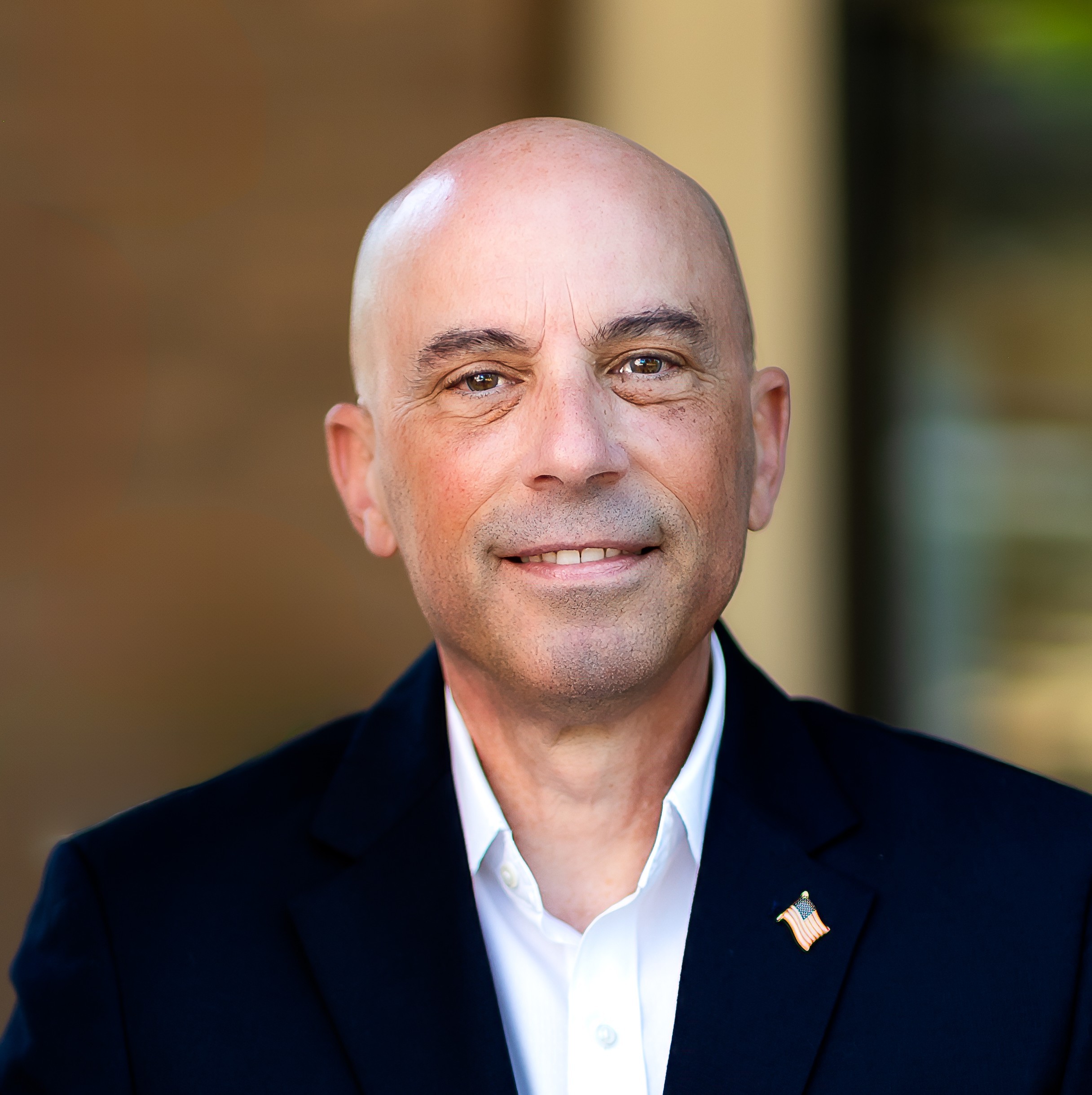
Alignment Strategist / Coach
Joe Arnao is an "alignment strategist" who helps professionals get clear on who they are, what they need, and where they truly thrive. He has created the 4W Strategic Identity Process, which guides people through a structured self-discovery and decision-making process to choose environments, roles, and paths that truly support their growth, fulfillment, and long-term success.
Joe helps professionals get clear on who they are, what they need, where they thrive, and why it matters, so they can stop chasing success that doesn’t fit and start building a path that actually aligns with them.
With decades of experience in real estate, coaching, and leadership, Joe has opened offices in multiple states, built an in-house brokerage, and helped individuals and organizations make more intentional, values-driven decisions. His approach blends strategy with self-discovery, giving people practical tools to create real clarity and momentum.

