From Corporate Communications to Purpose Driven Work with Ivonne Furneaux

Success can look flawless on LinkedIn while still feeling wrong in your body. That tension is exactly where my conversation with Yvonne Furneaux begins and where it gets most useful for anyone thinking about identity reinvention, career change, or a second chapter beyond a corporate title. Yvonne spent more than 25 years in corporate communications, employee experience, HR, and DEI leadership, and she shares what she learned from working within large systems that don’t treat everyone the same.


In this episode, we get into the messy realities professionals rarely say out loud: how layoffs actually land, why corporate loyalty keeps eroding, and what “humane” change management looks like when leaders put the employee experience at the center. Yvonne also talks about leaving Weight Watchers after leading through major disruption, then stepping into solopreneurship, where you’re no longer the voice of a company, you’re the voice of yourself. We unpack how she found her first consulting clients through her network and what it takes to reintroduce your expertise to people who only knew an earlier version of you.
Then we tackle the present moment: AI in the workplace, job insecurity, loneliness, and the DEI backlash. Yvonne offers a practical lens that cuts through politics while still improving workplace fairness, focusing on workplace identity: title, location, remote versus onsite, frontline versus corporate. She calls the invisible divides “ghost gaps” like the power gap, information gap, opportunity gap, and visibility gap, and explains how they quietly determine who thrives at work.
If you want clearer language for what you’ve been feeling and concrete ways to navigate systems that don’t always play fair, you’ll get a lot from this one. Subscribe, share this with a colleague, and leave a review so more people can find the show.
Have questions, comments, or interest in being a guest? Leave me a voicemail!
00:00 - Welcome And Why Identity Shifts
01:20 - From Journalism Dreams To Target
05:30 - Becoming An Employee Advocate
06:58 - Zigzags Through Industries And Chaos
10:50 - Corporate Loyalty And Humane Layoffs
14:35 - Leaving Weight Watchers For Independence
17:40 - First Clients And Rebuilding Credibility
20:50 - AI Anxiety And DEI Rollbacks
24:05 - Workplace Identity And The Ghost Gaps
28:50 - The Book Plan And How To Connect
Welcome And Why Identity Shifts
Eric Dickmann
Welcome to Beyond Expertise, a podcast about identity reinvention for professionals ready to explore who they are beyond their titles and careers. I'm your host, Eric Dickmann. Today, I'm excited to welcome Yvonne Furneaux to the podcast. Yvonne spent more than 25 years in corporate leadership roles helping shape communications, employee experience, and workplace culture. Along the way, she noticed a pattern that extended far beyond organizational charts and engagement surveys. People experiencing work very differently depending on where they sat, who they knew, and whether they had access to information and influence. Those experiences eventually led Yvonne to the broader realization that many professionals quietly feel disconnected, unseen, or out of alignment even while appearing successful on paper. Today, we talk about identity, reinvention, and what happens when the systems we work inside stop fitting and the hidden gaps that shape far more of our professional lives than we often realize. Let's get ready to go beyond expertise Yvonne, uh, welcome to the podcast. I'm so glad to have, uh, you on the show today.
Ivonne Furneaux
Thanks for having me.
Eric Dickmann
As I
From Journalism Dreams To Target
Eric Dickmann
normally do when I start these conversations, I really like to turn back the dial of time a bit and go all the way back to the beginning of your career, when you first started out, when you first entered that professional world. Did you start out where you wanted to? Tell me a little bit about your entrance into the professional world. What was that like?
Ivonne Furneaux
Sure. So I grew up a military brat, so I grew up living in a lot of different places. I decided pretty early on that I wanted to be a journalist, so in high school I was the editor of my school newspaper. I went to school for journalism, and I thought my dream was to become, like, this Pulitzer Prize-winning journalist. I was going to travel the world and go into war zones and speak truth to power and do all of those things. Um, and then after college, I ended up... Or during college, I ended up getting an internship at the office of Governor Jesse Ventura in the great state of Minnesota. Um, and so I started working in a PR office and seeing kind of the other side of things, you know, having been on the journalism side and then on the PR side. Also, side note, in high school I was a reporter for the Anchorage Daily News 'cause I went to high school and grew up in Alaska So that was what I thought my path was going to be, you know? And then after college, I realized, well, maybe I want a real job and not to be traveling all the time and getting paid pennies. Um, so I decided I was gonna go into corporate communications, and I ended up at Target. That was my first job out of college. I graduated from the University of Minnesota. Um, but my first job at Target was what was called a business analyst. It's the track to becoming a buyer. So my job was, like, knowing how many pairs of Jockey underwear size seven we had in store number 375 in Greenville, North Carolina, and making sure that we were constantly restocked. It was not the job for me, but I learned very quickly that when you get yourself into a large organization, you're able to kind of maneuver the ecosystem in a way that you can eventually land yourself in a good place. So I landed myself on the communications team after a while, and I was there for five years, and that was kind of what started my journey in corporate communications and HR from there on out.
Eric Dickmann
That's interesting that you had that vision when you were in school, made some fine-tuning to it, got into the corporate world. When you got in there, did you like the political environment? You said you saw a way to kind of navigate to where you wanted to be. Did-- Was that a game? Did you like that environment or not so much?
Ivonne Furneaux
It's interesting because I had no context for working in a corporate environment. You know, my mom and stepdad were both military, um, both in the Air Force. My biological father was a New York City taxi cab driver. Nobody in my family had worked in a corporate environment, so I didn't really have any context for what it was like. And I remember in those early years always feeling like I was dressing incorrectly. I didn't know how to be in meetings. Um, you know, somehow it felt like all the people around me had gone to Ivy League schools, and I was a, a gopher who got my journalism degree, so I always felt a little out of place. Um, I think what I saw, though, was the vast opportunity that exists in an organization of size, you know? Um, and I quickly learned how to meet the right people and apply for the right opportunities and raise my hand in the right ways. And part of that did come from my military upbringing of having to constantly adapt to new environments and meeting new people. So for me, it was like just figuring out what was the area of the company that I wanted to work in, meeting those people. You know, you can email anyb- anybody can email the CEO if you work in a big company, you know? You can email anybody. So it was just, you know, "Hey, I, I'm interested in, in learning more about this," or, "Could we meet and have some coffee? And I would love to hear more about the work you're doing on your team." So I just started early on figuring out how to internally network in the context of a big organization.
Becoming An Employee Advocate
Eric Dickmann
How did you handle the change from being a bright-eyed journalism student who was going to, uncover the wrongs in this world to being in a corporate environment where you kind of have to toe the party line and, you know, speak in the voice of the company? Was that hard to do, restrain yourself a bit?
Ivonne Furneaux
It was a little bit difficult, if I'm being honest, in the beginning. But I was able to think of myself as an advocate for employees. So, you know, a good, a good journalist is thinking of themselves as an advocate for the public. They wanna bring the truth to the public, right? And I saw my role in communications, particularly in internal communications similarly, where I could be the voice of employees, and I could be an advocate for employees. Because employees, especially in big organizations, they're often kind of the, the last stakeholders on the list of important people, right? It's the customers or the shareholders. Those all come first. It's often the employees who are the last to know. So I kinda made it my mission to make sure employees were the first to know, they were the first people to be considered, that when we were having some big changes in an organization, how is this going to affect employees? So I started to see my role as doing advocacy on behalf of the employee population, and in that way, I was really able to channel that journalistic instinct into the corporate comms world.
Eric Dickmann
So you started at Target and obviously progressed from there. Tell me a little bit about that journey, about how you continued on in, in corporate communications
Zigzags Through Industries And Chaos
Ivonne Furneaux
Yeah. So my journey was a long and winding road that took some strange turns along the way, but, um, I went on to work in manufacturing and real estate and all kinds of different industries doing communications. Um, and then I also started taking on HR-related work, employee engagement, um, employee experience, things like that. I worked for companies from Redbox to OfficeMax to Anywhere Real Estate, which is the parent company of Coldwell Banker and Century 21. Um, so my, my career just kind of crossed all these zigzags Over time, I also became really interested in doing diversity, equity, and inclusion work. I was doing DEI before we called it DEI, before it was cool to do DEI, before it was not cool to d- do DEI. So I also started taking on a lot of that work in different organizations, leading employee resource groups. Um, I did DEI as my sole role working for UnitedHealth Group. I was a chief diversity officer when I was at Anywhere Real Estate. I finally landed... My last corporate role was at Weight Watchers, where I was a VP on the HR team, overseeing all of those things, comms, DEI, social impact, and employee experience. So it was a great role, really culminating my entire career's work. But part of the reason I jumped around so much, sometimes it was because I was forging my own path and wanting to find something new or bigger for myself. I was also a single parent for many of those years, so I was always in a pursuit to kind of better my life, not just for myself, but for my son. Um, but along the way, I also encountered a lot of these massive corporate shifts that people fall victim to all the time, massive layoffs, a merger or acquisition, a corporate relocation. You know, three times in my career, I was asked to pick up and relocate because the headquarters was moving from one state to another. I didn't do it twice, and I did do it once. Um, so it was this constant, um, state of, of change and chaos that was happening in various organizations, and I was always at the center of it, being impacted by it in some way, either having to lead through it from a comms and HR perspective, or like being impacted from it by actually having to make a big decision in my life and in my career. So that's how I ended up kind of working across all different industries and spaces. But ultimately, it ended up being a blessing because it gave me a really wide range of experience that I can learn from now.
Eric Dickmann
Did it feel like that at the time? It sounds chaotic.
Ivonne Furneaux
No. It doesn't feel like that at the time at all, you know? Um, I, you know, I got laid off 18 years ago, I recall, and, you know, again, I was a, I was a single parent. I couldn't afford to just be without a paycheck, you know? I ended up taking a role that was a lateral move. It was at a better company ultimately, but, you know, at the time, in those moments, it feels really, really difficult, you know? And then I'm with the company for a year, and hey, guess what? We're going to have this big merger happening, and I'm like, "Okay, here we go again." Um, from a professional perspective, I-- though, I learned to really, um, enjoy those moments of being able to lead through chaos and crisis. I think it was where I had an opportunity to really shine, and again, it was my opportunity to really be an advocate for employees to think about how are we enacting this massive change, but still keeping, uh, humans at the center of it and really understanding the impact it's going to have on people.
Eric Dickmann
When I hear your story about the chaos, moving around a lot, the layoffs, moving because of corporate headquarter changes it sounds frustrating, and I hear that from a lot of people, and we wonder why corporate loyalty isn't quite what it used to be, right? It doesn't feel like employees are treated as
Corporate Loyalty And Humane Layoffs
Eric Dickmann
assets maybe the way they once were. Do you feel that way?
Ivonne Furneaux
I, I do feel that way, and it's hard not to take these things personally. You know, when you're being impacted by them, it's hard not to feel like, oh, the corporations are evil or whatever. Um, but I also, over time, learned to be pretty pragmatic about it, and you ultimately understand, like, big companies, big organizations exist with the purpose of, of making profit. You know, if you want to work in an organization that doesn't exist for that purpose, then a corporation is not for you. Then you should go work in nonprofit or work for yourself or do something creative in the arts or something. Um, so we have to just be pragmatic about the reality that, you know, this is the construct of organizations that are built for profit, that are built with a hierarchy, that inherently have disparity and, and unfairness built into the system. So we can choose to fight it, which we should often, especially when things are really unfair. We, we also can learn to navigate it and just accept that the workplace isn't fair. We're gonna get over it, and we're gonna figure out how to navigate our way through it and still be successful, and that means having loyalty to yourself, and I think that's okay.
Eric Dickmann
Yeah, when I hear things like layoffs, workforce reductions, downsizing, all words for basically the same thing, you rarely hear about somebody who says Oh, but they handled it really well at my company. Do you think it's possible to handle that really well, or it's such an emotionally charged event that almost nothing you could do would make it more palatable to the person who's being laid off?
Ivonne Furneaux
I, I actually do think there's a way to handle it well, and again, it's by putting the human experience at the center. Um, you know, uh, 18 years ago when I got laid off, I was-- my entire office was literally called into a conference room. We were standing around a table over a speakerphone, and a voice from somebody we'd never met in another country told us that when we left the room, we would have an email, and if we had an email, it meant it was our last day. If we didn't have an email, then we could stay. It was the most inhumane thing I could imagine. I still, it, it... I still have, like, PTSD just thinking about it. I still will always have a negative perception of that company. Years later, corporate relocation happens. A bunch of people are going to be displaced at the company I was working for. But we told people about a year in advance. We offered really generous relocation packages. We're talking like half a year's salary if you wanted to move, plus all the relocation costs. Um, we were moving from here in Chicago down to Mobile, Alabama. I brought the mayor of Mobile, Alabama, here to talk to our employees. I brought real estate agents from here. We sent people down on exploratory trips to explore the new community and look at schools and look at where they would be living and the office that they would be working in. Um, and the people who decided not to stay, we gave very generous severance to, beyond the usual one or two weeks per year, um, that a lot of companies offer. So I do think that there are humane ways to handle these things when you set people up with a, a runway that takes into consideration the major shift that they are going to have to make in their life, whether it's moving or finding another job.
Eric Dickmann
Yeah, that's encouraging to hear because you hear more bad stories than good stories. But it's good to know that there are at least a few good stories out there, because like you said, it's a corporate world. They have a strong profit motive, and sometimes layoffs or downsizings are part of that. But eventually, in your story, you got to Weight Watchers and then decided not to zig or zag again in the corporate world and decided to do something else. What was the impetus for
Leaving Weight Watchers For Independence
Eric Dickmann
you really saying, "Not gonna do another one of these corporate gigs"?
Ivonne Furneaux
Yeah. So, um, I blame Oprah Winfrey, and I thank Oprah Winfrey for the next chapter in my life. Um, at Weight Watchers, you know, Oprah was on the board for a long time, and after she left the board of directors and with the onset of GLP-1s, it was kind of a difficult time for the company. And, um, the company made the decision to lay off about half of leadership, which was like VPs and up, which I was at the time. So I had to stick around and run my own layoff at that point. But by this point in my career, again, I had a very pragmatic view on it. No hard feelings. I get it. I'm gonna do what I'm here to do. I'm gonna make sure that employees are at the center, and we handle it the best way we can. Um, so that was how I ended up leaving Weight Watchers. Um, and I took some time to really think about what it was I wanted to do. And throughout my career, I had been the voice of a lot of companies. I had put words in a lot of CEOs' mouths for them to say on stages. And then I had been on a lot of stages myself, you know, especially when during my years as a chief diversity officer doing the industry circuits and speaking at conferences and things. And for a long time, I had thought that that was something that I wanted to, to do. I wanted to make that venture into solopreneurship. And my, my husband had done it for many years. He owned, um, a landscaping company, and then he became a real estate agent. And I always felt like, "Hey, I'm over here having to work, and you're getting to explore all these things." So I was like, "You know what? It's finally my turn. It's my turn to do this." Um, and luckily we were blessed at this point in our life that I could take some time to really figure out what it was I wanted to do. I wasn't in that same, um, place I was 18 years ago, where I had to just take the next job because I have a family to support. So thankfully, I have, you know, a different support system now that enabled me to think about, um, you know, taking this new journey on my own and being a voice for myself, that, rather than a voice for other companies. Um, it's been really empowering to do that because, like you said earlier, when you're in the context of an organization, you don't always have the freedom to, to speak as freely or to say the hard things, you know? Um, and there's something really empowering coming in as, as an outsider, as a consultant or a speaker, and being able to speak hard truths that I think are important to say. So, um, I've really kind of embraced that aspect of my new journey now.
Eric Dickmann
How great that you were able to have that period where you could reflect and think about what it is that you really wanted to do. And what I find with so many guests that I speak with is that their next chapter in life usually is related to the previous one, but in a different way, more empowered, doing what they really wanted to do with the skills that they've developed over time. And what I'm always curious about is you've made the decision now to go off on your own, to start your own business, to forge your own path, and you've had these six months of reflection. So
First Clients And Rebuilding Credibility
Eric Dickmann
I'm sure you built a website, you got your domain, you
Ivonne Furneaux
Yeah.
Eric Dickmann
got a new email account, you're sitting in front of your computer. How did you get those first clients?
Ivonne Furneaux
Oh, well, you know, I thought that the clients were just gonna come raining down from the sky the minute I decided that I was gonna venture on my own, and strangely, it just did not happen that way. Um, um, but I got my first few clients really through leveraging my network that I had built over time. Um, you know, I, I'm not a cold caller necessarily, so, uh, and I had built up a lot of great connections and relationships over the years since I'd worked in so many different industries. And, um, so yeah, I just really relied on the power of my network to get, get my momentum there in the beginning. Uh, and it's, it's not an easy path, as you know. You know, it's a completely different- skill set. Um, it's, it's operating in a different way than I was used to from having been in the corporate world for so long. So it feels like I'm still constantly learning and growing, and there are still days when I'm like, "You know what? Screw this. I'm just gonna go bake croissants at the local bakery and call it a day." And, um- Yeah but, you know, you just keep going and, uh, you know, there are constantly things you can be doing too to build your business and your brand, as you know. It's like, do I spend my time doing a podcast or doing LinkedIn posts or doing videos, or now I'm working on a book and, you know, I have a speaker reel now. So it, it almost feels like I went from working 40 hours a week to working 24/7, which I'm sure you hear all the time.
Eric Dickmann
Absolutely. And I'm curious too, because it's a fairly usual path, right? That people get some of their early clients from their close network, and then that kind of fades over time, and you really have to develop clients, from scratch, if you will. But, uh, as you engage with those people who you had worked with or worked for in the past, how did that feel? Was the relationship dynamic different because now you're outside the corporate structure dealing with those people who were inside the corporate structure? Did it feel different?
Ivonne Furneaux
It, it did feel different. For some, with some relationships it felt very easy and natural, and they were like, they knew my level of expertise and it was like, "Yes, let's bring you in for X, Y, and Z." For other people, they knew me in a different context 15 years ago than what I'm operating in today. You know, my s- my skill set was different 20 years ago than it is today. They knew me as a communications coordinator just starting my career. How can they possibly see me as a senior consultant that can come in and talk to CEOs? So, um, it's almost like reintroducing myself to people I already know and having to, um, kind of sell my, my depth and breadth of knowledge that I've earned and gained in the years since we've worked together. Um, so it is really different. It's kind of like this reintroduction to some folks. But it's been really fun too, like reconnecting with people I hadn't talked to in 15 or 20 years, just to... Not to sell them on anything, just to, to reconnect and hear how people's lives have changed or what paths they took. Um, you know, some people may still be working at the same company that I worked with them 20 years ago at. So it's been interesting that way too to connect with
AI Anxiety And DEI Rollbacks
Ivonne Furneaux
folks.
Eric Dickmann
You mentioned earlier that you participated in some DEI initiatives, and that certainly was in favor or gone out of favor a little bit. And now we're in this era of AI. You may have seen the viral clip recently of a keynote speaker at a graduation getting booed because she was talking about the AI revolution. And it seems like workplace stress is up, loneliness is up, isolation is up. A lot of factors that are making it tough for people in the corporate workplace to really thrive. As you deal with your clients and speak and, and consult, are you hearing this? What are the challenges that you're seeing these companies facing?
Ivonne Furneaux
Oh, yeah. I mean, the advent of AI has just feels like it just blew up overnight, right? And so, um, employees are feeling disconnected, employees are feeling lonely. They're worried that they're going to lose their job to AI. Um, companies meanwhile, are like, "We're just gonna invest, invest, invest in AI," without really taking the time to think about the impact it's going to have. You know, I have my own concerns around, you know, the folks building the AI aren't necessarily unbiased themselves, so they're... It's you're getting a biased result when you're asking it for information. So then you layer that with what's been happening with the rollback of DEI initiatives, and a lot of folks are feeling confused about how do we move forward while still trying to support certain populations in our employee base, or to try to still drive fairness across the workplace. So these are common themes I'm hearing everywhere I go. Everyone I talk to, big organizations, small organizations, associations, corporations, you name it, they're all dealing with these things like, how do we, how do we maintain human connection right now? How do we support employees fairly right now? Um, it seems like every keynote speaker now is a blank topic in the age of AI, right?
Eric Dickmann
Right.
Ivonne Furneaux
XYZ in the age of AI. So it's like all anyone can talk about right now. Um, but it... And it does seem... I'm Gen X. You know, I, I won't ask your age, but it... I just read recently that Gen Xers are like the best and biggest earliest adopters of AI right now, which I found really interesting. And the resistance is coming more from like the Gen Z, who are seeing like they, they have a negative perception of it already because they're, they're seeing that it's impacting the job market. And, um, so that's interesting too to see the generational differences that are at play in and out of the workplace in their response to how AI is being adopted. But when I go in and talk to organizations specifically about the diversity, equity, and inclusion state of today, um, what I've been telling folks is to think about instead of thinking about our core identity, like race and gender and orientation, which are Unfortunately hot button topics right now. I want them to think about people's identity in the workplace, and what I mean by that is what title they have, what location they're in, whether they're remote,
Workplace Identity And The Ghost Gaps
Ivonne Furneaux
whether they work hourly or salaried, if they're on the front lines or in a corporate office. All of those things determine kind of our identity in the workplace, and they completely determine how we experience the workplace. You know, the corporate worker in finance is going to experience the same company very differently than the person who works on the front line making the widget. So when we start to think about what are the disparities that exist between these boxes that we put people in at work, you start to uncover a lot of areas where there's, um, imbalance in your workplace that you can address because it's, it's systemic or it's something that your organization has created, and it has nothing to do with who people are, and it has everything to do with who they know or where they sit or what they do. So y- if you can take that lens through which to view fairness in the workplace, it removes some of the hot button politics, but still gets you to a place where you're going to build a more fair and equitable workplace in the end.
Eric Dickmann
That makes a lot of sense to me, and I think it's still a very valuable conversation to have. When I started this podcast, the concept was really to dig into people's second chapters when they built a backlog of experience through their years working, and then they decide to take that experience and potentially do something else with it, very much like what we're talking about today. But I'm also seeing that there are a lot of younger people that their second chapter is more like a pamphlet, uh, instead of a book, right? Because they are thinking of exiting the corporate world much earlier. They don't see that as a long-term home to build those years of experience, to do the zigging and zagging. And they are just going out on their own and trying to figure out, "How can I do this without really building that bank of experience?" Do you see that a lot too, where people in the workplace are just wondering if the corporate world is for them at all?
Ivonne Furneaux
Oh, yeah, and I, I felt that myself. You know, I was in it for so long, and now being out of it, I don't know that I could go back to it. You know, you, you see the, the toxicity and the politics of those environments. I do believe that they can be better, um, but I also completely understand people just not wanting to participate in it at all. Like, why would I go be part of that when I, again, I could go bake croissants at the local bakery and make people smile, um, every day? So it's... I'm see- I am seeing that a lot, and I completely understand and recognize it, and that should really be a wake-up call for corporate America to think about how do we create workplaces that are more fulfilling and welcoming and, um, centered on, on purpose and people versus just profit.
Eric Dickmann
And so is that where you feel you've landed today, that you're much more in alignment with your own values, your own purpose? Do you feel like the zigging and zagging is over?
Ivonne Furneaux
Yeah. I, well, I don't know if it's over. You know, I think I'm much more in alignment with my purpose and my stage in life. Y- I would love to be more aligned with my pocketbook in the way I was before in the corporate world, but that will come in time. You know? I, I think that's the struggle all entrepreneurs have in the beginning, right? Is like, how do I, how do I do this in a sustainable way, um, that's going to fulfill my life? But one of the things that I thought about embarking on this journey was really, like, what do I wanna get out of this? Is it for financial gain? Is it for freedom? Is it for flexibility? Um, is it for the mission? And for me, the, after being corporate for 25 years, the financial aspect of it just, I realized, was less important for me at this stage in my life. And that's a, that's... I understand that's a position of privilege to be able to, to, to do that and say that. Um, but for me, the idea of having the, the freedom and flexibility and being able to do what I focus on, what I really, really enjoy doing is, uh, where I am right now. Now, if the right opportunity came along, if somebody called me after this podcast and said, "You know what? We have this great role at X, Y, Z," I would certainly have that conversation, but it would have to be the right thing for me.
Eric Dickmann
Mm. And you mentioned earlier that you're toying with the idea of writing a book. Have you started? Is this going to be in line-- Oh, h- is it gonna be in line with your work, or is it something totally different?
Ivonne Furneaux
No. Although I, I, I've started on two books. One is an erotic fiction novel. We can talk about that on a different podcast. One one is my nonfiction book that really talks more about my, my IP and my body of work. Um, so, you know, I've got about 100 pages in, and I'm working with a, um, somebody to help me get that finished and published. So I'm hoping that by fall I have that out. And now that I've said it in a recorded format, I am going to
The Book Plan And How To Connect
Ivonne Furneaux
bind myself to having it out by the fall, right?
Eric Dickmann
That's right. You've got some virtual accountability
Ivonne Furneaux
have virtual accountability. But my, my concept for the book is about what I go out and talk about, which is what I call the ghost gaps, and they're these invisible divides in every workplace, um, like the power gap, and the information gap, and the opportunity gap, and the visibility gap, and all of those things kinda shape how workplaces thrive or don't. Um, so that's what my book is about, and you'll be reading it in the fall.
Eric Dickmann
That's exciting. Congratulations on starting that project. I wish I could do that myself, but it's a real accomplishment to get one published and a great way to get a lot of things that are inside your head out onto paper. And I'm curious, you've got such a great mission helping these companies. If people wanna find out more about you, getting you, into one of their events to speak, uh, where can they find more about you?
Ivonne Furneaux
Yeah. So you can find me at yvonnefourneaux.com. You can connect with me on LinkedIn. If your organization is more interested in consulting, uh, my firm is called EmpowerUp Consulting, empowerupconsulting.com. You can also find me on YouTube, uh, at Yvonne Fourneaux, and on Instagram at Yvonne in Real Life.
Eric Dickmann
Ivan, this has been great. I've really enjoyed the discussion, and I'll make sure that all of that is linked up in the show notes so that people can find you. But I really appreciate your perspective here. I think so many of us who have been in that corporate environment really understand where you're coming from and the value that you can add, so I, I've really appreciated hearing your perspective.
Ivonne Furneaux
Thanks so much for having me, Eric.
Eric Dickmann
Thanks for listening to Beyond Expertise. You can find show notes, resources, and links mentioned during this episode at podcast.ericdickman.com. If this conversation resonated with you, I hope you'll join me again next time as we continue exploring what it means to reinvent ourselves beyond our careers, titles, and expertise.
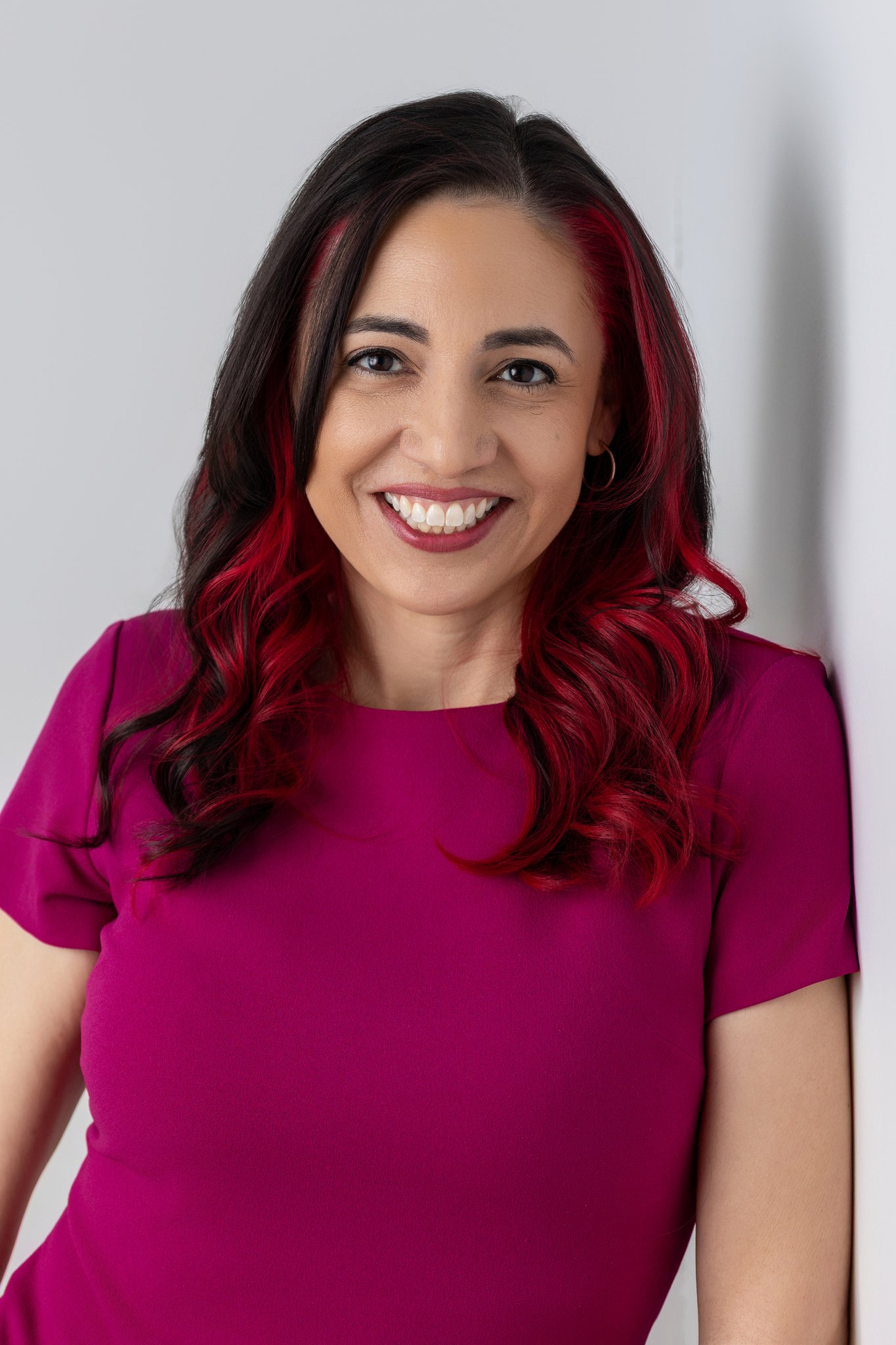
Workplace Strategist
Ivonne Furneaux is a reformed corporate exec turned speaker and consultant focused on building better workplaces. With deep expertise in organizational change, corporate culture, and communications, she founded emPower Up Consulting in 2025 after decades spent leading communications, employee experience, and diversity, equity & inclusion for world-renowned brands including Target, UnitedHealth Group, WeightWatchers, OfficeMax, and Anywhere Real Estate.

