When "Successful" Isn't the Same as Fulfilled: Adrian Jones on Career Reinvention and Authentic Alignment

There's a quiet crisis hiding in many high-achieving careers. The title is impressive. The compensation is solid. The calendar is full. And yet something feels off. A low-grade hum of disconnection that's easy to drown out with busyness, caffeine, and the next professional milestone.
For Adrian "AJ" Jones, that hum eventually became impossible to ignore, not because of a performance review or a layoff, but because his heart stopped while he was riding on a mountain bike trail in Marin County.
AJ joins host Eric Dickmann on Beyond Expertise to tell a story that is part cautionary tale, part comeback, and ultimately a compelling case for why career reinvention isn't just a lifestyle choice; it may be a health strategy.
A Career Built on Adaptability and a Dream Deferred
AJ didn't set out to spend two decades in financial services. He studied international relations at Occidental College, spent time on a bond desk in Brussels, and had his sights set on diplomacy, a master's degree from the Kennedy School, and a life lived across international borders.
Then life intervened. A work permit issue in Belgium, a couch at a friend's apartment in San Francisco, and a job offer that leveraged his brief finance experience launched him into a career he hadn't exactly chosen. He earned his MBA at UCLA Anderson, worked at Wells Fargo, Deloitte, Barclays Global Investors, BlackRock, and eventually Schwab, building an impressive career ladder while quietly watching the international path he'd wanted gradually close off.
The adaptability that made him successful also made it easy to keep going, to optimize, perform, and achieve, without ever stopping to ask whether the direction was right.
This is a pattern worth naming, especially for Gen X professionals navigating midlife career reflection. When you're good at something, and when that something comes with stability and reward, it's remarkably easy to mistake momentum for meaning.
The Wake-Up Call No One Wants
On a Saturday morning ride in Marin County, the birthplace of mountain biking, AJ's legs gave out on a steep climb. Within minutes, he was nauseous, lightheaded, and experiencing chest pain. He was having a widowmaker heart attack: a full occlusion of the left anterior descending artery, one of the most lethal cardiac events a person can experience.
He survived. He spent four months on leave, staring at the ceiling, asking the question that would reframe everything: Why did I survive, and what am I supposed to do with this second chance?
The answer came in what he describes as a lightning bolt moment: Use your story to help and inspire others.
He didn't know what that meant yet. But he signed up anyway.
The Hidden Cost of Staying Safe
What happened next is the most relatable part of AJ's story for anyone who has ever stood at the edge of a career transition and stepped back.
He went back to work.
Not because he wanted to. Because it was familiar. Because he knew the regulations, the rhythms, and the reward structures of financial services. Because the safe choice felt like the rational one.
Over the next five years, he dabbled on the edges of his calling, anonymous blogging, a podcast, talks for the American Heart Association, while keeping his paycheck rooted in wealth management. The gap between his authentic truth and his daily reality grew wider.
His body noticed before his mind fully did. Stress-related nausea. Insomnia. Anxiety that required medication. Getting out of bed each morning became an act of will. He describes feeling trapped, not by anyone else's expectations, but by identity, money fear, and the sheer momentum of a life already in motion.
This is what the neuroscience of misalignment suggests is actually happening: when your daily actions consistently conflict with your core values, the nervous system can interpret the "safe" choice as an ongoing threat. The comfort isn't comfortable at all. It just looks that way from the outside.
His wife could see what he couldn't fully admit: "This job is not worth it. Your life is."
When the firm he'd joined was acquired, and he was laid off, he smiled—relief, not devastation.
The Second Heart Attack That Clarified Everything
In April 2024, three months after launching his new company, More, AJ came home from the gym to an empty house and had a second widowmaker heart attack.
He called 911, knew the symptoms, and had lights and sirens at his door in under four minutes. Another stent. Another hospital stay. Another forced reckoning.
His cardiologist told him to retire. AJ respectfully disagreed. Two widowmaker events, against the odds of survival on both, felt less like bad luck and more like a mandate. He had unfinished business.
What the second event provided wasn't just urgency; it was clarity about what More was actually meant to be.
Reinvention Takes Iteration
AJ is honest about the messy middle of building something new. More launched as a broad community for Gen Xers who wanted more out of life, pivoted to a career wellness platform, and eventually landed, after a mastermind workshop in New Orleans, surfaced a critical piece of feedback on its current focus: alignment.
Not wellness as a category. Not career coaching as a service. But the specific, science-backed work of helping accomplished professionals align what they do with who they fundamentally are.
More now has a PhD in psychology and neuroscience on staff, a methodology AJ built into his forthcoming book Powered by Authenticity, and a growing body of research connecting alignment with measurable health outcomes. The finding that stands out most is that when people are aligned with their purpose, all-cause morbidity risk goes down. Cardiovascular risk goes down. Research from Japan, one of the world's longevity blue zones, points in the same direction.
Career reinvention, in other words, isn't just about feeling better at work. It may be one of the most consequential health decisions a person can make.
What This Episode Is Really About
On the surface, this is a story about surviving heart attacks and leaving financial services. But the deeper theme runs through every episode of Beyond Expertise: the difference between a life built on what you're capable of and one built on who you actually are.
AJ's journey, from diplomat-in-training to financial executive to founder, traces the long arc of a person seeking the intersection of skill, identity, and meaning. The heart attacks were the interruptions that made that search impossible to defer any longer.
For anyone currently navigating burnout, a career plateau, or the quiet suspicion that their professional identity has drifted away from their actual self, AJ's story offers more than inspiration: a framework. Alignment isn't a destination you arrive at once. It's something you iterate toward, with honesty, support, and a willingness to be wrong on the way.
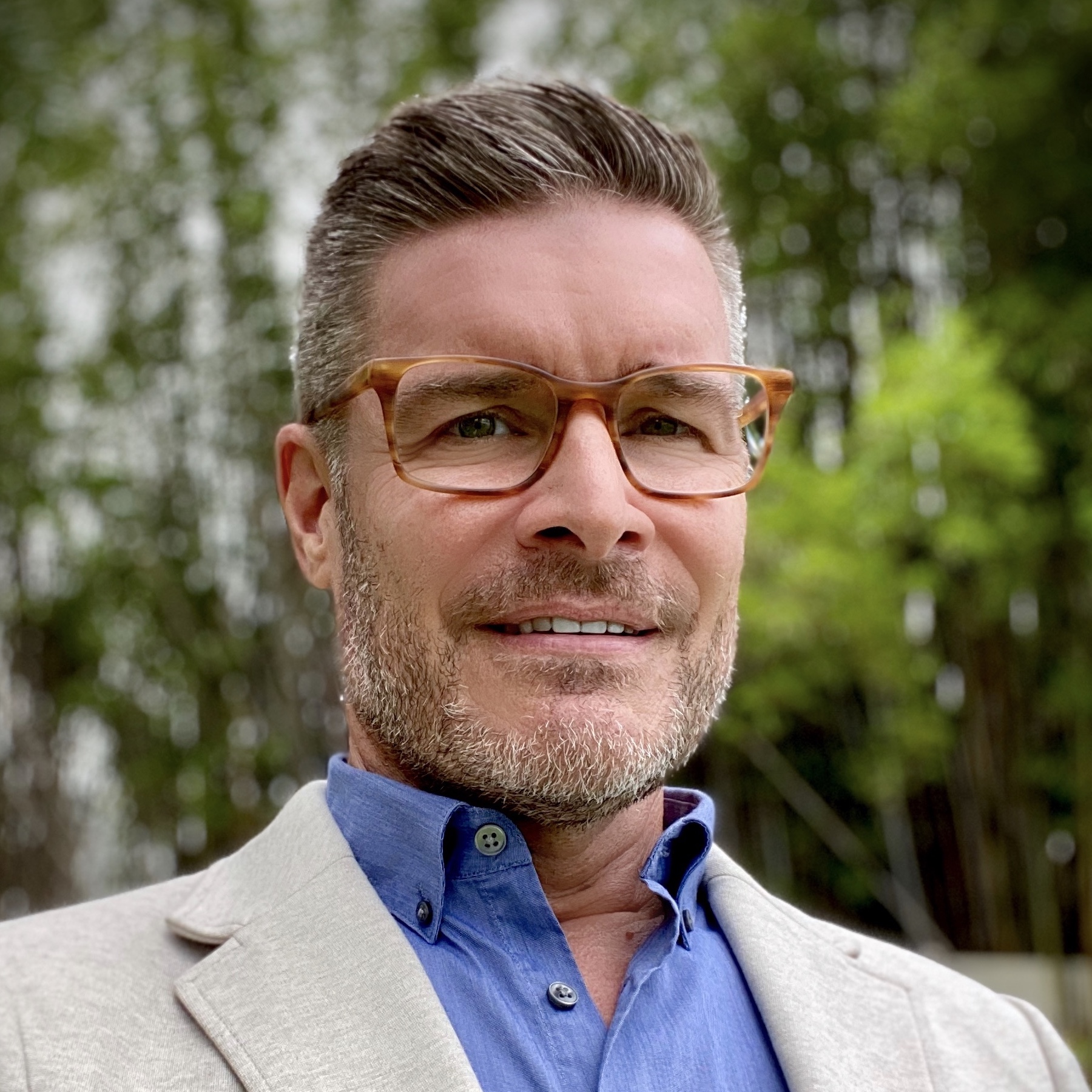
Host | Fractional CMO
Eric Dickmann is a former corporate executive who built a successful second chapter as an entrepreneur, fractional CMO, and podcast host. After years of leading marketing, product, and growth initiatives for organizations ranging from Fortune 500 companies to emerging startups, he made the leap from corporate leadership to building his own consulting business to help B2B companies grow through strategic marketing leadership.
As the host of The Virtual CMO, Eric has published more than 130 episodes featuring marketing leaders, founders, and growth experts. Through those conversations, he noticed a deeper theme that extended far beyond business strategy: many successful professionals eventually reach a point where they begin asking what comes next when titles, roles, and career identity no longer feel like the full story.
That realization inspired him to launch Beyond Expertise, a show exploring reinvention, relevance, confidence, and building a meaningful next chapter in midlife and beyond. Eric brings a rare mix of executive experience, entrepreneurial perspective, and personal honesty about navigating change in real time.

When Getting Fired Is the Beginning, Not the End: Merry Korn's Career Reinvention Story



