When COVID Canceled the Stage, She Built a New Career: Kate Kayaian on Identity Reinvention for High Achievers
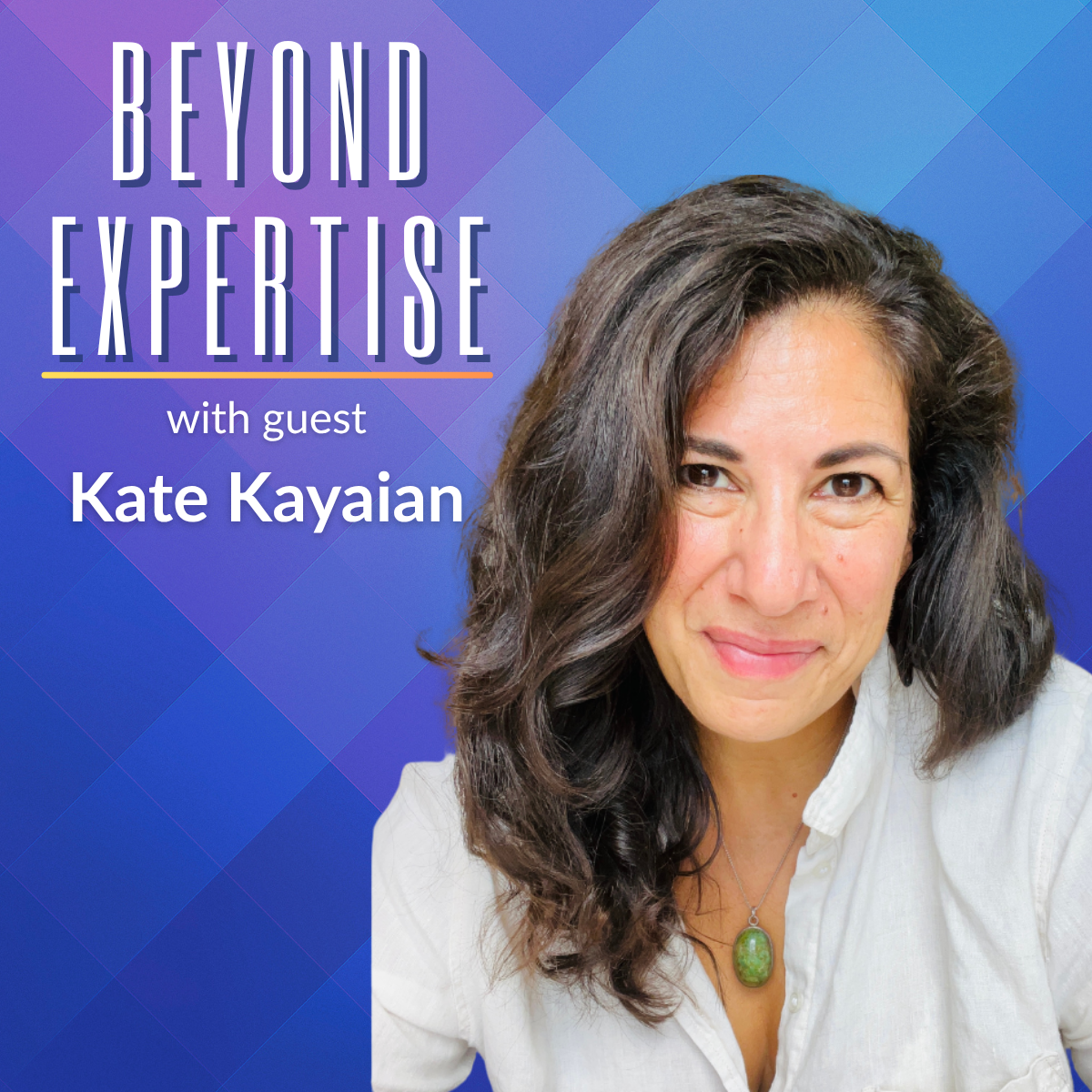
Identity reinvention is rarely dramatic in the moment. More often, it shows up as a quiet question that keeps returning: Is the life I built still the life I want? On Beyond Expertise, host Eric Dickmann sits down with Kate Kayaian, a concert cellist turned coach, author, and speaker, for a conversation that is equal parts career-transition case study and an honest guide to navigating what comes after expertise.
When Your Identity is Your Job Title
Kate started playing cello at four and a half years old, initially because of a crush on an eight-year-old boy. By the time she reached New England Conservatory of Music on a full scholarship, the instrument wasn't just something she did. It was who she was.
"This is my friend Kate. She's a cellist. This is my daughter Kate. She plays cello," she recalls. "It was how everybody knew me."
That total identification with a role is familiar far beyond classical music. In the corporate world, your function becomes your introduction. Your weekends orbit your output. And when everyone around you is in the same bubble, in Kate's case, a world where Yo-Yo Ma came to dinner and friends' parents played in the Chicago Symphony, it can be nearly impossible to imagine a different map.
That insular environment shaped how Kate measured success. Classical musicians have their own version of career progression: landing a seat in a top-10 orchestra, joining a prestigious quartet, becoming a touring soloist, or building a freelance practice. Kate won a coveted fellowship with the New World Symphony in Miami Beach. And through that experience, she discovered something important: she didn't actually want an orchestra job.
"In an orchestra, the conductor makes the decisions. You just play what's on the page," she explains. "I didn't like not having my own creative take on things."
The desire for autonomy, creative control, and variety quietly set the stage for everything that came next.
The Costs That Accumulate Slowly
For years, Kate thrived. She was the cellist getting called to perform in each city when rock stars went on tour. She shared a pizza with Jay-Z backstage. She played concertos in beautiful venues and traveled the world. But by her late thirties and early forties, the tradeoffs had become impossible to ignore.
Concerts happen on weekends. Friends' weddings happen on weekends. Family reunions happen on weekends.
"I started to think: do I wanna be missing out on these other things for the rest of my life?" she says. "Is what I'm doing as a cellist so important to the world that it's a sacrifice worth making?"
This is a tension that professionals in all fields recognize. Even in corporate roles, the "next level" can begin to feel like more of the same, just with higher stakes and less time. Kate's story clearly names the cost: not just career stress, but the slow erosion of the social life around you as you optimize for achievement.
She also did something rare: she got honest with herself about what was actually driving the ambition.
"I wanted people to think I was amazing. I wanted to be the best," she says. "And I was like, I don't really feel like I need to be pursuing that for the next 20 or 30 years."
COVID as a Forced Sabbatical and Unexpected Relief
The turning point arrived in March 2020. Kate played what turned out to be her last major concert before lockdown. She told the audience it would be a long time before they could gather like this again. People later told her she seemed shaken.
She wasn't.
"I was relieved," she says plainly. "I was filled with this relief: I don't have to do this. I don't have to go on that tour."
She had confided in trusted colleagues before this moment, had said quietly that she thought she might be done performing. Their response was immediate: You can't quit. You're not allowed.
COVID removed the social permission problem. With performances canceled across the industry, no one could question why Kate wasn't on stage. It gave her, as she describes it, a forced sabbatical, and she treated it like one.
"I said: I have at least six months where nobody's gonna bat an eyelash if I'm not playing, because nobody is. And I'm just gonna see how I feel."
Building Something New From Skills She'd Discounted
Ten days into lockdown, Kate read an article about summer camps being canceled. The entrepreneurial instinct, the same one that had led an eleven-year-old Kate to launch "Story Time and Puppet Time" in her neighborhood and rake in enough money to fund the camp she'd been told she couldn't attend.
Music festivals would be canceled, too. Students would need something. The world's top cellists had no concerts and no income. She had Zoom experience, admissions know-how, a background in festival administration, and a strong network. She launched the Virtual Summer Cello Festival.
It was an enormous success. Within five years, about twenty other online festivals had launched, most of them calling Kate for advice.
"I was able to use these other skills that I have, these non-cello-playing skills," she says. "There's a need in this community, and I think I have the skills required to fill that need."
This is the insight at the center of any effective second career strategy: your next chapter usually doesn't require abandoning your past. It requires recombining transferable skills with a real market need. Kate had discounted her teaching ability, organizational experience, comfort with online platforms, and entrepreneurial instincts. COVID forced her to take them seriously.
From the Virtual Summer Cello Festival came a paid coaching program called Profit Pivot, which she ran seven times in the first two years, followed by the Creatives Leadership Academy for musicians who wanted to develop broader leadership skills. Through coaching, she realized she needed formal training in the craft. She got certified and, in her words, fell in love with it.
The Plateau and the Portal
Today, Kate's client base is roughly 70% creatives and 30% executives and professionals from other fields. The common thread isn't industry. It's a moment she now calls the plateau and the portal.
"No matter how successful you've been at something, you just hit this plateau," she explains. "You're like: I don't really want my boss's job. I'm not interested in the next level. But I'm also not interested in just doing this for the next 10, 20, 30 years."
The portal is what appears next: a doorway to something different. The choice is whether to walk through it.
Stepping through triggers everything people who research "how to reinvent yourself" typically fear: imposter syndrome, social friction, and the discomfort of having to reintroduce yourself. Kate writes about this candidly in her book Beyond Potential, including the story of her husband no longer knowing how to introduce her at a party. In Bermuda, where she lives, saying "she's a cellist" got a certain reaction. Without that, the sentence had to be rebuilt from scratch.
The book is structured around three phases: Reassess, Redefine, and Reignite.
- Reassess means questioning the stories that have kept you in place. For Kate, one story was "playing the cello is the only thing I know how to do" — a belief reinforced by a cello teacher who said, earnestly, "But you don't know how to do anything else." Examining where those stories came from — a parent, a teacher, a peer, an earlier version of yourself — is the work of the first phase.
- Redefine means rebuilding your identity around values and capabilities rather than titles and roles. It includes the awkward transition period where you're something you can't yet fully claim — the author before the book comes out, the coach before the credential, the entrepreneur before the revenue.
- Reignite is about building a realistic roadmap rather than making a single dramatic leap.
One Thing You Know for Certain
For people who reach the plateau and genuinely don't know what comes next, Kate uses a coaching prompt that cuts through the overwhelm.
She gets quiet with the client and asks: What is one thing you know — anything at all — that you are one hundred percent sure of about what you want?
The answer doesn't have to be big. One client said, "I don't know what I want to do, but I know I want to do it from home." That's enough to start narrowing.
A former Google executive wanted to become an artist but was paralyzed about what kind of art to make. Kate asked the same question. He said: " Math." He said it half-jokingly, half in despair, "The only thing I really love is math, and that's what I did in my old job." Kate told him to follow the thread. Two weeks later, he returned with stunning pencil drawings of mathematical equations; visual representations of the shapes he had always seen in numbers, shapes no one else seemed to notice. He built an entire gallery show around it.
"You just need to know one thing," Kate says. "Whether it's that you never want to put on a pair of high heels or a tie again, or you want to be out in nature, or you want to work with numbers. If you know one thing, you can follow that rabbit hole, and you'll find it."
What Kate is Building Now
Kate's work today centers on coaching, both one-on-one and through the Creatives Leadership Academy, as well as speaking, writing, and serving as president and music director of the Bermuda Philharmonic on a volunteer basis. She describes her keynote work as "the best of both worlds": the adrenaline of walking on stage, but with the purpose of helping a room full of people think differently.
She's also got another book in development and notes with some amusement that her mother spent her teenage years asking, "Are you sure you don't want to be a writer?" An English teacher once marked her down for not following the rules. The same writing style that people now describe as distinctive and unique.
The lesson in that detail is the same lesson running through the whole conversation: the things that didn't fit inside your official identity often turn out to be exactly what comes next.
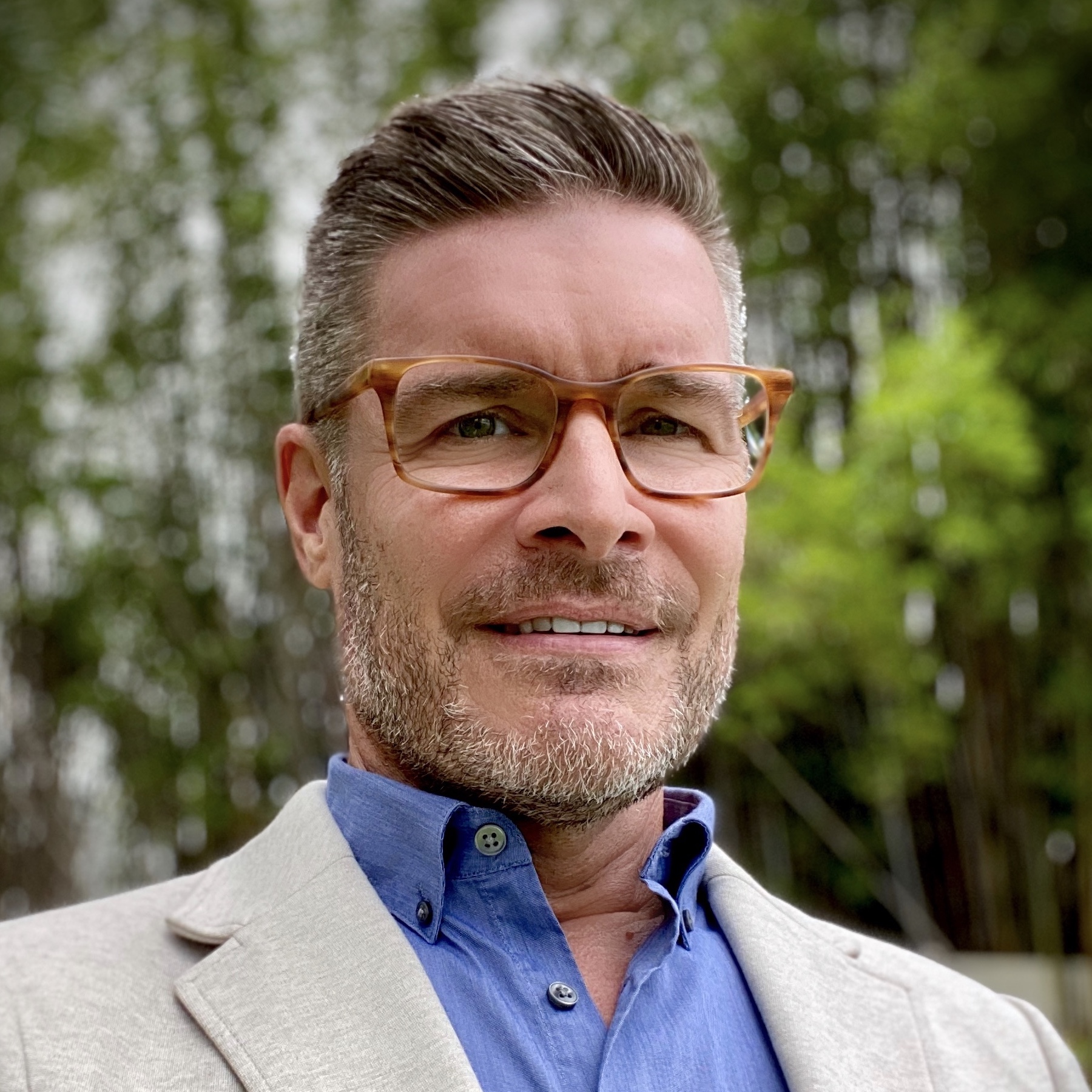
Host | Fractional CMO
Eric Dickmann is a former corporate executive who built a successful second chapter as an entrepreneur, fractional CMO, and podcast host. After years of leading marketing, product, and growth initiatives for organizations ranging from Fortune 500 companies to emerging startups, he made the leap from corporate leadership to building his own consulting business to help B2B companies grow through strategic marketing leadership.
As the host of The Virtual CMO, Eric has published more than 130 episodes featuring marketing leaders, founders, and growth experts. Through those conversations, he noticed a deeper theme that extended far beyond business strategy: many successful professionals eventually reach a point where they begin asking what comes next when titles, roles, and career identity no longer feel like the full story.
That realization inspired him to launch Beyond Expertise, a show exploring reinvention, relevance, confidence, and building a meaningful next chapter in midlife and beyond. Eric brings a rare mix of executive experience, entrepreneurial perspective, and personal honesty about navigating change in real time.

When Getting Fired Is the Beginning, Not the End: Merry Korn's Career Reinvention Story



