When the Corporate Blueprint Stops Fitting: Ivonne Furneaux on Career Reinvention and the Hidden Gaps at Work
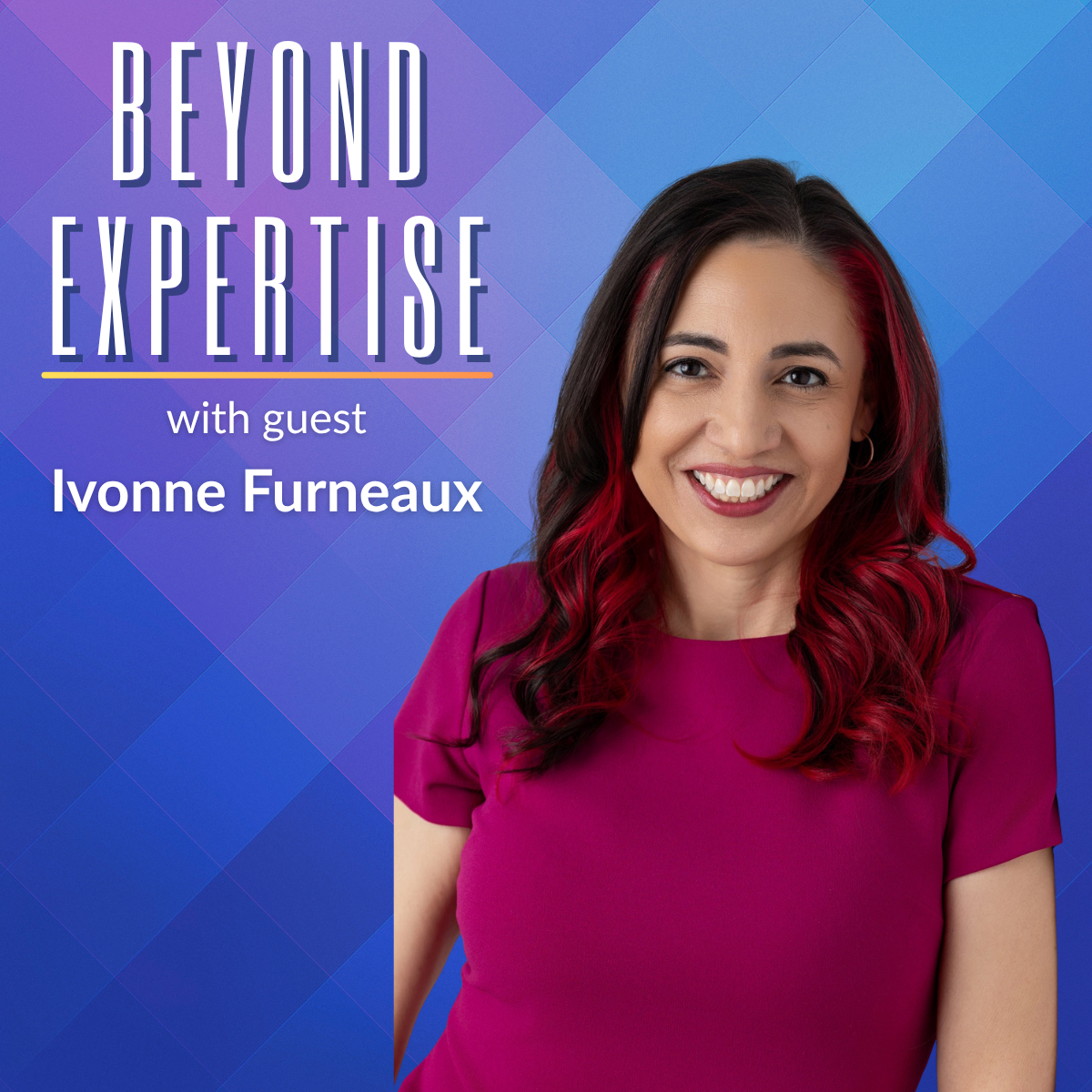
Some careers look like a straight line from the outside. From the inside, they feel like a long series of decisions made under pressure, in motion, with no map. Ivonne Furneaux spent more than 25 years navigating corporate America, from Target to OfficeMax to UnitedHealth Group to Weight Watchers, building expertise in communications, employee experience, and DEI along the way. And then she left.
Not because she failed. Because she was finally ready to work for herself.
Her story, explored in a recent episode of the Beyond Expertise podcast, is a case study in what professional reinvention actually looks like when you strip away the inspirational shorthand: the false starts, the layoffs, the credibility gaps, and the slow, honest process of figuring out what you want your work to mean.
A Career Built Without a Blueprint
Ivonne grew up a military brat, moving constantly, adapting to new environments before she was old enough to call it a skill. She had planned to become a journalist, the kind who goes into war zones, speaks truth to power, and earns a Pulitzer. Instead, an internship in the office of Governor Jesse Ventura introduced her to the PR side of communications, and after college, she landed at Target in a business analyst role that had nothing to do with words or storytelling.
But she noticed something: in a large organization, you can move. You can find the people doing the work you want to do, ask for a coffee meeting, or raise your hand. Nobody had taught her how corporate life worked; her parents were military, and her father drove a taxi in New York, but her upbringing had given her something more valuable than a network: the ability to walk into any room and figure out how to belong.
That instinct carried her from Target's communications team to a two-decade journey through manufacturing, real estate, health care, and retail. She describes the path as "zigzags" and that framing matters. For professionals who feel like their non-linear resume is a liability, Ivonne's story reframes it as a range. Every industry pivot expanded her understanding of how organizations actually work and how employees actually experience them.
Reframing Corporate Communications as Advocacy
One of the most useful ideas in Ivonne's career, and one that translates directly into leadership and culture advice, is how she reconciled her journalist instincts with corporate communications work.
The tension was real. Journalism is about bringing the truth to the public. Corporate communications often feels like the opposite: message control, damage management, and saying what leadership approves. But Ivonne found a reframe that held: employees are the public she serves.
In large organizations, employees are frequently the last stakeholders considered. Customers come first, then shareholders. Employees often hear about major changes at the same time, or after, the outside world does. Ivonne made it her mission to change that equation. Internal communications, done well, are advocacy. It keeps employees from being blindsided, builds trust in leadership, and creates the conditions where people actually want to stay.
This is a practical insight for any leader or HR professional: engagement isn't built through surveys and town halls. It's built through the daily experience of feeling informed, considered, and visible. The employee who is always the last to know will eventually be the employee who leaves.
What Corporate Chaos Teaches You About Trust
Ivonne's career wasn't just a series of deliberate pivots. It was punctuated by layoffs, mergers, acquisitions, and three corporate relocations — two of which she declined, one of which she accepted. She describes navigating these moments from both sides: as the HR and communications leader helping the organization manage change, and as an employee absorbing the personal impact of decisions made far above her.
The contrast she draws between a bad layoff and a well-handled relocation is worth sitting with for anyone in a leadership role.
The bad layoff: her entire office was called into a conference room. A voice on a speakerphone, someone they'd never met, told them that when they left the room, they'd have an email. If they had an email, it was their last day. She describes it as the most inhumane thing she could imagine. The memory still carries what she calls PTSD. Years later, that company still carries a negative association.
The well-handled relocation was announced a year in advance. Generous packages, half a year's salary if employees chose to move, plus full relocation costs. She brought the mayor of Mobile, Alabama, to Chicago to talk to employees. She sent people on exploratory trips to look at schools and neighborhoods—those who chose not to relocate received severance that far exceeded industry standards.
Same basic outcome, people losing their jobs or being asked to uproot their lives, but entirely different human experience. The difference was in design. Leaders who treated the transition as a communications and logistics challenge got bad results. Leaders who designed the process around the human experience built trust, even in the worst moments.
The takeaway for leaders is blunt: trust is not built when things go well. It's built in the moments when you had every opportunity to cut corners and didn't.
Leaving a Senior Role to Build Something New
Ivonne's exit from Weight Watchers came during a difficult period for the company, including Oprah Winfrey's departure from the board, the rise of GLP-1 medications, and a significant reduction in leadership that eliminated roughly half of VP-level roles. She found herself in the unusual position of leading her own layoff.
By that point, she had been in the corporate world long enough to handle it pragmatically. No hard feelings. She understood the logic. She made sure employees were centered on how it was handled. And then she took time, a real period of reflection, supported by a different financial situation than she'd had as a single parent two decades earlier, to think about what she actually wanted.
What she decided: she had spent 25 years being the voice of other companies. She had written speeches for CEOs, managed communications for major brands, and shown up on stages as a DEI thought leader. It was time to be a voice for herself.
That transition, from senior corporate executive to independent consultant and speaker, is where the second act becomes interesting and instructive for anyone considering a similar move.
The Credibility Gap is Real (and Closeable)
The first clients came through her network. She had spent decades building relationships across industries, and those relationships opened early doors. But she quickly encountered a dynamic that anyone making a major career pivot will recognize: some people knew her work intimately and engaged immediately. Others remembered her from 15 years ago, when she was a communications coordinator just starting out. The gap between who she was then and who she is now wasn't obvious to them, and it was her job to close it.
Reintroducing yourself to people who already know you is a specific and underappreciated challenge of professional reinvention. You can't assume your growth is visible to people who haven't watched it happen. You have to articulate it: clearly, repeatedly, with evidence.
For Ivonne, closing that gap has meant building visible assets: speaking engagements, a speaker reel, a LinkedIn presence, video content, and a book currently in progress about her framework of "ghost gaps," the invisible divides in organizations that quietly determine who has access to power, information, opportunity, and visibility.
Her advice for anyone making a similar leap: decide early what success looks like for you. Financial upside? Freedom? Flexibility? Mission? The answer shapes every decision that follows. And accept that entrepreneurship after corporate is its own skill set, different from anything you learned in an organization, and requiring its own learning curve.
Ghost Gaps: A Framework for the Workplace We Actually Live In
One of the most original contributions Ivonne brings to conversations about workplace culture is her reframe of the fairness conversation.
In an environment where DEI language has become politically charged and organizationally risky, she offers an alternative lens: workplace identity. Not race, gender, or orientation, though those matter, but the structural identities that every organization creates and rarely examines: title, location, remote versus on-site, hourly versus salaried, frontline versus corporate office.
These aren't personal characteristics. They're organizational constructs. And they often determine invisibly who gets information first, who gets access to senior leaders, who gets considered for high-visibility projects, and who gets left out of the conversations that shape their own future.
Ivonne calls these disparities "ghost gaps": the invisible divides that haunt organizational performance and employee experience without ever showing up on an engagement survey. The power gap. The information gap. The opportunity gap. The visibility gap.
The value of this framework isn't just political, though it does lower the temperature on a charged conversation. It's practical. Ghost gaps are diagnostic. Once you name them, you can find them. Once you find them, you can address them. And the organizations that address them build cultures where more people can do their best work, regardless of where they sit on the org chart.
What This Second Act is Really About
When Eric Dickmann, host of Beyond Expertise, asks Ivonne whether she feels more aligned with her purpose now than she did in corporate, she pauses before answering. She says yes, more aligned with purpose, and with this stage of her life. Less aligned with her bank account, for now.
That honesty is part of what makes her story useful. Career reinvention isn't a clean, triumphant arc. It's a series of real trade-offs: income versus freedom, scale versus autonomy, the security of a title versus the exposure of being fully yourself. What Ivonne found, after 25 years of building expertise within institutions, was that the most valuable thing she had to offer wasn't a function, a department, or a job description. It was a point of view, hard-earned, specific, and hers.
That's the thing that a second act gives back, if you let it.
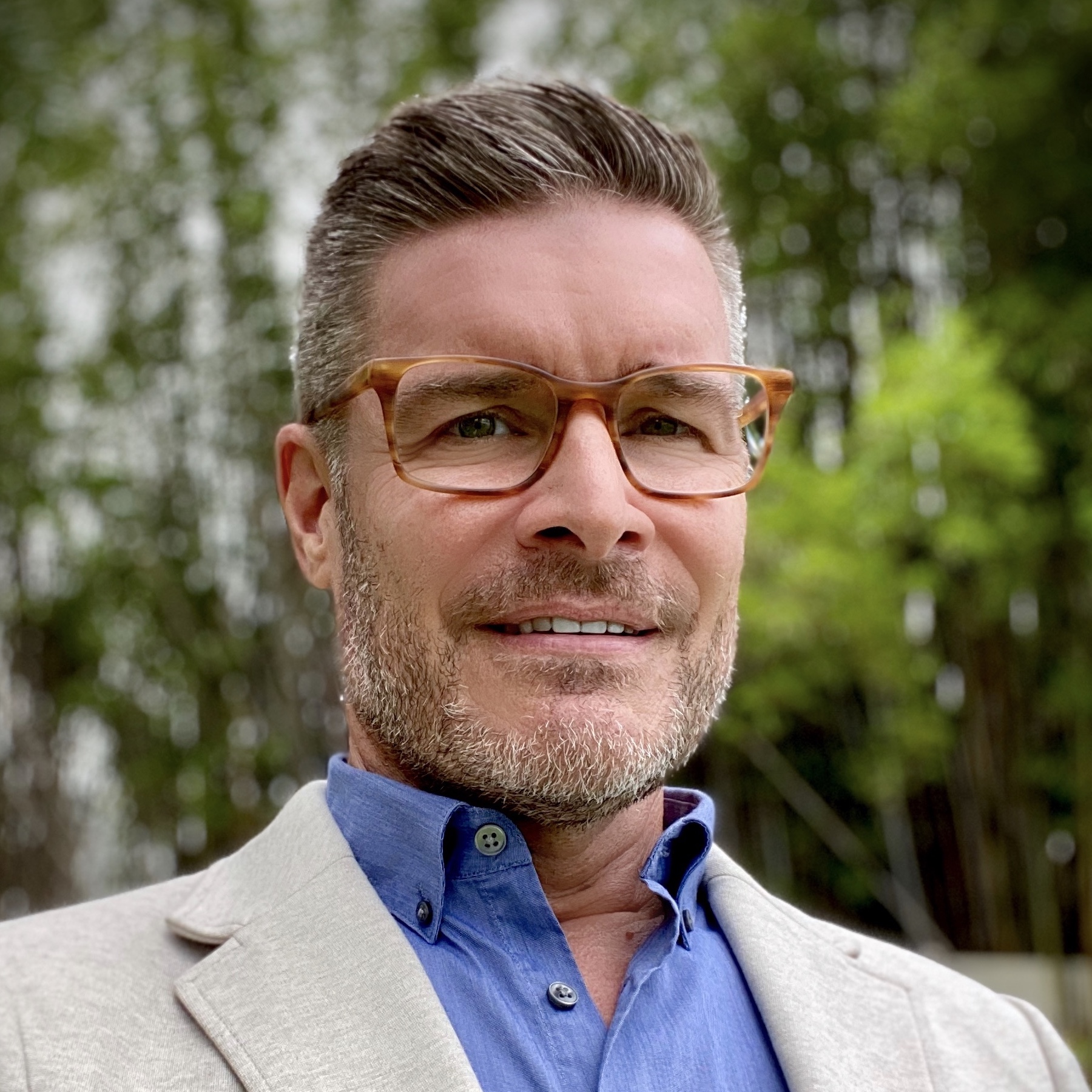
Host | Fractional CMO
Eric Dickmann is a former corporate executive who built a successful second chapter as an entrepreneur, fractional CMO, and podcast host. After years of leading marketing, product, and growth initiatives for organizations ranging from Fortune 500 companies to emerging startups, he made the leap from corporate leadership to building his own consulting business to help B2B companies grow through strategic marketing leadership.
As the host of The Virtual CMO, Eric has published more than 130 episodes featuring marketing leaders, founders, and growth experts. Through those conversations, he noticed a deeper theme that extended far beyond business strategy: many successful professionals eventually reach a point where they begin asking what comes next when titles, roles, and career identity no longer feel like the full story.
That realization inspired him to launch Beyond Expertise, a show exploring reinvention, relevance, confidence, and building a meaningful next chapter in midlife and beyond. Eric brings a rare mix of executive experience, entrepreneurial perspective, and personal honesty about navigating change in real time.

When Getting Fired Is the Beginning, Not the End: Merry Korn's Career Reinvention Story



