From Corporate Creative To Sci-Fi Author Without Quitting Your Day Job with Christian Hurst

At some point, being good at your job stops being the problem and starts being the cover story. Christian Hurst is a seasoned graphic designer and creative leader, but he also carries a sci-fi universe he’s been building in his head for more than twenty years, and he finally decides it can’t stay there.


In this episode, host Eric Dickmann discusses career identity and creative reinvention without the dramatic “quit your job” storyline. Christian walks us through how a design career built during the financial crisis trained him to develop ideas, take critique, and keep producing, then how those same skills helped him move from imagination to a finished novel. He shares the bold (and slightly terrifying) choice to self-publish before getting any feedback, how Draft2Digital helped real readers discover the book, and why shipping an imperfect first version became the turning point that made him take the craft more seriously.
The conversation also goes deeper than process. Christian reflects on growing up Mormon, the loneliness of feeling different, and how science fiction and classic literature shaped his view of identity, certainty, and moral choice. We get into editors (copy edits versus story edits), the tension between commercial viability and artistic truth, and what it means to create work that carries your own name, including his Lily Starling series and its IPPY Award recognition.
If you’ve been sitting on a book idea, a creative project, or a second path you “don’t have time for,” this one will push you to make it real. Subscribe to Beyond Expertise, share this episode with a creative friend, and leave a review so more people find it, then tell us: what would you publish if you stopped waiting for perfect?
Have questions, comments, or interest in being a guest? Leave me a voicemail!
00:00 - Why A Second Chapter Matters
02:36 - Early Creative Identity And Choosing Design
07:09 - Building A Career Through Big Shifts
12:43 - Feeling Different And Finding Refuge In Stories
15:26 - Sci-Fi Influences And Lessons From Classics
19:07 - From Long-Held Idea To Self-Published Book
25:01 - Editors, Publishers, And Owning Your Name
29:46 - Practical Advice And Where To Find The Books
Why A Second Chapter Matters
Christian Hurst
Welcome to Beyond Expertise, the podcast about what happens when the career identity you've built no longer contains all of who you are and how you begin making room for what comes next. I'm your host, Eric Dickmann. My guest today is Christian Hurst, a longtime creative professional and the author of the Lily Starling science fiction series. What stayed with me from our conversation is that Christian's story is not built around walking away from a successful career. He still enjoys his work. He has built real expertise as a designer and creative leader. But he also reached a point where creating for someone else's agenda was no longer enough. I think that distinction matters. We often talk about reinvention as though it requires a dramatic break, leaving the company, starting the business, or abandoning one identity in favor of another. Christian's experience offers a different model. Sometimes the next chapter begins alongside the life you already have. For him, that meant taking stories that had lived in his imagination for more than twenty years and finally deciding they could not remain there forever. He wrote a novel, self-published it, put it in front of readers, and learned as he went. The process was imperfect. He later brought in editors, worked with a small publisher, and became more deliberate about the craft. But none of that could have happened until he was willing to release something before it felt completely ready. That may be the lesson I took most clearly from Christian. Expertise can give us confidence, but it also makes us overly aware of everything that could be improved. At some point, creating requires us to stop protecting the idea and give it life outside of our own heads. His story is also a reminder that the work we do for our employers and clients may build the very skills we eventually use to create something deeply personal. Christian's career in design taught him how to develop ideas, present them professionally, absorb criticism, and keep producing. Those skills became the foundation for work that now carries his own name. In our conversation, we talk about creative identity, the loneliness of feeling different, the stories that help us understand ourselves, and what it takes to move a long-held ambition from imagination into the world. Let's get ready to go Beyond Expertise.
Early Creative Identity And Choosing Design
Eric Dickmann
Christian, welcome to the podcast. I'm so glad you could join me today
Christian Hurst
Thanks for having me. Happy to be here
Eric Dickmann
One of the things that I do with all my guests is I like to turn back the dial of time a little bit and think about when you were younger, graduating from high school, getting ready to take that first real career job or go on to, additional schooling. At that point in your life, what is it that you thought you wanted to do?
Christian Hurst
Well, it's interesting. I, I've always had an interest in art and creativity, and so from a young age, I always said that I was gonna be an artist when I grew up. Um, but that, uh, uh, turned out to encompass so many different things because creativity is, um, more of a mindset, I guess, than any sort of one field. And so, when I was going into college, I, I, I really was considering multiple creative fields, and I w- I did a little film school, I did a little, um, media studies. Um, but I ended up picking graphic design, which was something I loved anyway. Um, and, uh, I ha- I had been-- had experience since I was, like, 16 doing graphic design and, uh, had a internship when I was a teenager. So, uh, that was... I, I had, I knew I had to focus.
Eric Dickmann
Yeah
Christian Hurst
And, and I was like, "That's, that's a good focus because I know I'm good at it and I know I can, you know, at least get a job."
Eric Dickmann
Well, that's interesting. If you had a couple different creative outlets that you enjoyed and were thinking about pursuing, did graphic design just rise to the top because it seemed like there was the most opportunity in that field, because somebody said, "Hey, you're really good at this," or because you were most passionate about it? How did you end up really settling on that?
Christian Hurst
Yes, it, it's a bit of all of those. I was actually in a bookstore, believe it or not. I remember clearly I was on break between semesters, and I was at Barnes Noble, and I was, like, looking at books on graphic design, not career-wise. I was just doing that for enjoyment. And as I was looking through one of the books, I was like, "I really should just change my major to this because I, I'm enough of a nerd about it that I know that I could have a successful career, uh, in this." And when you're young, I mean, I don't know if... I assume it's this way for everybody. You kind of-- Your opportunities are endless, you know? I d- I-- At least for me, I didn't, like, narrow myself to, to any one particular endpoint as far as a career goes, and it was just more that I wanted to make cool stuff. And so I, I thought this is a way that I can get on that immediately, and it's actually turned out to be my superpower throughout all the other, like, creative efforts that I've gone and done. Because on- once you know design and, um, design thinking and how to use the tools, you know, you can make anything look professional, which is really a, a, a big value
Eric Dickmann
And so did you know it was a superpower back then? And looking back at those first jobs that you got, did it feel like, "Oh yeah, this is what I'm gonna make my life's work"?
Christian Hurst
Well, no, no, not a superpower. I think I felt like, uh, I, I was very serious about it back then. I was very, like, academic, very like, "I'm gonna be one of those designers who, like, gives TED Talks about, you know, fonts and stuff." So, um, but, uh, which is good, I think, because I learned very granular things about design that have, you know, served me to this day. But, um, especially now with, like, AI making people... It's another wave of people thinking they can be designers. Uh, and I've survived that before, you know, when PowerPoint first proliferated and when, uh, uh, many other, you know, times when tools became very accessible to people, and they would play, which is fine. I love it when people play, but then they realize that all their stuff looks like a mess, and then they hire a graphic designer to fix it. So we just have to survive those little moments.
Eric Dickmann
Oh, for sure. Yeah, so many changes. Yeah, I think about just all the technology changes that have probably happened in your career. I know certainly in mine, and it's a lot to keep track of. So you're now working as a graphic designer, talk a little bit about how your career progressed and what were you really feeling about it?
Building A Career Through Big Shifts
Christian Hurst
So I wa- I am a millennial and I entered the workforce during the financial crisis and, uh, like a lot of people my age. So I actually did... My career was kind of the reverse of a lot of people's. I did freelance first, um, and the reason for that was because a lot of agencies had laid people off and they had too much work, and so there was a lot of overflow work. So, um, I lived in the Pittsburgh area and I, I made relationships with some Pittsburgh agencies and then also some agencies in New York, some big ones. Got a lot of work, uh, that way, and then when the economy recovered, it all went away, and because they hired people again. So that was the point where I was like, "I guess I gotta get a real job," and, uh, ended up moving to the DC area and, uh, you know. I, I tell people, actually, this is advice, but you don't have to take it, obviously. Take all advice with a grain of salt. But when I was thinking, "I want a job that will pay the bills," you know, "and I want a career in this. I really want to build a career," um, once I made that decision, we, me and my wife made a list of like cities in the country that we would be comfortable living in. We were like, "We could live in these places." And then, um, which of those places have strong, you know, careers in graphic design? And then I started applying for jobs in those places, and we ended up in DC.
Eric Dickmann
Did you still feel like as you're working your way up the corporate ladder, back in the corporate world now, did you still feel like that creative itch was being scratched? Where in your career progression did you decide that maybe graphic design isn't everything, isn't enough, there's another itch I need to scratch?
Christian Hurst
Yeah, so I, I've always seen myself as a storyteller, and I think graphic design is one, one expression of that. So I see it as a continuous, uh, creative career. The-- as far as the itch being scratched, I'm very, like, I get involved in multiple projects, so I'm always doing things even off on the side or, like, sitting on the train and writing. And so, um, yeah, for a long time I was very busy obviously building my c- my career. Um, kinda have to go where it goes, especially in the time I came up, and so I did hop around companies a little bit. Really got kind of my legit footing when I was at Marriott, uh, and did... You know, I was there for the Starwood merger, I was there for the creation of Bonvoy, the brand, and like... So I worked on a lot of their hotel brands, um, and worked with a lot of big agencies then. So I, I, I had a period where I hopped back to a creative agency in Baltimore for a while, and then I went back to Marriott. And, um, there was a point where I, I remember I was sitting in an Uber going home, and it was a long ride, and I can't remember exactly why it hit me then. I was, I think I was on my laptop sending some emails and, like, doing some work, and I'm, like, commuting and not really thinking about it, and I was like, "Oh, I think that I'm legit now." Like, "I think that I don't have to, like, fake it anymore," you know? "I'm actually doing this work, and it's coming naturally to me." And that was, like, a moment for me where I realized that you can develop that muscle where it, it's... You, you're not scared of where the next idea is gonna come from anymore. You, you are just sort of producing work almost in the way that you would personally. So as an artist, you know, I go and I create, and I don't really worry about what consumers think about it. Um, and I, I think I reached that place in my career where it was like, "Oh, I can put stuff out there now, and I'm not, like, a wreck about it," you know? And it, it takes, like, the first few times that you put your work out there and, like, a million people see it, and then they forget about it the next day. And it, it's just a process, you know? And even if it was their favorite thing in the world and they forget about it the next day you, you, uh, you know, you, you move on. And so it's, it, it helps you feel better about when the work maybe isn't as good. Uh, you just do it again.
Eric Dickmann
Well, I know when I talk to a lot of guests on this show, many of them reach a point in their career where they've developed a lot of skill and expertise, very much what you're talking about. They're comfortable in their roles. They have truly become experts in what they do. But there's something that feels like it's unfulfilled, that they're looking for that next thing, that second chapter, either applying some of those skills maybe in a different way, maybe moving out of the corporate world and doing, freelance work, consulting, whatever it may be. But you strike me as having a slightly different story, that you're continuing in the corporate world, that's not really a problem, but there's also this other side of you where you have stories to tell, and maybe it would be good to understand a little bit about your backstory there. I know you came from a religious background, and that's certainly given you things to think about and discuss, right? How did you decide that you have stories that you want to tell?
Feeling Different And Finding Refuge In Stories
Christian Hurst
Yeah, I think that's a good transition because it, it was at, you know, this point then I'm like well on in my career and then COVID hits. And so it just sort of shakes you up and, and it shook up the world and it causes you to think about your life differently just because I had to sort of pivot and again, and like at that point in my life I was not ready to pivot. I did not want to pivot. But I was forced to pivot at that point. And I'm glad where I ended up and I, I'll just say about AARP that it's been a wonderful experience and I absolutely love the people over there and the, the culture and working there. Um, but from a very young age I've had, you know, stories to tell and I think part of that is because, like you said, I grew up in the Mormon Church and the growing up in a, an environment like that where there are very set expectations for, um, your life, your entire life, right? And that's just very contrary to my personality. So from a young age, um, I felt a little bit like an outsider. I was a weird kid. I, I liked being a weird kid. I, they-- that wasn't a problem. I love my parents and they, they were great parents, but the, it just the environment of the church was not a good match for my personality. So a long time I had kind of a, the person that, you know, the mask I wore at church and then like who I really was inside and, and that kind of gets lonely, right? 'Cause you start to build your identity from the inside out and you start to feel like you're always on the outside looking in. I think that can be a good perspective for an artist because you observe people and you see the things they do and the way they interact and from almost a detached perspective. But at the same time it, it can get very lonely and so that for me as someone who was able to work through that and, and grow and be true to themselves and find a good place, it was important for me to tell-- kind of pass that lesson on to younger people and tell that s- in a story format. Because for me growing up, stories were my refuge. I would, you know, lose myself in books and in science fiction and, and I would explore these whole worlds in my mind and it kind of saved me from the going nuts, you know?
Eric Dickmann
Yeah. Was there a particular series that you were drawn to as a younger person? You know, what was it about science fiction that really drew you in? Just the different worlds?
Sci-Fi Influences And Lessons From Classics
Christian Hurst
Absolutely. I mean, I grew up on the classics. I've, I've-- You know, we're a well-read family. We-- My parents still have, like, rooms, walls and walls of books. And, um, so I grew up reading a lot. But I w- I al- also grew up watching Star Trek, and Star Trek was a big influence on my life, um, from the time I was quite young. I watched the, the original show and then, um, ended up being a fan of all of it later. But, uh, but those early shows are th-th-they... The blend of fun and also just very, like, philosophical, deep thinking, you know? And, and that reached me at a young age because I, I enjoyed the action adventure, I enjoyed the fun, I enjoyed the, like, moral decision-making of Captain Kirk, you know, who would walk in a room and he always knew what he was gonna do. Nobody ever told him what to do, right? And that w- that really appealed to me as a, as a kid, um, because he was sure of himself, but he was sure of himself in, like, a, a moral sense. It was very much internal and not, like, what people had, you know, told him to do. And,
Eric Dickmann
For sure
Christian Hurst
And then the cla- I mean, like, I think the book that changed my life was actually Les Misérables, which is not, not sci-fi. But when I was 14, I read that book from cover to cover, which isn't normal, I've heard, for 14-year-olds. But, um, but I, I remember my mom would get mad at me because I would wanna sit in the backseat of the car when we would drive to, like, uh, different places, and she's like: "I'm not your chauffeur," or whatever. She thought it was weird that I sat in the backseat, and I'm like: "I just wanna sit back here and read." And, and I read that, that whole book, and I, I learned... I couldn't really put words to it at the time, but, like, Victor Hugo and then later Ursula Le Guin, who is another one of my favorites, talk a lot about the dangers of absolutism. And, you know, I think it just really hit me because I would see people as a kid at church get up and talk about how I know this to be true, or I know this or I know that, or I think I know that this is going to happen. I know that my life is going to do this. And then inevitably something would happen to make them doubt, right? To pull the rug out from under them. And it wasn't just a crisis of faith, it was a crisis of identity. And that really hit me because it's like you formed your entire sense of being around what the church told you to be. And so when just a little thing happens to, like, make you doubt, you don't know who you are anymore. And that was very s- a very scary thing to me. Um, and so I, I, I think I was very drawn to lessons like that.
Eric Dickmann
It's interesting, and I know in talking with others that many people have a book idea in their head. Maybe it's something that's existed for years or decades, a thought about, "Oh, this would make a good story." Some have even gone so far as to pull out a notebook and sketch characters and scenes like that. And so I think for a lot of people in their, their second act, writing a book is something that's on the table. Maybe it's a business book, not a, a work of fiction, but they think about being an author, and there's a pretty big jump from taking a few ideas scratched in a notebook to putting together a coherent story or a book. So I'm interested in that process for you. You've decided now that you want to write
From Long-Held Idea To Self-Published Book
Eric Dickmann
a book. You've got some ideas about a story that you want to tell. How then do you take these out of your mind and start to put it into a book that somebody would enjoy reading?
Christian Hurst
Yeah, I, and I think that there was that point when I was like, "If I don't tell these stories now, I'm never gonna get to," right? So I, I need to stop sort of waiting for the perfect time or whatever. But a lot of them have been in the making for 20-some years, like you said, you know, like just rattling around in my head or I've written about them, sketched them out. I, I wrote film script, like screenplay drafts at some point. I had-- I was-- I made video games when I was, uh, younger and, you know. So I've explored... Comic books, I've drawn comic books. So I've, I've explored these ideas in many different ways, and so finally I was like, "A novel. I don't know if I can write a novel, but I'm gonna try." And, um, because I've read a lot and, and so it, it's funny because when people review my work, they're like, "There's almost something classical about it." I'm like, that's probably 'cause I read mostly classics and I haven't read a lot of like contemporary YA fiction, to be honest. I've read some, but not, not, um, not a ton, and I'm not a huge fan of the first person persp- like in, when I read a book, if it's entirely in the first person, it can get tedious for me. So, um, so yeah, my, my work feels a little more classical, um, and that's, you know, just the way I write. But I think w- I w- I think what happened is this entire creative career, like we were talking about before, just taught me to be able to pull the trigger on things, and so I wrote this book and then I was like, "I'm gonna self-publish it." Boom. And I just put it out into the world, and I wasn't sure what to expect. I had, I had a lot of other ideas for things I wanted to write. This was the first novel that I wrote, and I was like, "I have this idea for a romantic comedy. I have this idea for a, a whole thing about like Mormon missionaries. I have a, a story about that." I have like all these different ideas of things, and I wasn't really sure where this was gonna go. And then people started to read it, and people started to like it, and people started to comment on it, and I was like, "I should start taking this seriously." And so I, I actually, um, had the book edited at that point because people kept finding mistakes in it, and I was a little bit like, "Oh, I should really be a little more,
Eric Dickmann
Intentional about it. Yeah.
Christian Hurst
about my work." Yeah, exactly. And, and, uh, I ended up wor- working with a small publisher in Pittsburgh, Outpost Books, and they've been awesome to just get me in touch with some things that I needed and, uh... But I still maintain all the creative control over my own work and, uh, work on my own, you know, covers and everything.
Eric Dickmann
Well, I'm curious, as you're writing this, the story is coming to life, you're putting it, you know, we'd say on paper, but it's in a computer, right? So you're, you're putting all this down. Are you letting somebody read it as you go? Did you let your wife take a look at it? Did you wait until the entire thing was done and then drop a manuscript, got it down on somebody's desk and say, you know, "Read it and tell me what you think"? How do you get that first feedback?
Christian Hurst
Um, I didn't. For the first one, I just published it. That I was-- no one had... Yeah, no one had-- There were some people who bought it over Christmas. They were the first people who had read it besides me. yeah, and, and it was-- I got those first reviews and I was like, "Oh, wow, people connect to this." And so it was, you know, for m- it- for me, it felt very personal and it felt like I, I felt like it might be something people would connect to because there are a lot of ideas in there that I feel are universal, like loneliness and connection and identity. And I also thought that people would connect maybe to the queer characters because a lot of sci-fi has queer characters, but it's, it always has to be a part of the story. It's like this character, you know, is trans and we're gonna have a whole episode about it instead of like, I just wanted these people to exist
Eric Dickmann
Hmm
Christian Hurst
in their queer identities within the story. And it, you know, it, it doesn't necessarily move the plot along. It's just, it's part of who they are. And, uh, and people did like that. People liked that. People liked my characterization and they felt like, um, I've gotten feedback that like the dialogue and the characters feel real to them. So, so I was like, "Okay, well then I'm writing book number two," because I already had the whole idea for book number two in my head. And that, and that was really when I started to be a lot more intentional about it.
Eric Dickmann
How did you get those first people to read the book? So you talked self-publishing. Did you put it on a website? Did you upload it into Amazon or Apple Books, or how did those first people find it?
Christian Hurst
Yeah, I put it on, uh, Draft2Digital, which is a, an aggregator. It's a tool that a lot of authors use. So I did a little homework and I knew a little bit about the publishing world, but not so much about the self-publishing world. And, um, so I put it out there and, and they have a couple tools, like for promoting your book and stuff. So people just found it because it was Christmas time and there was a lot of buying, and I, I just put it down to 99 cents and it popped up on a lot of sites as like new and people like, you know, liked the cover kind of thing. So, uh, but the title too, I thought was sort of eni- enigmatic and fun, like, uh, "Lily Starling and the Voyage of the Salamander." It sounds pulpy and weird and it, it... You wanna check it out, you know? So, um, I mean, that's sort of part of the identity of the book.
Editors, Publishers, And Owning Your Name
Eric Dickmann
I'm interested too to understand your experience with an editor. You said a couple people flagged some mistakes. What does an editor really provide to you? It's more than just, "Hey, there's a typo here," or something like that. They're looking at it for the story, right? Does everything make sense? Are things connected? Did you leave dead ends? That sort
Christian Hurst
there's different types of editors. So there's-- there are copy editors and then there's story editors. So I've worked with both now, um, and both are helpful. I think you j- l- I talk about my relationship with the story editor as if I'm locked in mortal combat because it-- you kind of like it's a back and forth of like, uh, you know, they, they do want you to change things to be generally more audience appealing, cult- like, uh, commercially viable kind of things, especially if they work for your publisher. Um, but I'm usually kind of, uh, stubborn about keeping things the way that I, you know, saw them in the book. And, uh, and so I have had some criticism of my work in terms of like plotting and, um, they're like, "Well, it, it really kind of, um, slows down at this point." And I'm like, "Yeah, I know. I did that on purpose. You don't have to like it." But, but you know, so I, so I've never really written them to be, uh, the most commercially successful books. That was never my intention, um, with this particular series, but, uh, more to be just true to what they are. And, and you know, that was really what it was all about when I was publishing it. It sounds kind of like cheesy, but it's true. Like I, I've done all this creative work. I've made millions of assets throughout my career, right? I want something that exists that y- when you look it up, it has my name on it. That's something, some work that I put my heart and soul into that you can find when you Google me, you know? And that was important to me.
Eric Dickmann
I will assume your employer's not listening, but can you see becoming a full-time author?
Christian Hurst
I could see it. I mean, I, I think the finances of being an author are very tricky, frankly. Even if you're published through one of the big five, um, most authors are not full-time authors. Um, a lot of them are full-time writers, but they have to write for, you know, publications and, uh, a lot of times do, like, corporate writing and stuff to, you know, make a living. So, um, obviously that would be wonderful because the more I can make, like financially with my writing, the more I can write. So, um, that's kind of the goal is for it to be self-sustaining. Uh, but I don't know. It-- Yeah, of course I would love that, but, um, I would be happy either way.
Eric Dickmann
Well, I hear from a lot of people that, you know, when they're working in these corporate environments, I've certainly experienced this myself, it's somebody else's agenda, right? You're working on the projects that they need. You know, you talked about, um, the merger with Starwood and the rebranding and new hotels. They seem to come up with a new hotel every week. But That's not your agenda, right? That's somebody else's agenda, and even though it might be fun working on it, I do think a lot of people get to a point in their career where they said, "Well, I kinda wanna do my agenda now. I kinda work on the things that are most important to me." Not that that work was bad, it's just wasn't the work that rises to the top of your list of things that are, that are satisfying.
Christian Hurst
Absolutely. And so for someone like me who's a creative person who's had a lot of like 20 years of pent-up storytelling, I have so many ideas that like that's my problem is I don't get writer's block. I just have too much that I want to If you, if you read the first book of the series, it's got like each chapter is almost like an episode of television. It's really crammed in there. There's a lot of different adventures. And then the second book, I kind of let it breathe a little more. It's more like a movie, you know, um, where it's one overarching plot. But, um, so yeah, I have a lot to tell.
Eric Dickmann
Maybe we'll see this turned into a TV show. I know, uh, Apple TV has become a great place for, uh, sci-fi programs
Christian Hurst
There are a lot of good ones. Yeah, I'd love to see that. That would be neat someday. My-- After the YA series is done, which will be five books, I have another series planned in this universe, five books that are gonna be a little more, uh, adult sci-fi, so
Eric Dickmann
Very nice.
Practical Advice And Where To Find The Books
Eric Dickmann
Well, what advice would you give to somebody who maybe is similar in career stage to what you are, has some ideas that have been percolating in their brain for a long time, think that they want to start writing a book? Any advice,
Christian Hurst
Yes.
Eric Dickmann
writer to another?
Christian Hurst
I always tell people just to keep creating. You know, if, if something doesn't work, make something new. Um, and but you have to get something on the wall to look at in order to refine it. It can't stay inside forever. You have to throw it out there, mess with it, see if it works, iterate, uh, or move on. And, and sometimes, you know, that's the best thing to do is, is to do a new, uh, new version. Um, but that's the best way not to, like, overwork something, I think. You just cr- keep creating, keep going, you know? Don't... You know, it-- You will get discouraged. Make yourself make something every day and it, and you'll get out of it.
Eric Dickmann
Are you one of these writers that says, "I have to write X number of words every day or a week," you know, just to get the book done?
Christian Hurst
No, but I do make myself do something creative every day
Eric Dickmann
Well, it sounds fascinating. Where can people find out more about your series? Where can they download these books to, uh, to read them and stay tuned for your, uh, your next series?
Christian Hurst
Yeah, you can, uh, check out all my work, um, at seahurstpublishing.com or lilystearlingbook.com. The first book in the series just won an IPPY Award. It won gold at the IPPYs, which is a great honor. And the audiobook... Thank you. And the audiobook just came out, so peop- a lot of people who are busy get the audiobook. It's wonderful. Aaron Mello-Pryor, the actor, did the, uh, voice work for it, and it's just absolutely fabulous. They elevated it to a level I didn't even think was possible. So go check that out. Uh, and I... You can find me on Instagram at Seahurst Publishing, um, or just Google me. You'll find me.
Eric Dickmann
Perfect. That's great. I'll make sure we have all that linked up in the show notes so that people can find you. Christian, this fascinating discussion. Congratulations on the book. I'll make sure to check them out myself, but I really enjoyed our conversation today.
Christian Hurst
Absolutely. Thank you.
Eric Dickmann
Thanks for listening to Beyond Expertise. You can find show notes, resources, and links mentioned during this episode at podcast.ericdickman.com. If this conversation resonated with you, I hope you'll join me again next time as we continue exploring what it means to reinvent ourselves beyond our careers, titles, and expertise.
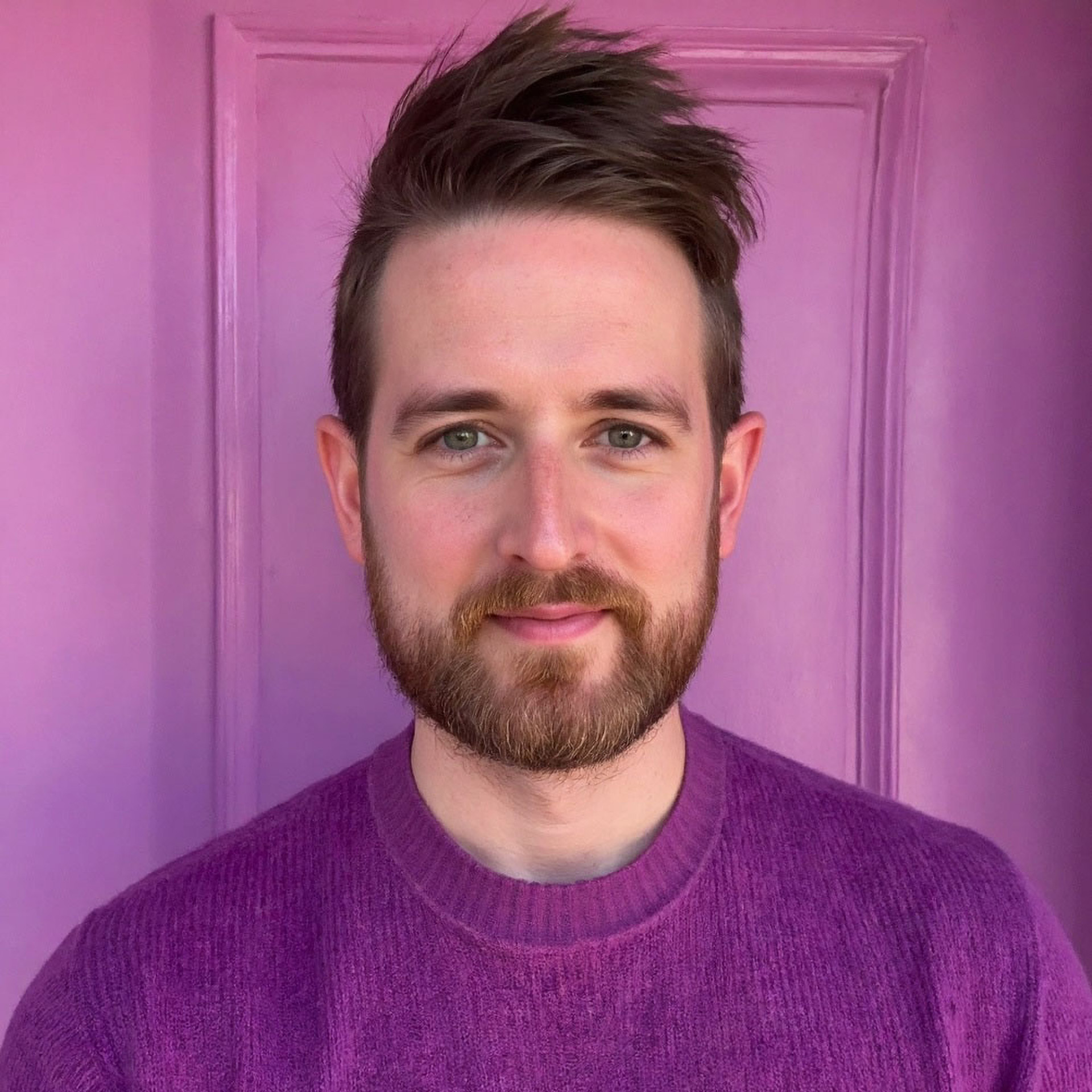
Author | Creative Director
Christian Hurst is an American author and creative director whose work blends epic science fiction adventure with emotional depth and human insight.
Hurst began his creative career as a teenage graphic design intern for the Commonwealth of Pennsylvania and later studied Graphic Design at Harrisburg Area Community College. Over the next fifteen years, he built a career in advertising and brand strategy, leading national rebranding initiatives for companies such as Marriott International before becoming an Executive Creative Director at AARP. His dual experience in art and storytelling informs the cinematic, emotionally grounded quality of his fiction.
A lifelong fan of science fiction, Hurst is best known for The Lily Starling Series, a young adult saga that explores identity, belonging, and the search for hope across the stars. He lives in Pennsylvania with his wife, their son, and three dogs.
