Reinventing After A Successful Exit with Jack Calhoun

You can “win” your career, sell the business, and still wake up wondering who you are without the role. Host Eric Dickmann talks with Jack Calhoun, founder of Encore Career Lab, to get honest about the emotional and practical mechanics of a second act after a big professional exit. Jack had something many people don’t: financial runway. What he didn’t have was instant clarity, and that gap is where the real reinvention work begins.


We trace Jack’s path from journalism to building a fiduciary-minded wealth management firm, including the stress of guiding clients through brutal market moments. Then we move into what happened after he sold: the pull toward creative writing, the isolation that followed, and a detour into consumer products that looked exciting but turned into a margin-squeezing grind once tariffs, COVID, and competition hit. The turning point comes when Jack stops chasing the next “what” and starts asking a better question: what did work give me that I still need in my life?
From there, we dig into identity loss, loneliness, “analysis paralysis,” and why volunteering alone often fails to fill the meaning gap. Jack explains how Encore Career Lab uses a why-first framework, small group cohorts, and coaching to help people surface their “wisdom fingerprint” and turn lived experience into real contribution and, if they want it, real income. If you’re thinking about career reinvention, retirement transition planning, or building an encore career in the age of AI, this conversation will give you language, structure, and a push forward.
Subscribe for more stories and tools, share this with someone navigating a second act, and leave a review so more people can find the show.
Have questions, comments, or interest in being a guest? Leave me a voicemail!
00:00 - Reinvention And The Advantage Of Runway
02:22 - From Journalism To Early Career Pivots
09:11 - Using Communication To Build Trust
14:24 - Stress, Responsibility, And Selling The Firm
18:34 - Writing Dreams And A Product Detour
24:01 - Isolation, Identity Loss, And The Why
31:33 - Encore Career Lab And Finding Your Wisdom
Reinvention And The Advantage Of Runway
Eric Dickmann
Welcome to Beyond Expertise, the podcast about what happens when the career identity you've built no longer fits, and how you begin figuring out what comes next. I'm your host, Eric Dickmann. Today my guest is Jack Calhoun, the founder of Encore Career Lab. After helping build a successful wealth management firm, Jack sold his stake in the business around age 50 and set out to reinvent himself. What stayed with me from our conversation is that Jack had something many people entering a second act do not: runway. He was financially secure. He had time to experiment. He could try writing, build a consumer product, make a wrong turn, and step back to examine what the experience was teaching him without the immediate pressure of having to replace a paycheck. That does not mean the process was easy. Financial freedom gave Jack options, but it did not give him clarity. He still had to confront the loss of his professional identity, the isolation that came with leaving a working community, and the realization that the business he created was not the one he wanted to spend years operating. I think that distinction matters. Some people get to approach reinvention as an exploration. Others arrive there after a layoff, a restructuring, or a financial disruption, and they need the next chapter to start producing income quickly. The lessons may be similar, but the conditions are not. What I appreciate about Jack's story is that he was willing to examine the experiment that did not work and ask a better question. Not simply, "What business should I start?" But, "What did my previous work give me that I still need in my life?" For Jack, the answer included relationships, contribution, creativity, and the opportunity to help people think through consequential decisions. That understanding eventually led him to the work he's doing today. As this show evolves, I want to explore not only the stories of reinvention, but the mechanics behind them, what people tried, how they supported themselves, what created momentum, and what they would do differently. Jack's story begins that conversation, and also reminds us that the freedom to experiment is itself an advantage worth acknowledging.
From Journalism To Early Career Pivots
Eric Dickmann
Let's get ready to go beyond expertise Hey, Jack, welcome to the podcast. I'm so glad to have you on today
Jack Calhoun
Thanks, Eric. I appreciate it. It's great to be here
Eric Dickmann
Jack, one of the things that I do, as I start these shows is I ask people to really turn back the dial of time and go all the way back to when your corporate career first started, your first job really out of school, your first meaningful job. And I know that you had a little bit of background in, uh, journalism, if I'm not mistaken. Talk to me a little bit about that experience of entering the professional world, and did you start out doing what you thought you'd be doing?
Jack Calhoun
Yeah, it's, it's funny. I look back on it now and, uh, you know, in high school, I guess I, some teachers that I admired said, you, you know, "You're a good writer," right? And that was kinda it. And I was like, "Oh, I'm a good writer." Uh, and so, uh, growing up in Atlanta and a lifelong fan of, of the Georgia Bulldogs, you know, the Herschel Walker era, uh, Georgia also happened to have a really good journalism school. Uh, and fortunately for me in the early '80s was easy to get into, not so much anymore. So, so I just waltzed myself right on down the road, uh, and, and, and enrolled at Georgia, got into the journalism school, and it was, it was aligned with my gifts as a writer, I guess, and I enjoyed it. It was fun. Um, and I thought, "Well, this is great. I'll just go right out and I'll make a living as a writer or reporter and editor and, um, you know That's it. And so I got out and immediately we had the recession of '89 and '90 and, um, I'd had a job lined up with a suburban Atlanta paper that had been acquired by The New York Times. It was really a good entree, hope- you know, hopefully for me at the time, and they put a hiring freeze on. And so my next best gig was a rural paper like 80 miles away, and I was not down with that. And so, uh, I ended up going to work for a trade magazine publishing company, uh, and, and it's free circulation and, and as a marketing person you already understand how soul-crushing that kind of stuff is 'cause you're just, you're, you're just a hack to write the copy. Not a hack, but I mean, they don't value you, right? Because all of the revenue comes from the advertising, right? So that, that was soul-crushing and so I segued from that into sports marketing and all this happened within about two years.
Eric Dickmann
Oh, okay. So fast
Jack Calhoun
and yeah, and so that was very informative for me. That was the Collegiate Licensing Company, which essentially pioneered, uh, college licensing in the United States. They, they created a consortium so that Nike, Adidas could come to them instead of negotiating with each individual school. And it was family owned by a family, the Battle family, great people, and I learned a lot. Um, one of the things I learned was that there were like 20 Battles in the company and I wasn't one of them. So, uh, I didn't see a bright future there, but I learned a lot about entrepreneurship. And one of the things that really dis- demystified it for me was just getting together every week, every month, every quarter, seeing what's working, seeing what's not, iterating, keep going, right? And so all of a sudden it was like, oh, this isn't as mysterious as I thought, right? And that was really instructive to me at a 25, 26-year-old age. So, um, yeah, so f- from there I, uh, jumped over to my father who was, uh, uh, a what you'd call a breakaway broker. Uh, he had been in the wirehouse business in the '80s and he liked the clients, he liked the subject matter, he hated the commission pressure, and he had gone fee only at a time when that really wasn't a thing, uh, to his credit. And so I moved over there to start doing marketing and, and business development and, and really branding for our little tiny company at that time to really to try to make us look bigger than we were. So, uh
Eric Dickmann
you excited about that transition? One of the things that stuck out to me as you were describing that journey is feeling valued. And, you know, when you're working for a publication that's just cranking things out, right, really doesn't care about the quality of the writing all that much, I'm sure you didn't get a chance to be all that creative in some of those early roles. But as you were progressing down this path and eventually into this more family business, were you feeling valued along that journey?
Jack Calhoun
Well, I was because, you know, as ADD as I am, my father was twice what I was, so between the two of us, uh, we had a lot of ideas and it was fun to, uh, to, to be valued for those and, and we made a good team on the vision part. Uh, not so much on the, uh, tactical and implementation part, which was kind of native to ADD stuff. But, um, but yes, it was great, it was fulfilling, and really it was validating in a way because, um, my, my, my major and my experience in journalism ended up serving me really well in the investment business
Eric Dickmann
Oh, talk a little bit more about that because one is a very creative pursuit, right? And the other is much more of a technical, numbers-based, pursuit. I'm sure there's lots of client interaction, so you have to have good people skills but where did you feel that there was good overlap?
Jack Calhoun
Yeah, it is. It's a hyper-analytical world, and I'm pretty analytical in some respects, but, you know, not with things I'm not particularly interested in. So stochastic charts and standard deviations and, um, things like that weren't terribly riveting to me. But I understood it conceptually and the need to understand it, and I was good at communicating stuff to clients, right? So modern portfolio theory, asset allocation, things that are commonplace now were not back then. Uh,
Eric Dickmann
Mm-hmm.
Jack Calhoun
efficient markets, you know. And so that was the realization, oh, all of these kind of wonky nerd types are burying people in these, you know, formulas and trying to show, prove their alpha and, and people's eyes are glazing over. And as an empath, I could see their eyes glazing over, right? And a lot of people are oblivious to that, right? And Dad was like me. Dad was-- Dad taught me a lot about that and, and about, you know, non-verbal cues and all that. And so that helped me understand that we really needed not to dumb it down at all, but to simplify it and get down to the essence of what we were trying to explain to people. Why are these things important, right? Why is it important not to chase performance, even though it seems like a logical thing to do? Um, you know, why is it better to diversify instead of to go all in on whatever's been hot recently, right? And so those were things I could communicate. So I learned the business really through my, um, my need and my interest in communicating these principles to clients. And, um, you know, there was a lot of imposter syndrome along the way, and there was an always aspect of that. But, you know, probably in hindsight, I undervalued, uh, the soft skills, the human stuff that really distinguished what I had to offer.
Using Communication To Build Trust
Jack Calhoun
And also this vision part, um, which was the creative, you know, as I said, ADD-type personality. I created a program in the late '90s for accounting firms that were getting in financial services, uh, the ultimate wonks, right? And,
Eric Dickmann
Very much so
Jack Calhoun
and they were being way, uh, swayed by the brokerage industry to sell dot-com stocks.
Eric Dickmann
Mm.
Jack Calhoun
And, you know, having come into an industry that they didn't know, they didn't know any better and so I created an alternative based on the fiduciary model, you know, where we helped them tell a much more professional service, uh, aligned story with their accounting brand. And that resonated with quite a few firms. And then the dot-com bubble blew up, and then we really looked like we knew what we were talking about. And so that program ultimately took off. And so I bought that out of the company in the mid-2000s, ended up being the majority owner. And, um, circa 2014, um, you know, we were up to about a billion and a half in assets under management by that time.
Eric Dickmann
So you really saw some growth
Jack Calhoun
We did a lot, and it was ironic or, you know, it was interesting that it happened during a decade with two of the worst bear markets in the history of the stock market, uh, '01, '02, '08, '09. But because we were diversified, because we didn't panic and all of the things that seem common sense today but didn't feel that way at the time, um, we looked good, right? And we did the right things and our performance showed it.
Eric Dickmann
You talked about entrepreneurship earlier too and how do you think entrepreneurship played into the growth of your company or your interest in growing the company as you began to work more closely with your dad and, and start to do some of these new programs like you did with the CPAs?
Jack Calhoun
Yeah. You know, call it serendipity or kismet or, you know, for me it, you know, there's a faith component for me. But, you know, I, I see a path that I sort of gained experience that all kind of culminated, right? Uh, so my communications background was a big part of it, but also that time I spent at Collegiate Licensing Company, watching that family create this very entrepreneurial consortium concept, uh, I then essentially applied that concept to working with accounting firms. Um, and, and I wouldn't have had an idea how to do that without pr- without that prior experience. And so, um, I had the chutzpah to, you know, at 33 or whatever years old, to roll this thing out, partner up with Schwab and these accounting firms and, you know, and I had the, the brochure. I didn't have, I didn't have the guts behind me on this thing, and I, I convinced a good friend of mine who was at, uh, KPMG and, and had been at T. Rowe Price, uh, the, the teachers' retirement fund, um, to come on board, and he was the guy that, you know, we made the band, right? So, so I was kind of the, the, the, the front man, and he was the lead guitarist, I guess. And so he was able, you know, he, he came in and he was like, "Oh my God, you've done nothing. Your brochure is not reflective of what's going on back here." So he made back here get all, all cleaned up and looking right, and between the two of us, we made a good team, and that h- that was a lot of the entrepreneurial part of it, was the kind of building it on, on the fly, right?
Eric Dickmann
Well, your story really resonates with me because so many of the guests that I've had on this show talk about an experience that was actually fairly early in their career, and they took some real lessons from it that maybe sat idle sometimes for decades, and then all of the sudden they kind of hearken back on these lessons or that experience and realize there was really something there that they just kind of set aside, but that they were able to take advantage of later on when they really gave it some thought. And it sounds like some of that played into your story as well. And I think it's also interesting, you know, you talk about your faith, and then you're also talking about a business where it's all about money, right? It's all about gains and how much more money can you earn for your clients, and the clients obviously are very focused on how much money they're earning. So how did you balance all that?
Jack Calhoun
You know, I think part of it was that we were advocating, uh, uh, this kind of fiduciary, more conservative diversification approach. And so all of what you just described was what I called the dark side of the industry. Uh, they were, they were preaching cha- chasing performance. They were rolling out, you know, day trading platforms and encouraging people to get in there and, and, and, and, you know, flip stocks around and everything. Well, we happened to be in the s- in the office complex where unfortunately there was a mass shooting from a psychopath who was a day trader. And, um, and, and so he got flipped upside down and, you know, it was a bad thing. So all of that was real to me. And so, you know, I felt very good that we were doing things the right way and, and that people needed us and we were saving people from this, um, you know, Dad called it the trail of tears, you know, brokerage firm to bank to insurance company blown up, blown up, blown up. And then we were helping them, right? So it was lucrative. It was a great business. Um, but it also was a good sleep at night model.
Stress, Responsibility, And Selling The Firm
Jack Calhoun
Um, having said that, '08, '09 took a lot out of me, uh, you know, psychologically. Uh, it was, it was such an extraordinary black swan event. Uh, it was the first time in my entire career in that business I was like, "I don't actually know if it's gonna be okay."
Eric Dickmann
Hmm.
Jack Calhoun
Um, and, you know, so our tagline was kinda like, you know, "If everything's okay, you'll be glad you stayed invested, and if it's not, not really gonna matter anyways." Um, you know, so that, that-- by the time the offer came to sell my company, that part of it, I think for me, I was like, "You know what? It'd be okay with me if I wasn't in charge of people's life savings for a while."
Eric Dickmann
I bet that's a tremendous amount of pressure. But there's real money and real stress that goes on in the, in the financial services business, right? In wealth management and, and giving people advice on what to do with their money.
Jack Calhoun
Yeah, there, there's a lot of that. And when you're telling people to stay the course no matter what, you know, whether you're in a bubble or, or, or the, the ultimate bear market like we were in '08, '09, both of those take a lot of emotional discipline to keep clients focused, and also belief that you're doing things the right way, and, and you can't always prove that out until in hindsight, right? So there's a lot of stress there for sure.
Eric Dickmann
So when you decided to sell the business, was this something that you had been contemplating and actively looking to sell the business? Was it an offer that just came along? You know, what was your mental state? Were you ready to get out?
Jack Calhoun
You know, I, I, I wasn't, but I think what I was and hadn't stopped to, to consider was, was, um, um, kind of bored. there's a point in wealth management, weirdly, where it doesn't make sense to devote your efforts to creating new things. It makes more sense to tend to what you've got.
Eric Dickmann
Sure
Jack Calhoun
The market will move things a lot more than you can move them with a new program. Um, and, and, and so I was kinda restless 'cause I like building and creating. I don't love managing. Um, and then the market caught up with us, and so some offers started coming in, in private equity, things like that, and, and they were, like, surprisingly high numbers for, you know, what I was expecting. So that got me thinking.
Eric Dickmann
Hmm
Jack Calhoun
Um, and then ultimately, you know, the partnership and I had a discussion, and then, uh, we worked it out to where we, we did an internal transition, and that was great. And so the younger partners, you know, I sold my shares back to them and, um, and, and so everybody was kind of a winner in that way. And, um, but for me, I was not like, "I gotta get out of this industry," right? It was just sort of a subconscious vibe that was brewing with me, and then when these numbers started coming in, I started thinking, "Eh, all right. Let's take some chips off the table, right? Let's go. You know, I'm a creative guy. I'll, I'll go reinvent myself. This'll be fun. I'm 50, you know. I'll figure it out." And thus was the entirety of my thinking about this next phase. And I look back now and I'm like, "Dude, hmm, should've talked to some people, done some more planning." I don't regret anything. I regret not being mentally prepared for it, but it ultimately led to what I've created now, so
Eric Dickmann
Well, I was just saying You're not alone there. I think so many people find themselves in that position. You were on the lucky side of it, right? You w- sold a business, so you had some money. Uh, you were able probably to take a little bit of time to figure out what this next act is gonna look like. I think for a lot of our listeners, it's more of a forced change, right? They're laid off, there's a downsizing, an acquisition, whatever it may be, and all of a sudden they find themselves, "Oh, geez, what am I gonna do next? I'm not so sure I wanna continue doing what I was doing, but I don't know what that next thing really is. And oh, by the way, I don't have a lot of time to figure it out because got a family to support." So now you're in this phase. You've sold the business. You've got the proceeds from that. You can think through what your next act is gonna be. Did you have an idea of what you wanted it to be? Did you have some guiding principles of saying, "I don't know what it is, but I wanna make sure it's checking this box and that box"? How did you approach it?
Writing Dreams And A Product Detour
Jack Calhoun
You know, I kind of did the conventional wisdom of follow your bliss, right? So, uh, your, your passion, right? And so I went back to writing and, and, you know, do some, doing creative writing and things like that. And, um, you know, I built a little, you know, cabin behind the house. We had a little property and, you know, did the whole cliched thing and, and, you know, it was great until it wasn't. After about three months of that, you're like feeling like you're in "The Shining," you know? Not the violent way, but the isolation way, right? You know, and I would write up in the, in the house because I was just so isolated and, and, and you don't think about that. Uh, and then I had a, a vision for creating a consumer product, a consumer electronic product. Uh, I'm a big outdoor smoking and grilling fan, and there was an opportunity to create a Wi-Fi thermometer in the market. Um, like these ceramic smokers, like Big Green Egg, Kamado Joe, they, they, they hold a temperature for a long time and you don't need to babysit them, but you do wanna keep an eye on them.
Eric Dickmann
Mm-hmm
Jack Calhoun
Um, and I thought it was ridiculous that the only thing on the market was a Bluetooth thermometer. You had to stay 50 feet from it to stay connected. And so I was like, "Eh, all right. Let's do it." And so I put together a development team and we did it and created it and it was really cool. We built it on the AWS platform. It had an app. The product was great, and then the tariffs came out. Uh, we had a lot of steel in the construction, and then COVID hit and everybody started a side hustle and pay-per-click ads exploded. And essentially I went from this very high margin world of wealth management to the skinniest margins on earth, which is consumer electronics. As a CMO, you're laughing at me right now. And, uh, and I was, I was like, you know... And, and I ultimately just wound it down, you know? I, I was gonna pivot it and I was having discussions with manufacturing, grill manufacturers 'cause we had a patent on the technology for connecting to AWS And I thought, you know, I probably, I'm a good, persuasive enough I can probably get this done. And then what, right? Then I'm gonna be that much deeper in an industry I hate, right? I loved the product creation. That scratched my creative itch, the entrepreneurial part. I'd expected to sell it and move on to something else. You know, uh, uh, conditions moved against me. I got stuck in it. You know, you learn. And so all of a sudden now I'm managing something that is just a brutal industry to be in. And so that was, I was like, "You know what? I'm just gonna wind it down, lick my wounds." And, and I worked with a coach at that time. This was just coming out of COVID probably. And he helped me kind of do what he called an autopsy of that experience, and it was very instructive. And, and I was mad at myself for a while because I was like, you know, I knew better than this, right? I mean, I advise my clients on how to retire. How come I went into something capital intensive, risky, no experience, all the things that I would've said no. And, you know, the cobbler's kid's kid had no shoes. And so, um, so, you know, after going through that with the coach, what I realized was it, it, it scratched the, the creative itch for me.
Eric Dickmann
Yeah
Jack Calhoun
But I didn't spend enough time thinking, "Well, what if it doesn't go perfectly? Um, what if you end up, you know, really needing to be in this industry for a while? Beyond the creation, what's there for you? And what are your priorities?" Like you said, "What are your values?" That's what I now see was my mistake. And one of the things I realized was I really missed the relationship stuff, right? As an empath, I really miss engaging with people that I cared about and who cared about me, and helping them solve these sort of higher level life problems, right? I just didn't miss managing money.
Eric Dickmann
Hmm
Jack Calhoun
So that was when I was like, "Oh, well I can do that in different capacities," right? And that was when this concept, this vision started to come to me. I wish there'd been a program I could have gone through when I left my career behind that would've oriented me to help me think through what you're talking about, right? Not the what, but the why. And, you know, it's a Simon Sinek thing, right?
Eric Dickmann
Yeah, find your why, right? And, and I think you're, you're exactly spot on here because so many people haven't thought about that next step yet. And, you know, there are tons of guidebooks out there now at least where you can say, "Well, don't make this mistake, don't make this mistake," but there is something to learning it, right? You can tell teenagers not to do a lot of things, but they're probably gonna do them anyway because the only way that you really learn is to make the mistakes. And if you've got a limited runway but you make these mistakes, the pressure really starts to build because now you're just coming from further and further behind. And so that was one thing that struck me in what you said, and I think the other was this whole concept of isolation and loneliness. I think especially when you've been in an environment where you've got an office full of colleagues, you've got customers that you're working with, you're interacting with people on a regular basis, and then it's potentially just you or you and a partner, oftentimes virtually, you're not even together in the same room, that's a very different experience and, and rather jarring for people. So I'm not surprised at your reaction to those things because I hear that so often and have experienced that myself
Isolation, Identity Loss, And The Why
Jack Calhoun
Yeah, and there's a couple of variations of that. You know, one are people who've been forced out, uh, who are sort of mid-career, and that's a whole other kind of stress. I totally get that. Uh, the other are people who have taken an early retirement package or they've just full-on retired or, you know, they've walked away from that career. They're ready for this next act. They don't know what that is. And they're-- And, and that was quote kind of me, right? And, and then, and there's this sense like, well, nobody is crying for me, right? You know, my friends are working their butts off back there, and I've got enough wherewithal to be able to keep a roof over my head, and, you know, people are starving all over the world. And what, what right do I have to complain, right? Uh, you know, boo-hoo, you're, you're lost. You can't figure out what to do with your life. Boo-hoo, you know, you've got some money. You had a good career. Cry me a river, right? A- and that's sort of the subconscious vibe, I think. And so for me, and this is what I've found with a lot of people, is you go internal, right? You don't talk about it because you don't feel like you've got a sounding board for anybody who can relate to it and actually have empathy for the isolation. A- and then it b- creates a self, uh, an endless loop, right? And, and so we, we, we're in our head. The first thing I realized that I missed was, um, was a brain trust, right? A sounding board. You know, partners, like you said. You know, you're, uh, you're, you're all up in your head, and all the arguments are going up here, right? Um, and so we get analysis paralysis. And Particularly achievers, which if you've read the book "From Strength to Strength," highly recommend that book. Um, Arthur Brooks calls, you know, people who are career invested is what I call it, right? Achievers don't like to call themselves achievers, but they are. Um, for people like that, we don't like when we don't have an answer to the question, what do you do, right? And, and, you know, even for me, having sold a company and supposedly, you know, grabbing the brass ring or whatever, and people say, "What are you doing?" I'm like, "Yeah."
Eric Dickmann
Yeah.
Jack Calhoun
It didn't feel good.
Eric Dickmann
Now
Jack Calhoun
And, and I had the metrics, supposedly I was successful, right? And so, you know, it's even more so when it's not on your terms, right? And so we rush to the what. As achievers, strivers, whatever, y- we rush to the what, and we don't spend as much time on the why because it feels like we don't have the luxury of that, or we don't even know how to address that, right? And so that was sort of the process and the framework I realized was missing. And, and having been in wealth management, I was like, "Oh, we are doing it wrong," right? I mean, we're doing it right in one regard, which is getting the numbers right. That has to be right or there's nothing else to talk about. But then we're like, "Okay, numbers look good. Party on, Wayne."
Eric Dickmann
Mm-hmm.
Jack Calhoun
And, and that's where we miss it, because there's this concept that retirement is just a 30-year vacation.
Eric Dickmann
Yes
Jack Calhoun
But really it's like a year vacation, and then it's like, what on earth am I gonna do with the next 29 years after that? And, and that's the part people can't get their arms around because people in corporate are so fried, they're so burned out
Eric Dickmann
Yes
Jack Calhoun
that this Shangri-La vision that they're working towards is hard to talk them out of, and I get it. And, and they've got it coming. They have got it coming to go into that world and catch their breath and reset. The problem is, you know, it's like I say, you ever been on a vacation that went a couple of days too long and you're kinda like, you know, "All right, let's get back to it," right?
Eric Dickmann
Yes
Jack Calhoun
There's no it to get back to. And it... And, and then, then it turns into inertia and
Eric Dickmann
Yes
Jack Calhoun
and that's when you start down what I call the decline railway, right? Get southern boy, right? You know, incline railway bit by bit, you go up the mountain, de- decline railway down bit by bit. And it's, it's losing your working muscle, right? It's losing your initiative, accountability, and it's the sandbox that our careers give us that we're then plopped out of it and, and we're f- forced to rebuild the sandbox on our own.
Eric Dickmann
It's adding value, right? You no longer feel like you're adding value.
Jack Calhoun
Right
Eric Dickmann
And, and careers for a lot of people are how they add value to this world, and once that's taken away, all of a sudden, maybe they're a parent, a grandparent, whatever it may be, and they're adding value in that kind of a way. But it's not quite the same as what you experienced in the corporate world
Jack Calhoun
Now you've really hit on it, and this is something I really try to get across to people, and that is, um, humans are wired with a need to feel accomplished,
Eric Dickmann
Mm-hmm.
Jack Calhoun
and we're the only species on Earth that's wired that way, right? Your dog does not wake up every day trying to figure out how to be the best dog he can be. But we are, right? And so we don't feel good about ourselves. We don't feel aligned when we're not doing things that are helping, that matter, and that call on our highest and best.
Eric Dickmann
Yes
Jack Calhoun
And one of the things I hear that I try to make the distinction with people is, is, well, you know, I'm just gonna volunteer, right? I'm gonna volunteer more, you know, particularly people who are financially secure or have some time, and, and it's, it's from the heart. It's a great instinct. But what I find, there's this, there's this rule of thumb called the 100-hour rule of volunteering, and there's been some studies that have found that beyond about 100 hours a year, you don't feel any additional fulfillment from volunteering activities.
Eric Dickmann
Oh, interesting
Jack Calhoun
It doesn't mean you shouldn't do it. It just means don't expect it to fill that meaning and purpose void, right? Well, if your average nine-to-five job is 2,000 hours a year and 100 hours is pretty much beyond which you're not gonna... You got a 1,900-hour delta just for a nine-to-five kinda job, and not many people in this day and age are working those hours anyway. So the void is significant, and a big part of that is this misplaced, well-intended idea that I'm gonna volunteer, and that's gonna be my work thing for me, and it's not. You have to find a new kind of work, you know? And I make the distinction between the soul-crushing, grinding corporate work and your life's work,
Eric Dickmann
Yeah
Jack Calhoun
and that's what I have to get people to stop long enough to hear it because people hear work and it's a four-letter word, right? And I'm like, "No, that's not what we're talking about. Look at the Rolling Stones," right? Look at Mel Brooks. He's 99 years old. He's working on a reboot of The Producers and Spaceballs, right? Yeah, they're famous, and yeah, they're rich, but rich and famous isn't what it takes or, you know, we wouldn't have the 27 Club, right? It's people who are doing their life's work. They don't have to be doing this at all, right? It's what drives them because it's what they feel like they were put here to do.
Eric Dickmann
So after your experiment with the thermometer, you kind of came to this realization, "Well, that wasn't the business that I am gonna do for the rest of my life." But you were feeling a little bit of this uneasiness about the direction that you were headed. So at that point, did you say, "Well, I need to come up with a program to help more people?" Did... Were you talking with peers and you started to hear something over and over again? What was the genesis of how you started to build this next business for you?
Encore Career Lab And Finding Your Wisdom
Jack Calhoun
Yeah, I was-- there's a couple of things I was realizing. First, I'm the first year of Gen X. Um, I'm 60. I was born in 19... very end of '65. Um, if my kids wanna trigger me, they just call me Boomer, and then, then it's game on, uh, 'cause I'm right there on that line. But I'm very much in that Gen X sensibility and, and I understand the demographic, and the first thing I was looking at was like, these people are not gonna do retirement like it's been done in the past, right? They're gonna look at whatever the Boomers did, and they're gonna be like, "I'm not doing whatever they're doing," right? Corporate work, corporate retirement. Gen X is like, "Mm-mm," right? So I knew that that was gonna blow up this retirement model as we've known it. Um, and then kind of living that, I was like, "Oh, okay, well now I understand how to get oriented," right? And what, what's missing from this equation, which is the existential part.
Eric Dickmann
Hmm
Jack Calhoun
In the program, we call 'em the threads, you know, which is like your tribe and, um, you know, your, your, your people and, and all of these things that, you know, I probably should have printed that out before I brought it up on this podcast. But, um, you know, but it's your, your, all of the things that our careers give us that we underestimate that collectively kind of make up this fabric of our lives. Uh, and so we have to weave all that back together again. And so that's really what I think we're missing for people. It's not just do the numbers work, but how am I gonna reinvent myself and create this new identity, and I think in particular, this f- future vision, right? And that's so important that we have what's called perspection, right? We see this future, uh, for ourselves. We see ourselves thriving in some capacity, and it pulls us forward.
Eric Dickmann
Hmm
Jack Calhoun
Well, the model, the mentality, the vision of aging in this country is decrepitude,
Eric Dickmann
Yeah, that's right
Jack Calhoun
And, and so if you're my age and you're 60 and, and I, I embrace the conventional model of 80, it's not inspiring to me. I wanna avoid that as long as I can, right? And so I don't have a future vision. My future vision is what trip can we go on, right? But if my vision is Mel Brooks, 99, jamming, right? Dan Sullivan, strategic coach founder, is 81, he looks like he's 50. You know, all of a sudden I'm like, "Oh, well, that is inspiring. I'd love to be that." Right? And so a lot of this is changing the paradigm for people and getting people to reject this vision of aging that was appropriate 50 years ago when people, you know, sat down at 5:00 and smoked a pack of Viceroys and had three martinis every night, right? Like my grandparents did, and nobody does that anymore, you know? And so we're in better health. The smoking thing is huge, and we kind of dismiss it, but
Eric Dickmann
Oh, that's right. Yeah
Jack Calhoun
totally changed the way we age. Now you've got AI, and now you've got medical tech, all of it wrapped up together in longevity, and people who have, you know, means will invest in their health in the future, right? And so all of this is, is wrapping up at a completely different view of aging than we've had in the past, but we still have this old retirement vision, which is make the money and go, go, go on your re- European river cruise, right? Which is a fun thing to do, but that's the entirety of the vision.
Eric Dickmann
How do you communicate that? Is this a, a one-on-one coaching program? Is it a mastermind? How have you put all this information together, these thoughts together in a way that can really help people kind of start to think clearly, I guess might be an easy way to say it, about what their future looks like in their second act?
Jack Calhoun
Yeah. Uh, it's, uh, for us and, and our, our program is Encore Career, Career Lab, which is what I created. Uh, and you know, the, the concept is that your Encore career is one that you create on your terms, you know, and, and career is not the career that you had before, right? Um, and so it's a combination of, it's a 12-week program. Uh, it's, it's a combination of self-study using this a- asynchronous curriculum that I've created, hosted online, rolls out a week at a time, and it walks you-- The big categories that w- that we divide it into are the why, the what, and the how. And so the first four weeks is really devoted to surfacing things. You know, this hidden wisdom that we all have that we've accumulated in drips and drabs over the course of 30 years, that it's become, you know, I call it your wisdom brand, right? Wisdom fingerprint. Um, it's unique to us. It's our combination of talents and experience and, um, perspective and, and that's what we have to offer in this next phase, a lot more than grinding energy that we have when we're 25, right? And fortunately, it's what the world desperately needs right now, right? You know, and as I've been telling clients, you know, your 20, 23-year-old billionaires are gonna be deciding what reality is for your grandkids. Don't you think you wanna inject a little wisdom into this discussion along the way, right? So it's really helping people figure out what is that and, you know, and also how can I offer that in a way that I'm being compensated for the value I'm delivering, which is significant
Eric Dickmann
For sure
Jack Calhoun
Um, so this isn't necessarily a time of diminished income. For a lot of people it is 'cause money just isn't as important to them as it was 20 years ago. But it's not mutually exclusive. These can be wildly lucrative if that's what you wanna do.
Eric Dickmann
Yes
Jack Calhoun
Um, and so that's part of it, and then we have, you know, probably the secret sauce is, uh, group cohorts. Um, you know, it's people like us in these group cohorts, five, six, seven people. Um, and it's very helpful because you realize, oh, it's not me, right? It's this, it's this situation. And we're really the first generation that's confronting it, right? Even our grandparents didn't come into this phase thinking, "I'm gonna reinvent myself and have this amazing third act," right? A- and, and, and but we, we see this in front of us, and so we're all kind of on it, you know, on this journey together, right? As pioneers in a way. And, and so that's part of the framework idea. So being around people who are going through it, who've been strivers, achievers, and who are also as lost as you are in a lot of ways, or as stuck, and they've been successful in their own right, it's just, it's helpful. Everybody can kind of, you know, bring a spirit of support and ideas and empathy and compassion, and it just makes you realize, okay, it's, I'm not a failure here. You know? Right when I thought I was supposed to be successful and exit stage right, and now I feel like a failure, oh, a lot of us are feeling this, right?
Eric Dickmann
I love that and I love the framework that you have there. And I think we're in such a unique time in w- many ways because throughout history, people have always respected the wisdom of their elders. And I think for so many people, we've spent our careers building skills, building talents, expertise in various ways, and now all of a sudden we're in the age of AI where people start to say, "Well, I don't need that anymore. I can just ask ChatGPT."
Jack Calhoun
Yeah
Eric Dickmann
And I personally don't believe that's true. I think there are a lot of things that AI can do that is extremely helpful, but discernment isn't one of them.
Jack Calhoun
No, it's
Eric Dickmann
A taste isn't one of them.
Jack Calhoun
No.
Eric Dickmann
Creativity really isn't one
Jack Calhoun
really one of them either, you know? I mean, it's, it's been programmed to be moral, but it's not inherently moral
Eric Dickmann
That's, that's exactly right. And so I do think this is a time where a lot of people are wondering, "What is my value? What am I gonna do in my next act? How can I make a meaningful contribution?" Whether it's for additional financial security going forward, or just the ability to share what they've learned and, and add value to others. And so I love what you're putting together there, and I, I believe that there are a lot of people out there that could use that kind of cohort support.
Jack Calhoun
Absolutely, and the world needs it. And we have one-on-one coaching is the third leg to the stool, right? So we have the group, the one-on-one, the curriculum, um, a- and it really creates this communal experience, and I think that's what we need going forward, right? Um, and, and, and to help people that are moving into their 60s and beyond, 50s, to stay in this sense of community, um, because that's what the first thing that goes away that I really underestimated, you know, um, is, is the isolation that we talked about. So I think that's what's so important and fig- helping people figure out, okay, what is this unique formula of wisdom that I have amassed and, and how can I offer it back to people in a way that helps them and that, you know, compensates me? And, um, so much of that comes from lived experience, right? And, and what do I know now that I wish I knew then?
Eric Dickmann
Yes
Jack Calhoun
How would I inform younger me 10 years ago doing whatever? You know, it can be personal, it can be professional, right? You know, one of my early clients, uh, she was mid-50s, got a surprise divorce, right? Didn't see it coming, didn't want it, out in LA, and after 20 years raising kids had to jump back in the workforce. And she has been looking, you know, putting together a support group with other women that have been given the same situation, right? Surprise divorce, back in the corporate workforce, had a early successful career, but now they're having to reinvent themselves. That's tremendous value
Eric Dickmann
Oh, yeah
Jack Calhoun
that, who feel isolated, right? Um, and, and they're, they'll pay for that community, right? You've raised a special needs child, right? You know, you don't have to come at it from a credentialed expert. You can come at it from some, a parent who lived it, and what have you learned? Support group. So these are these kind of wisdom, just two very, you know, quick examples, you know. And that's part of what I think we have been really good at is helping people surface that and think, oh, okay, that's something, yeah, that really resonates with me,
Eric Dickmann
That's gotta be hugely fulfilling
Jack Calhoun
Very, very fulfilling for them and for me, right? So my encore career is helping people find their encore career, so it's, uh, you know, it's, it's nice when a plan comes together
Eric Dickmann
I love that. And you know, this, uh, podcast is entitled Beyond Expertise, and the concept is very much the same. It's what's beyond that expertise that we've developed throughout our careers. And, uh, so I love your mission. I love what, uh, you've put together there. I love the frameworks that you discussed, and have loved this story today. Uh, where can people find out more about you and about your programs?
Jack Calhoun
Yeah, our URL, uh, as luck would have it, is encorecareerlab.com. Uh, it's lab, L-A-B, singular. Uh, they can also email me at that same domain, jack@encorecareerlab.com
Eric Dickmann
That's perfect, Jack. I'll make sure that we've got all that linked up in the show notes so that people can find you this has been great. I've really enjoyed our conversation today. Love what you're doing. Thanks so much for taking the time to share your story with us.
Jack Calhoun
Thank you, Eric. It's been a privilege. Thanks for having me
Eric Dickmann
thanks for listening to Beyond Expertise. You can find show notes, resources, and links mentioned during this episode at podcast.ericdickman.com. If this conversation resonated with you, I hope you'll join me again next time as we continue exploring what it means to reinvent ourselves beyond our careers, titles, and expertise.
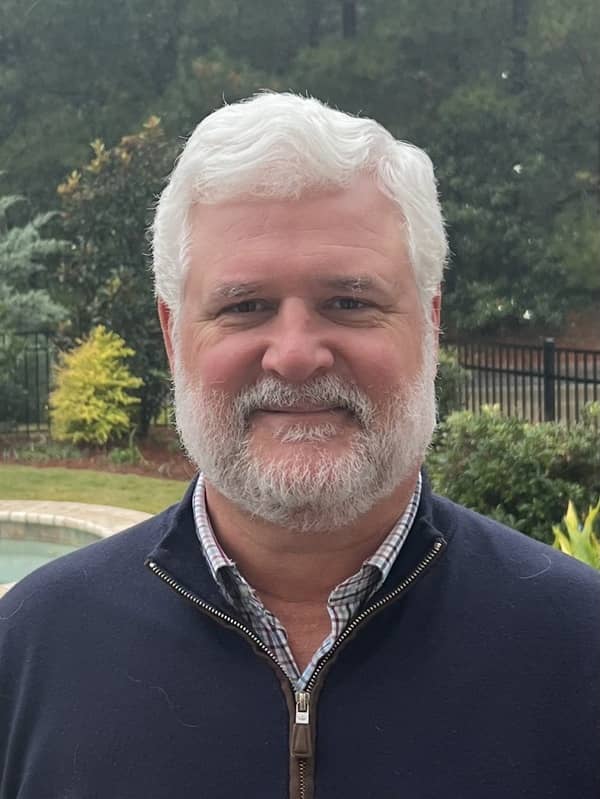
Founder | CEO
Jack Calhoun has spent more than three decades building programs and companies that meet people exactly where they are and where the world is heading.
A graduate of the University of Georgia's Henry W. Grady College of Journalism and Mass Communications, Jack joined with his father in the mid-1990s to scale his small investment firm, Capital Directions. Jack ultimately became the majority owner and managing partner of the firm before selling the company in 2015.
What came next was unexpected. With no framework, no roadmap, and no program to turn to for guidance, Jack found his post-career phase more disorienting than intoxicating.
That experience inspired Jack to found Encore Career Lab in 2023 to help people create amazing Third Acts for themselves beyond the “life of endless leisure” that has always defined the conventional approach to retirement.
